Reverse Osmosis Equipment for Food and Beverage Production Lines
Reverse osmosis equipment for food and beverage production delivers hygienic stable purified water for mixing, fermentation, filling and equipment cleaning in food factories. It is equipped with high-precision liquid filter as vital pretreatment barrier to intercept suspended contaminants and prevent RO membrane fouling. You can select mature models including 5 Tons/hour Reverse Osmosis Equipment and 10 Tons/hour Reverse Osmosis System to build complete food-grade water treatment workflow. This system thoroughly removes hardness ions, heavy metals and microbial precursors to guarantee taste consistency and extend product shelf life. Scalable configurations from compact units up to Large-scale Reverse Osmosis Equipment serve small workshops and large beverage industrial parks. Widely adopted in beverage, snack, dairy and condiment factories, this article covers product composition, working principle, technical indicators, quality standards, application scenarios and typical operational FAQs to support your food factory water treatment project planning.

1. Product Introduction
Reverse osmosis equipment for food and beverage production is customized food-grade water treatment system developed to meet strict sanitary water standards of food processing industry. Water is a core raw material in nearly all food and beverage production processes. Raw groundwater or municipal tap water contains calcium-magnesium hardness, colloids, trace heavy metals and microorganisms. Unprocessed raw water used for raw material mixing, fermentation, beverage dilution and CIP cleaning will cause unstable flavor, easy bacterial reproduction, pipeline scaling and shortened shelf life of finished food. Therefore, reliable purified water preparation equipment has become essential supporting facility for standardized food and beverage enterprises.
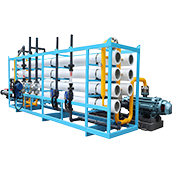
The whole equipment adopts sanitary skid-mounted modular design. All pipelines and pressure vessels contacting water adopt food-grade materials to comply with food production hygiene specifications. The front pretreatment unit is equipped with high-performance liquid filter to intercept sediment, fiber and particulate impurities, avoiding irreversible organic and biological fouling of downstream RO membrane components.
Enterprises can select models according to daily water consumption: small food workshops adopt 1 Ton/hour Reverse Osmosis Equipment and 2 Tons/hour Reverse Osmosis Equipment; medium beverage and condiment factories choose 5 Tons/hour Reverse Osmosis Equipment and 10 Tons/hour Reverse Osmosis System; large food industrial parks can connect multiple units in parallel to form Large-scale Reverse Osmosis Equipment. For high-standard ultra-pure water demands, you can also refer to Two-stage Reverse Osmosis Equipment (Double-pass RO).
Many food factory managers compare this RO equipment with traditional water softeners. Simple softening equipment only removes calcium and magnesium ions, while reverse osmosis realizes deep purification to remove soluble salts, trace heavy metals and microbial spores at the same time. Produced purified water can be directly used for formula mixing, yeast fermentation, beverage dilution and production line cleaning. Concentrated water generated after separation can be recycled for workshop ground cleaning and raw material cleaning to reduce freshwater procurement cost. Different from general industrial pure water equipment, reverse osmosis equipment for food and beverage production prioritizes sanitary structure, quick-disassembly pipelines and reserved CIP cleaning interface, and has become standard matching equipment for newly built and renovated food production lines.
2. Working Principle of Reverse Osmosis Equipment For Food And Beverage Production
Reverse osmosis is pressure-driven physical membrane separation technology. Under external driving pressure higher than natural osmotic pressure of raw water, water molecules pass through semi-permeable food-grade RO membranes. Hardness ions, soluble salts, colloids, microbial spores and suspended pollutants are trapped on the concentrated water side, realizing efficient physical purification without adding large amounts of chemical agents.
The complete food factory water treatment workflow is divided into four core stages:
Stage1: Multi-stage precision pretreatment filtration
Raw water sequentially flows through multi-media filter, activated carbon filter and liquid filter. This procedure removes sediment, residual chlorine and suspended particles, lowers water turbidity and SDI value, and creates qualified inflow conditions for the RO main unit.
Stage2: Dosing adjustment and pressurization
Scale inhibitor and food-grade biocide are added quantitatively as required to suppress membrane scaling and microbial growth. Qualified pretreated water is boosted by sanitary high-pressure pump to reach the optimal working pressure of RO membranes.
Stage3: Reverse osmosis deep purification separation
Pressurized raw water enters membrane pressure vessels. RO membranes intercept impurities, and water is divided into two streams: low-conductivity purified water for food production and high-salinity concentrated wastewater. Purified water is transported to each workshop through closed sanitary pipelines.
Stage4: Intelligent monitoring and automatic flushing
PLC control system continuously monitors water conductivity, operating pressure and liquid level inside water tanks. Automatic cross-flow flushing activates during shutdown to wash pollutants attached on membrane surfaces. Operators can arrange regular CIP online disinfection to prevent biofouling.
For high-end beverage, infant supplementary food production requiring ultra-low microbial content, two-stage reverse osmosis configuration can be adopted to further improve ion and microbe removal efficiency.

3. Core Technical Parameters
We provide personalized customized design based on factory daily water consumption, raw water quality and food production process standards. Standard technical indicators of reverse osmosis equipment for food and beverage production are as follows:
Water production capacity: 1m³/h ~ 200m³/h, customizable, including 1 ton/hour reverse osmosis equipment, 2 tons/hour reverse osmosis equipment, 5 tons/hour reverse osmosis equipment, 10 tons/hour reverse osmosis system and expandable large-scale reverse osmosis equipment
Outlet water conductivity: ≤10μS/cm (adjustable according to different food processing requirements)
Single-pass salt rejection rate: ≥97%
System water recovery rate: 65% ~ 80%
Inlet water requirements after pretreatment: Turbidity ≤1 NTU, SDI ≤5, residual chlorine <0.1mg/L
Working temperature: 5℃ ~ 40℃
Control mode: Full-automatic PLC intelligent control, online conductivity monitoring, high-low pressure protection, automatic membrane flushing, reserved CIP cleaning interface
Material standard: Food-grade FRP or 304/316L stainless steel pressure vessel; sanitary quick-disassembly pipeline; food safety certified anti-biofouling RO membrane
4. Product Quality Standard
All reverse osmosis equipment for food and beverage production strictly implements food machinery safety and hygiene specifications.
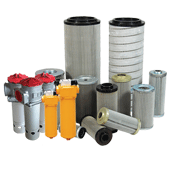
Firstly, core RO membrane elements adopt food-grade anti-pollution reverse osmosis membranes. Supporting liquid filter uses food-grade high dirt-holding filter material to guarantee stable pretreatment effect and avoid secondary pollution of water quality. Pumps, sensors and valves contacting water all select sanitary industrial brands suitable for long-time continuous operation.
Secondly, every complete set of equipment passes hydraulic pressure test, continuous running test and sanitation inspection before delivery. The skid base adopts anti-corrosion coating. All pipeline joints adopt quick-disassembly design for regular cleaning and disinfection. We supply complete P&ID flow diagrams, installation guidelines and operation manuals.
For ultra-high purity water upgrading scheme, you can view the introduction of Two-stage Reverse Osmosis Equipment (Double-pass RO).
Thirdly, our professional technical team provides remote online guidance and optional on-site commissioning service. Standardized maintenance plans effectively slow down membrane biological fouling, extend membrane service life and ensure stable purified water supply during peak food production seasons.

5. Application Fields of Reverse Osmosis Equipment For Food And Beverage Production
This dedicated food-grade reverse osmosis water system is widely used in food deep processing industries:
Beverage production: Carbonated drinks, fruit juice, mineral water, tea beverage blending and filling supporting water
Dairy processing: Milk, yogurt, cheese production process purified water
Condiment factory: Vinegar, soy sauce, sauce fermentation and preparation water
Snack and bakery workshop: Raw material mixing, equipment cleaning water
Small food processing factory: Adopt 1 ton/hour and 2 tons/hour reverse osmosis equipment
Large food industrial park: Deploy 5 tons/hour, 10 tons/hour reverse osmosis system and large-scale reverse osmosis equipment for centralized water supply
Different food categories have different limits on water hardness, conductivity and microbial indicators. Our engineers optimize pretreatment scheme and operation parameters after analyzing local raw water samples, to match food safety production specifications.
Frequently Asked Questions
FAQ1
Q: Why cannot softened water completely replace RO purified water for food production?
A: Water softener only removes calcium and magnesium ions, and cannot intercept trace heavy metals, microbial spores and soluble salts. Reverse osmosis equipment realizes deep purification, effectively reducing risks of flavor change and microbial overgrowth in finished food.
FAQ2
Q: How to select suitable reverse osmosis equipment model for food factories?
A: Small workshops choose 1 Ton/hour Reverse Osmosis Equipment or 2 Tons/hour Reverse Osmosis Equipment. Medium beverage factories select 5 Tons/hour Reverse Osmosis Equipment or 10 Tons/hour Reverse Osmosis System. Large food parks can expand to Large-scale Reverse Osmosis Equipment.
FAQ3
Q: What function does liquid filter perform inside this food-grade RO system?
A: Liquid filter intercepts sediment, algae and colloids in raw water, prevents particulate pollutants from scratching and blocking food-grade RO membranes, reduces biological fouling frequency and extends service life of expensive membrane components.
FAQ4
Q: Can this reverse osmosis equipment run continuously matching 24-hour food production lines?
A: Yes. The system is optimized for uninterrupted industrial operation, equipped with automatic flushing function and reserved CIP disinfection interface, adapting to non-stop production rhythm of food and beverage factories.
FAQ5
Q: Is two-stage reverse osmosis necessary for all food processing projects?
A: Single-stage RO satisfies general cleaning and blending demands. Two-stage reverse osmosis equipment is recommended for high-end beverage, infant food and products requiring ultra-high water purity.
FAQ6
Q: What regular maintenance tasks should be arranged for food production RO equipment?
A: Regularly replace filter cartridges in liquid filter; conduct periodic CIP sanitation disinfection; keep automatic membrane flushing enabled; monitor inlet and outlet water quality daily; implement chemical cleaning once biofouling causes water flow and water quality decline.
Other products you want to know about:
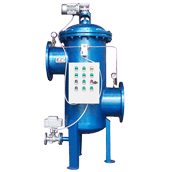
Self Cleaning Filters
Ultrafiltration equipment
High Flow Cartridge Filter