How Industrial Reverse Osmosis Equipment Works | Full Working Mechanism Guide
Industrial reverse osmosis equipment serves as the mainstream water purification device to remove salts, colloids, suspended solids and organic contaminants from raw water for industrial production demands. It is necessary for liquid filter devices to complete preliminary raw water interception and filtration before water flows into the core RO membrane components, effectively reducing membrane pollution load and extending the overall service life of reverse osmosis equipment. System integrators and factory buyers can grasp the whole equipment operation logic by combining the structural configuration of Professional Design of RO System for Industrial Pure Water Stations and acceptance testing standards from Industrial RO Equipment Acceptance Criteria for High-standard Water Stations. This paper systematically explains the overall composition of industrial RO devices, detailed osmosis separation working principle, standard operating technical parameters, manufacturing quality control specifications, diversified industrial application fields and common operating influencing factors. The interpretation is applicable to small low-flow RO skids, medium integrated water making units and large multi-module centralized RO systems, widely deployed in food processing, pharmacy, new energy, chemical industry and thermal power water treatment projects. Mastering how industrial RO equipment runs helps users arrange scientific daily operation and maintenance plans, cut unexpected equipment failure rates and lower long-term water system operating costs.

1. Product Profile of Industrial Reverse Osmosis Equipment
Industrial reverse osmosis equipment is a physical separation water treatment assembly composed of pretreatment assemblies, high-pressure power unit, RO membrane separation stack, dosing system and intelligent control cabinet. Unlike simple filter equipment, industrial RO can achieve deep desalination to produce qualified pure water and ultra-pure water that meets strict industrial production indexes. Complete industrial RO equipment is divided into four core modules: pretreatment system, pressurization system, membrane separation main body and automatic control system.
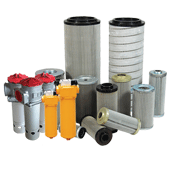
The liquid filter is the most critical component inside the pretreatment section. Raw water from rivers, underground water or circulating wastewater contains large amounts of suspended dirt and particulate impurities. Without the interception of liquid filters, these pollutants will directly scour and pollute the expensive RO membrane elements, leading to irreversible membrane performance degradation in a short period. Standard liquid filters are equipped with pressure difference monitoring ports to remind maintenance staff to replace filter materials in a timely manner.
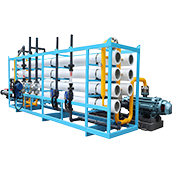
We adopt modular structural design for all our industrial RO products. Small and medium water demand customers can select integrated skid products designed according to the process framework of Professional Design of RO System for Industrial Pure Water Stations, featuring convenient installation and simple debugging. For large industrial park centralized water supply projects, we adopt combined multi-membrane rack layout, and all finished equipment will pass full performance inspection in accordance with the data indicators of Industrial RO Equipment Acceptance Criteria for High-standard Water Stations before factory delivery.
Many users only focus on the working state of RO membranes while ignoring the matching operation of pretreatment liquid filters and high-pressure pumps, resulting in the actual service life of equipment being far lower than the theoretical value. A complete set of industrial RO equipment includes seven core structural parts: liquid filter & multimedia tank pretreatment assembly, anti-scaling dosing device, high-pressure pump unit, RO membrane pressure vessel group, concentrated water flow regulating assembly, conductivity/flow online monitoring instruments and PLC automatic control system. When each module operates in a coordinated state, the whole RO system can steadily supply stable pure water for product mixing, workpiece cleaning, boiler makeup water and workshop circulating cooling water.
2. Working Principle of Industrial Reverse Osmosis Equipment
The core working theory of industrial RO equipment is based on natural osmosis and reverse pressure-driven separation. In the natural state, water molecules will spontaneously diffuse from the low-concentration pure water side to the high-concentration salt water side through semi-permeable membranes, and this phenomenon is defined as osmosis. Reverse osmosis applies external high pressure to the high-concentration raw water side to reverse the natural osmosis direction, so that pure water molecules pass through the polyamide semi-permeable RO membrane, while most dissolved salts, colloids, microorganisms and particulate pollutants are trapped on the concentrated water side and discharged out of the system along with concentrated water flow.
The whole running flow and corresponding functional principle of each section are shown below:
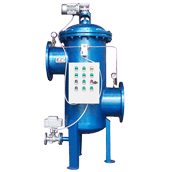
First stage: Pretreatment filtration principle. Raw water first passes through multi-stage liquid filters and multimedia filter tanks to remove suspended solids, rust, sediment and large organic particles. This step controls the inlet SDI value of raw water within the qualified range, which is the basic precondition for the normal operation of subsequent membrane components.
Second stage: Dosing system working principle. The metering pump quantitatively injects anti-scaling agent into the pretreated raw water to inhibit the precipitation of calcium and magnesium scale inside the membrane surface under high-pressure operation. Biocide can also be added regularly to restrain the breeding of microorganisms inside the pipeline and membrane elements.
Third stage: High-pressure boosting principle. The high-pressure pump raises the raw water pressure to the rated working pressure (1.0~1.5MPa for conventional industrial RO systems), providing enough driving pressure for pure water molecules to penetrate the RO membrane layer.
Fourth stage: Membrane separation & automatic control principle. Under stable pressure, pure water permeates the membrane to form product water for production use; concentrated water with high salt content is discharged after flow regulation by the concentrated water valve. The PLC control system automatically executes periodic automatic flushing according to set parameters to wash away pollutants attached to the membrane surface.

3. Core Technical Parameters of Industrial RO Equipment
Standard operating pressure: Conventional industrial RO systems run stably at 1.0MPa to 1.5MPa, consistent with the design parameters inside Professional Design of RO System for Industrial Pure Water Stations.
Liquid filter control index: The system requires raw water inlet SDI ≤ 5; replace filter cartridges once the inlet and outlet pressure difference exceeds 0.05 MPa.
System water recovery rate: Single-stage industrial RO maintains a recovery rate of 60% ~ 78%, and excessive recovery operation is prohibited for a long time.
Desalination rate of RO membrane elements: The nominal salt rejection rate of standard industrial 8040 membrane elements is higher than 97%, which must reach the acceptance standard specified in Industrial RO Equipment Acceptance Criteria for High-standard Water Stations.
Allowable operating temperature: The applicable raw water temperature range is 5℃ ~ 40℃; too high or low water temperature will affect membrane permeation efficiency.
Online monitoring indicators: Real-time monitoring of product water conductivity, system inlet flow and membrane front-rear differential pressure to judge the system operating state.
4. Quality Control Standards For Industrial RO Equipment Production
Firstly, pretreatment component quality standard: Liquid filter shells adopt pressure-resistant industrial material, and the filter core uses high dirt-holding precision filter material to avoid rapid blockage under long-term raw water impact.
Secondly, membrane element matching quality: Equip genuine industrial-grade RO membrane elements with stable desalination performance, inferior membranes will cause actual water yield and water quality to fail to meet design requirements.
Thirdly, high-pressure pump and pipeline quality: Select pumps with stable pressure output; UPVC or stainless steel pipelines with standard wall thickness are used to prevent pipeline deformation and water leakage under long-term pressure load.
Fourthly, finished machine debugging standard: Every set of industrial RO equipment will complete 72-hour full-load operation test before leaving the factory to record actual water yield, conductivity and pressure data to ensure consistency with theoretical design values.
Fifthly, complete supporting documents: Equip formal operation manuals, P&ID drawings and equipment maintenance lists for each delivered RO system to guide users in standardized operation.
5. Application Fields Based On RO Equipment Working Characteristics
Pharmaceutical factory purified water preparation: Utilize the high desalination performance of RO equipment to produce purified water that meets pharmaceutical industry standards, matched with sanitary pretreatment liquid filter assemblies.
New energy lithium battery production workshop: Adopt two-stage RO combined equipment to prepare ultra-pure water for electrode cleaning and battery material synthesis.
Food and beverage processing industry: Use single-stage integrated RO equipment designed by Professional Design of RO System for Industrial Pure Water Stations to treat production process water and ingredient water.
Thermal power plant boiler feed water treatment: RO removes scale-forming ions in raw water to reduce boiler pipe scaling and corrosion problems.
Chemical factory industrial circulating water treatment: Eliminate salt and organic pollutants in wastewater through RO separation to realize water resource recycling.
Electronic component cleaning workshop: High-purity water prepared by RO equipment effectively avoids ion residue affecting the yield rate of precision electronic products.
Raw water quality, production water demand and operating environment of different factories are different. We will configure matching liquid filter grades and membrane specifications according to customer actual working conditions on the basis of fixed equipment working principles, balancing equipment input cost and long-term stable operating performance.

6. Frequently Asked Questions (FAQ)
FAQ1: What is the overall working flow of complete industrial reverse osmosis equipment?
A: Raw water → liquid filter pretreatment → dosing treatment → high-pressure pump boosting → RO membrane separation → product water collection & concentrated water discharge, supported by the structural layout of Professional Design of RO System for Industrial Pure Water Stations and the acceptance indexes of Industrial RO Equipment Acceptance Criteria for High-standard Water Stations.
FAQ2: Why does liquid filter affect the normal working efficiency of RO membranes?
A: The liquid filter intercepts particulate impurities in raw water. Once the filter is blocked or fails, impurities will directly attach to the membrane surface, causing membrane fouling, rising differential pressure and decreased water production efficiency, and even causing permanent damage to RO membrane elements.
FAQ3: Can industrial RO equipment filter out all impurities in raw water only by relying on RO membranes?
A: No. RO membranes are precision separation components with weak anti-pollution ability. The pretreatment liquid filter must bear the primary interception task, otherwise the membrane will be quickly polluted and scrapped in a short running time.
FAQ4: Why is a high-pressure pump a necessary component for RO equipment to work normally?
A: Natural osmosis will make water flow to the high-salt side spontaneously. The high-pressure pump provides reverse driving pressure to overcome the osmotic pressure, so that pure water can penetrate the semi-permeable membrane smoothly to complete the water purification process.
FAQ5: What factors will reduce the working efficiency of industrial RO equipment in daily operation?
A: Liquid filter blockage, membrane surface scaling/biological fouling, abnormal high-pressure pump pressure, too high or too low raw water temperature and unreasonable concentrated water flow setting will all reduce the overall working efficiency of the RO system.
FAQ6: Does the working principle of small integrated RO skids differ from large multi-module RO water stations?
A: The core separation principle is completely consistent. The difference only lies in the quantity of membrane elements, supporting pretreatment scale and automatic control logic; the basic water passing and separation process follows the same reverse osmosis mechanism.
Other products you want to know about:
Automatic Back-flushing Filter
Ultrafiltration equipment
Precision water filter