Standard Containerized RO Unit | Integrated Turnkey Water Treatment System
Standard containerized RO unit is a fully pre-assembled, tested and enclosed reverse osmosis water treatment system built inside standard shipping containers for fast field deployment and mobile water production demands. It is compulsory to integrate properly sized liquid filter assemblies into the front pretreatment zone inside the container compartment, stabilizing inlet water quality and blocking particulate contaminants to protect the core RO membrane modules from premature fouling and degradation. Project integrators and industrial buyers can match system layout and internal component configuration referring to the structural parameters of Integrated Reverse Osmosis Unit for Compact and Efficient Water Production and overall mechanical durability standards laid out in Stainless Steel Frame RO Equipment for Durable Industrial Water. This article systematically explains the integral structure of containerized RO units, classic reverse osmosis separation theory combined with container layout design, unified standardized technical indicators, whole-container manufacturing and testing quality control criteria, diversified industrial application scenarios and standardized installation & commissioning workflows. This containerized RO solution covers small 20ft standard container RO systems and large 40ft multi-module containerized pure water plants, widely deployed in temporary construction sites, remote mining areas, oil & gas fields, emergency water supply projects and scattered industrial park water stations. Learning the structural features and operating rules of standard containerized RO units shortens project construction cycles and cuts extra civil engineering costs for on-site water treatment infrastructure construction.

1. Product Introduction of Standard Containerized RO Unit
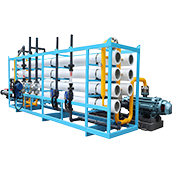
A standard containerized RO unit packages the full set of water treatment equipment including pretreatment devices, membrane separation racks, dosing systems, power assemblies and intelligent control cabinets inside ISO standard shipping containers. Unlike traditional split-type on-site assembled RO equipment, all pipelines, instruments and electrical wiring are pre-installed and fully commissioned inside the factory before delivery, requiring only external raw water pipe connection, drain pipe docking and power access to realize formal water production after transportation to the project site.
Liquid filter equipment is a fixed essential component inside the container pretreatment cabin. Limited by the fixed internal space of the container, liquid filters adopt compact integrated structural design. If the filter cartridge is blocked or fails, it will directly affect the operating stability of the whole container RO system, and the narrow internal space of the container also increases the difficulty of later maintenance when the filter fails abnormally. Therefore, the matching precision and dirt holding capacity of liquid filters are strictly calibrated during the factory assembly stage.
For small-scale temporary water demand projects such as road construction camps and small mineral processing sites, 20ft standard containerized RO equipment is designed and produced according to the compact layout mode of Integrated Reverse Osmosis Unit for Compact and Efficient Water Production, featuring light weight, convenient vehicle hoisting and flexible relocation. For long-term fixed large-volume water supply needs such as oil field base and chemical branch factories, 40ft extended containerized RO systems are adopted; all internal frames, pipeline brackets and supporting structural parts are manufactured and inspected in accordance with the anti-corrosion and durability standards of Stainless Steel Frame RO Equipment for Durable Industrial Water.
Most on-site assembled RO projects have problems such as messy pipeline layout, irregular wiring and long debugging cycles, while standardized containerized RO units solve the above pain points through factory standardized assembly. Our complete standard containerized RO system consists of seven core built-in modules: sealed liquid filter & multimedia pretreatment unit, integrated chemical dosing cabinet, vibration-damping high-pressure pump group, fixed RO membrane pressure vessel frame, built-in online monitoring instrument set, independent waterproof PLC control room, and container internal drainage & ventilation system. After arriving at the destination and completing simple external interface connection, the containerized RO unit can continuously supply stable qualified pure water for on-site equipment cleaning, production ingredient preparation, boiler makeup water and domestic purified water for staff.
2. Reverse Osmosis Working Principle & Container Layout Design Logic
The core water purification principle of containerized RO equipment is completely consistent with conventional industrial reverse osmosis equipment. Driven by the pressure output of the high-pressure pump, raw water first flows into the liquid filter group inside the container to intercept suspended solids, sediment and colloidal impurities, controlling the SDI value of inlet water within the safe range required by membrane operation. After the anti-scaling agent is added evenly by the dosing system, water molecules pass through polyamide semi-permeable RO membranes under rated working pressure, while salt ions and harmful pollutants are intercepted in the concentrated water pipeline and discharged outward. The biggest difference lies in the overall layout planning of each functional component adapting to the closed, limited internal space of the container.
2.1 Four-stage working flow inside standard container RO unit
Stage 1: Container internal pretreatment filtration. Raw water enters the liquid filter assembly arranged at the water inlet end of the container to complete primary impurity interception and water quality regulation.
Stage 2: Built-in dosing system operation. The metering dosing device fixed on the container wall steadily adds scale inhibitors and biocides to prevent membrane scaling and biological contamination during long-term sealed operation.
Stage 3: Vibration-damped high-pressure pressurization. The high-pressure pump is equipped with shock-absorbing bases to reduce vibration transmission inside the closed container and avoid pipeline loose joints caused by long-term vibration.
Stage 4: Membrane separation & centralized control operation. The membrane rack is fixed in the middle area of the container, and the independent control cabin is set on one side of the container to realize closed automatic operation, automatic flushing and real-time data monitoring of the whole system.
2.2 Container internal layout design logic
The container space is divided into independent functional zones: pretreatment zone, dosing zone, membrane separation zone and electrical control zone. Ventilation fans and moisture-proof devices are installed inside the closed container to avoid damp and hot air accumulation leading to electrical component short circuit and pipeline corrosion. Liquid filters are placed at the foremost end of the water flow route to facilitate daily replacement and maintenance operations for operators from the container access door. All pipelines are fixed with special pipe clamps to prevent pipeline displacement and damage during container road transportation and hoisting.

3. Core Standard Technical Parameters of Standard Containerized RO Unit
Container specification: Optional 20ft standard container / 40ft high cube container, the internal stainless steel support frame complies with the material specification of Stainless Steel Frame RO Equipment for Durable Industrial Water.
Built-in liquid filter technical index: Design flow matches the system rated water output, inlet-outlet pressure difference alarm threshold is 0.05MPa, system inlet raw water SDI ≤ 5 permanently.
System rated operating pressure: Stably operate within 1.0 ~ 1.5MPa, all pressure gauges adopt vibration-resistant sealed type adapted to transportation bumping.
System water recovery rate: Single-stage containerized RO maintains stable recovery rate of 60% ~ 75% under full-load operation.
Container internal environmental configuration: Equipped with ventilation fans, moisture-proof dehumidification devices, lighting systems and internal drainage grooves to adapt to long-term closed operation.
Whole machine transportation protection: All precision instruments adopt anti-collision fixing measures, and the whole system completes vibration simulation test before factory delivery.
4. Quality Control Standards for Standard Containerized RO Unit Production
First, container shell transformation quality: The container body undergoes rust removal, anti-corrosion paint spraying and internal thermal insulation treatment to adapt to outdoor long-term placement in various climatic environments.
Second, liquid filter built-in matching quality: The filter tank body is fixed with anti-vibration supports, and the filter material has good anti-impact performance to avoid filter element displacement damage during container transportation.
Third, internal pipeline and frame welding quality: Stainless steel pipelines adopt standardized welding process, and the frame structure completes vibration durability test to resist road bump load during transportation.
Fourth, factory full-load overall test: Each finished containerized RO unit runs for 72 hours continuously under full load inside the factory to record water yield, water quality and pressure data to ensure stable performance after delivery.
Fifth, complete supporting delivery materials: Equip container layout drawings, P&ID diagrams, equipment operation manuals and spare parts list for each shipped container RO system.

5. Industrial Application Scenarios of Standard Containerized RO Unit
Open pit mining remote water supply stations: Containerized RO equipment can be transported to mining areas by truck without building fixed water treatment workshops, realizing fast water supply input.
Oil & gas field surface supporting water system: Sealed container structure adapts to field complex weather and volatile gas environment for long-term stable water preparation work.
Temporary large-scale construction projects: Road, bridge and municipal engineering construction camps use container RO units to solve on-site production and domestic water supply problems.
Emergency disaster relief water supply projects: Containerized RO devices can be rapidly mobilized to disaster areas to treat raw water into safe drinking and production purified water.
Scattered small industrial park water stations: Adopt the compact integrated scheme of Integrated Reverse Osmosis Unit for Compact and Efficient Water Production to build distributed water supply points with low civil engineering investment.
Field environmental remediation engineering: Mobile container RO systems treat polluted raw water on-site to meet the water treatment discharge standards of environmental projects.
The raw water quality, local climate conditions and required water output are different in various regions. Our technical team will adjust the configuration grade of built-in liquid filters, internal pipeline thermal insulation layout and container ventilation scheme according to customer actual working conditions, balancing equipment procurement cost and long-term stable running performance.
6. Frequently Asked Questions
FAQ1: What complete functional modules are integrated inside a standard containerized RO unit?
A: It includes built-in liquid filter pretreatment assembly, automatic dosing unit, vibration-damping high-pressure pump set, fixed RO membrane rack, online monitoring instruments, independent PLC control room and container internal ventilation & drainage auxiliary system.
FAQ2: Why is the installation position and performance of liquid filter strictly controlled in containerized RO equipment?
A: The internal space of the container is closed and narrow. Once the liquid filter is blocked or fails, it will quickly cause membrane pollution, and the maintenance operation inside the container will be more complicated than conventional open RO equipment.
FAQ3: Can the containerized RO unit be put into use directly after being transported to the site?
A: After arriving at the site, only three operations need to be completed: connecting raw water inlet pipe, concentrated water & product water drain pipe, and connecting matched power supply, then the system can be started after simple parameter inspection.
FAQ4: What anti-transportation protection measures are adopted for internal components of containerized RO equipment?
A: Membrane elements, precision instruments and pumps are fixed with anti-vibration supports and buffer parts; all pipelines are clamped firmly with special pipe brackets to prevent loose joints caused by vehicle bumping during transportation.
FAQ5: What daily maintenance work needs to be done for standard containerized RO units during operation?
A: Regularly check the pressure difference data of the built-in liquid filter, clean the container internal drainage tank, inspect the operation status of ventilation and dehumidification equipment, and replace aging filter elements according to the pressure difference alarm value.
FAQ6: Will the closed container structure cause high temperature and damp inside to affect the operation of RO equipment?
A: Standard containerized RO units are equipped with forced ventilation fans and moisture-proof dehumidification devices inside. The internal temperature and humidity are kept within the normal working range of electrical and water treatment components without affecting the water purification operation of the RO system.
Other products you want to know about:
Automatic Back-flushing Filter
High Flow Filter Element
Ultrafiltration equipment