Two-stage RO Pure Water System For Industrial High Purity Water Treatment
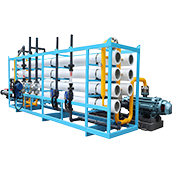
Two-stage RO pure water system adopts dual reverse osmosis desalination process to stably produce high-purity industrial pure water. It is equipped with high-precision liquid filter as core pretreatment facility, and can refer to the 5 T/H RO equipment configuration list for standard scheme design. Compared with single-stage RO equipment and traditional RO vision exchange equipment, this dual-stage solution effectively reduces the operating cost of industrial RO equipment. All equipment passes inspection according to industrial RO equipment acceptance criteria, and we provide standardized RO equipment construction/installation plan for on-site engineering. Widely used in chemical industry and power plants, this paper introduces product composition, working principle, technical specifications, quality control, application fields and common operating problems to guide customers in equipment selection.

1. Product Introduction
Two-stage RO pure water system is a high-efficiency integrated water treatment device built based on industrial reverse osmosis equipment, specially developed for scenarios that demand low conductivity pure water. Different from single-pass reverse osmosis equipment, raw water goes through two independent RO membrane separation processes in sequence to further remove dissolved salts, residual organics and trace pollutants.
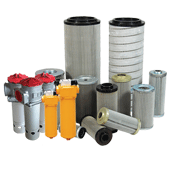
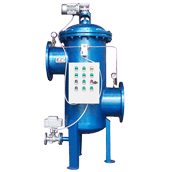
The complete system adopts modular skid-mounted structure. The front-end pretreatment unit is matched with high-performance liquid filter to intercept suspended particles, colloids and impurities, protecting subsequent RO membrane elements from contamination. If you need mature standardized layout, you can check the 5 T/H RO equipment configuration list as basic design reference. Many buyers compare it with RO vision exchange equipment; two-stage RO avoids frequent acid and alkali regeneration required by ion exchange technology and reduces chemical consumption, so the operating cost of industrial RO equipment can be well controlled during long-term operation.
Before shipment, every complete set will be tested strictly following industrial RO equipment acceptance criteria. After delivery, our engineering team can carry out construction and commissioning according to the RO equipment construction/installation plan, greatly shortening the project cycle. If you are confused about model selection, read our RO equipment selection guide for chemical industry or the document Application of RO equipment in power plants, covering mainstream industrial water demand scenarios. When calculating required capacity, you can follow the guidance of how to size industrial reverse osmosis equipment to confirm water yield, recovery rate and supporting pump specifications. We will provide complete industrial RO system flow diagram/P&ID after order confirmation. For large capacity projects, the large-scale RO equipment operation manual includes startup, daily maintenance and shutdown procedures to avoid common faults in industrial RO equipment caused by irregular operation.
Two-stage RO pure water system can steadily produce pure water with conductivity below 5μS/cm. It serves as ideal pre-treatment equipment before EDI ultrapure water modules, and becomes the mainstream choice for enterprises upgrading water purification systems.

2. Working Principle of Two-stage RO Pure Water System
To clearly understand how industrial reverse osmosis equipment works, we further explain the working logic of two-stage series connection. Reverse osmosis is a pressure-driven membrane separation technology. Under external pressure, water molecules penetrate semi-permeable RO membranes, while ions, macromolecular organics, bacteria and heavy metal pollutants are trapped on the concentrated water side.
The whole purification flow is divided into four stages:
Stage1: Pretreatment filtration
Raw water flows through multi-media filter, activated carbon filter and liquid filter. This step removes sediment, residual chlorine and colloids, preventing membrane oxidation, scaling and blockage, which is the most effective method to reduce common faults in industrial RO equipment.
Stage2: First-stage reverse osmosis separation
Pretreated raw water is pressurized by high-pressure pump and enters the first-stage RO membrane housing. Most inorganic salts, pollutants are intercepted. The produced water from first-stage RO generally reaches conductivity between 20~60μS/cm, which still cannot meet high-standard production requirements. Concentrated water can be recovered or discharged according to local environmental regulations.
Stage3: Second-stage reverse osmosis deep desalination
Permeate water from the first RO unit enters the second-stage RO system after pH adjustment and secondary pressurization. Trace residual salts and organics are removed again through membrane separation. After two-stage treatment, stable low-conductivity pure water output is realized.
Stage4: Automatic monitoring and flushing
PLC control system monitors conductivity, operating pressure, flow rate in real time. The system automatically triggers membrane cross-flow flushing during shutdown to wash pollutants attached on membrane surface, extending service life of RO elements.
Compared with single-stage RO, two-stage process greatly improves salt rejection rate and water outlet quality. For enterprises pursuing ultrapure water, two-stage RO can be connected with EDI module to reach 15~18.2MΩ·cm resistivity.
3. Core Technical Parameters
We support customized design according to raw water quality, local temperature and production requirements. Standard technical parameters of two-stage RO pure water system are listed below:
Water production capacity: 0.5m³/h ~ 100m³/h, customizable; 5T/H unit is one of the most widely used standard models, details can be viewed in the 5 T/H RO equipment configuration list
Outlet water conductivity: ≤5μS/cm (adjustable based on raw water TDS)
Comprehensive salt rejection rate: ≥99%
System water recovery rate: 65% ~ 80%
Inlet raw water requirements: Turbidity ≤1NTU, residual chlorine <0.1mg/L, SDI ≤5
Operating temperature: 5℃ ~ 40℃, optimal temperature: 20~28℃
Control mode: Full automatic PLC intelligent control, equipped with online conductivity monitor, high/low pressure protection, automatic flushing function
Optional materials: FRP or stainless steel membrane housing; pipeline optional UPVC, 304 stainless steel or 316L stainless steel
4. Product Quality Standard
All components of our two-stage RO pure water system implement strict quality management standards.
First of all, core RO membrane elements adopt high anti-fouling membrane with stable desalination efficiency. Supporting liquid filter adopts high dirt-holding filter material to guarantee long-term stable pretreatment effect. Pressure vessels, high-pressure pumps, valves and instruments are sourced from well-known reliable brands.
Secondly, every complete equipment needs to pass water pressure test, continuous running test and water quality test before delivery, fully complying with industrial RO equipment acceptance criteria. Skid frame adopts anti-corrosion spraying or stainless steel welding to adapt humid industrial workshop environment. We provide complete technical documents including industrial RO system flow diagram/P&ID and large-scale RO equipment operation manual for daily operation management.
Thirdly, our technical team provides long-distance online guidance and optional on-site service. Standardized maintenance suggestions can effectively control the operating cost of industrial RO equipment and reduce unexpected shutdown caused by common faults in industrial RO equipment.

5. Application Fields of Two-stage RO Pure Water System
Two-stage RO pure water system has wide application coverage in modern industrial manufacturing:
Chemical industry: Refer to RO equipment selection guide for chemical industry; used for fine chemical reaction water, reagent dilution and cleaning water
Power industry: Application of RO equipment in power plants, used for boiler makeup water and cooling circulation pure water
Food and beverage industry: Raw material mixing water, equipment cleaning pure water
Electronic manufacturing: Circuit board cleaning, pre-treatment water for electronic component production
Pharmaceutical industry: Purified water for pharmaceutical auxiliary production
New energy industry: Lithium material production, photovoltaic module cleaning water
Different industries have different standards for pure water indicators. Our engineers can adjust system configuration after analyzing raw water sample reports to match your production requirements.
Frequently Asked Questions
FAQ1
Q: What are the main differences between two-stage RO pure water system and single-stage RO equipment?
A: Two-stage RO carries out secondary desalination on the produced water of first-stage RO. It achieves higher salt rejection rate and lower outlet conductivity. Single-stage RO is only suitable for scenarios with loose water quality requirements. If high-purity water is needed, two-stage solution is more appropriate.
FAQ2
Q: Is two-stage RO pure water system a good alternative to RO vision exchange equipment?
A: Yes. Traditional ion exchange equipment needs regular acid-alkali regeneration and produces waste liquid. Two-stage RO runs continuously without frequent chemical regeneration, easier operation and lower long-term operating cost of industrial RO equipment.
FAQ3
Q: Can I refer to the 5 T/H RO equipment configuration list to design my two-stage RO project?
A: Definitely. The 5 T/H scheme is mature standard configuration. You can take it as the basic framework. Our engineers will adjust pipeline power and membrane quantity according to local raw water quality.
FAQ4
Q: How to reduce common faults in industrial RO equipment during system operation?
A: Equip qualified liquid filter for pretreatment; strictly control inlet water SDI and residual chlorine; perform automatic flushing regularly; operate according to large-scale RO equipment operation manual; arrange periodic membrane cleaning.
FAQ5
Q: Do you provide RO equipment construction/installation plan after order confirmation?
A: Yes. We supply industrial RO system flow diagram/P&ID, foundation drawing and standardized construction/installation plan. On-site technical guidance service can be arranged upon demand.
FAQ6
Q: How to calculate the required capacity of two-stage RO pure water system?
A: You can follow the method in how to size industrial reverse osmosis equipment. The calculation needs to consider daily water consumption, raw water TDS, recovery rate and continuous running hours. Contact our technical team for free scheme calculation.
Other products you may want to know about
Aquatic Alchemy: Unveiling the Marvels of RO
RO membrane
Ultrafiltration equipment