1 Ton/hour Reverse Osmosis Equipment: Compact Pure Water Treatment Unit
1 ton/hour reverse osmosis equipment is a compact skid-mounted pure water production unit designed for small factories and laboratories. It can be matched with the RO equipment remote monitoring system, and provides a cost-effective alternative compared with larger 5 tons/hour reverse osmosis equipment. The miniaturized structure meets strict industrial water standards, and supports customized configuration to adapt to indoor workshop and semi-outdoor operating environments.

Product Description
1 ton/hour reverse osmosis equipment belongs to small-scale integrated water purification equipment. Its rated hourly pure water output reaches 1 cubic meter, specially developed to satisfy decentralized, low-flow water demand. Many small workshops, research laboratories and pilot production lines do not require large water yield, making oversized RO systems cause unnecessary energy waste and space occupation. This compact unit solves such pain points perfectly.
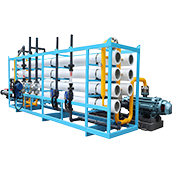
The whole machine adopts integrated frame layout, occupying limited floor space. Clients can choose standard stainless steel frame or carbon steel anti-corrosion structure. If users plan to expand production capacity later, we can provide professional guidance about how to size industrial reverse osmosis equipment, and offer feasible transformation schemes. The equipment can be equipped with simplified automatic control modules, and optionally connect to the RO equipment remote monitoring system to realize online data viewing. All finished machines will be inspected according to unified industrial RO equipment acceptance criteria before delivery.
Working Principle
The core operation logic of 1 ton/hour reverse osmosis equipment relies on membrane separation technology. Raw water firstly enters the pretreatment assembly, where suspended substances, residual chlorine and scaling ions are intercepted to protect internal RO membrane elements. After passing through security filters, water is pressurized by a compact high-pressure pump and flows into membrane shells.
Under pressure driving force, water molecules penetrate semi-permeable membranes to form qualified pure water. Dissolved salts, microorganisms and particulate impurities are trapped and discharged as concentrated water. The built-in program executes regular automatic flushing to reduce membrane surface pollution. Through optimized flow channel design, the system can maintain stable water yield and balance recovery rate under long-term continuous operation.
Technical Features
1. Ultra-compact skid-mounted design:
All pretreatment, pressurization and control components are integrated on a mini frame. It requires less installation space and is convenient for indoor placement and short-distance relocation.
2. Low power consumption matching design:
Equipped with small-flow high-pressure pump matched for 1m³/h water yield. It avoids excess power output, effectively lowering daily operating power consumption.
3. Modular assembly structure:
Key components adopt standardized specifications. Users can independently replace filter materials and membrane elements without complex professional tools.
4. Simplified intelligent control system:
Automatic start-stop, low-pressure protection and membrane flushing functions are reserved. Optional access to the RO equipment remote monitoring system for remote data observation.
5. Flexible configuration options:
According to raw water quality, we adjust pretreatment combinations. The effluent conductivity can be stabilized to meet the water demand of small-scale production and laboratory testing.
Product Advantages
1. Low initial investment cost:
Compared with medium-sized 5 tons/hour reverse osmosis equipment, the purchase cost of this small unit is lower, suitable for enterprises with limited initial budget.
2. Low threshold for installation and operation:
The unit comes pre-assembled. Users only need to connect water pipelines and power supply to put it into operation, without complicated civil construction.
3. Flexible capacity expansion solution:
When water consumption rises later, clients can add a new set of 1 ton/hour reverse osmosis equipment in parallel, or consult us for system upgrade planning.
4. Simple daily maintenance work:
The structure layout is open, making regular inspection, filter replacement and cleaning work easier for operators.
5. Multiple application scene adaptability:
Suitable for indoor workshops, laboratories and mobile pilot projects. We can also provide outdoor protection parts upon request for semi-open installation environment.
Application Fields
1. Chemical laboratory & testing institutions:
Supply purified water for experimental preparation, instrument cleaning and sample testing.
2. Small cosmetics and daily chemical workshops:
Provide process water for raw material mixing and equipment cleaning in small-batch production.
3. Electronics small-batch prototype production lines:
Meet pure water demand for manual circuit board cleaning and electronic component testing.
4. Small food and beverage pilot production workshops:
Produce raw water for small-scale trial production of beverages, sauces and health products.
5. Small medical device processing factories:
Supply cleaning water for medical consumables processing, matching relevant hygiene requirements.
6. Water quality demonstration and pilot research projects:
Serve as test water making equipment for water treatment research institutions to carry out water process tests.
FAQs
Q1: What raw water quality can 1 ton/hour reverse osmosis equipment adapt to?
A1: The standard model adapts to conventional surface water and municipal tap water. If raw water salinity is high, we will adjust pretreatment configuration. You can send us water quality reports for customized scheme design.
Q2: Can this equipment realize remote monitoring of operating data?
A2: Yes. We support optional access to the RO equipment remote monitoring system, which can remotely check real-time pressure, flow rate and effluent conductivity data.
Q3: Can multiple sets of 1 ton/hour reverse osmosis equipment run in parallel to increase total water yield?
A3: Parallel installation is feasible. If you have long-term capacity expansion plans, our engineers can provide relevant design suggestions about how to size industrial reverse osmosis equipment.
Q4: What kinds of faults frequently appear on small-scale RO equipment during long-term running?
A4: The most common issues include filter element blockage and membrane surface scaling. We will supply detailed operation manuals with regular maintenance guidance to effectively reduce such risks.
Q5: What acceptance standards will be adopted before shipment?
A5: All equipment will complete continuous water yield test according to unified industrial RO equipment acceptance criteria. We can provide test records before delivery for your confirmation.
You May Also Be Interested In
5 tons/hour reverse osmosis equipment
RO equipment remote monitoring system
How to size industrial reverse osmosis equipment
Carbon steel epoxy-coated RO equipment
Industrial RO equipment energy-saving retrofit