Compact 1 T/H Output Reverse Osmosis Equipment for Small Workshops
Compact 1 T/H output reverse osmosis equipment is miniaturized skid-mounted purified water unit designed for small workshops, laboratories and pilot production lines with low continuous water demand. It is equipped with high-precision liquid filter as essential pretreatment barrier to intercept suspended pollutants and prevent early fouling of RO membrane elements under long-term intermittent operation. You can match supporting water treatment solutions such as Compact 5 T/H Reverse Osmosis Equipment for Workshop Purified Water and 10 T/H Output Reverse Osmosis System for Medium Industrial Production to build scalable factory water supply workflows. This mini RO system steadily removes soluble salts, colloids, heavy metals and particulate impurities, supplying qualified purified water for reagent preparation, small-batch production and equipment cleaning. The integrated compact structure occupies minimum floor area and supports simple installation and automatic unattended running. Widely adopted in cosmetic labs, small fine chemical workshops, R&D pilot lines and small food processing sites, this article elaborates product composition, working principle, technical indicators, quality standards, application scenarios and typical operation challenges to support your small-scale purified water project planning.

1. Product Introduction
1 T/H output reverse osmosis equipment is miniaturized industrial reverse osmosis system developed for small-scale production, laboratory and pilot test scenarios. Many R&D laboratories, small processing workshops and startup factories do not require large water yield, but still demand stable purified water. Large-capacity RO equipment leads to excessive investment and low equipment utilization rate. The 1 cubic meter per hour reverse osmosis equipment perfectly matches low-flow water demand, balancing footprint, initial cost and daily operation expenses.
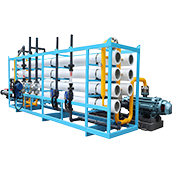
The whole unit adopts fully integrated skid-mounted modular design. Compact pipeline layout and optimized membrane assembly guarantee stable 1m³/h permeate flow under intermittent or continuous operation. Front pretreatment unit is equipped with high-performance liquid filter to intercept sediment, fine particles and colloidal pollutants, lowering membrane fouling risk and extending the service life of reverse osmosis membrane components.
Enterprises can realize capacity expansion through modular combination: when later production expands, multiple sets of 1 T/H RO equipment can operate in parallel; for scaled-up production workshops, users can upgrade to larger models including Compact 5 T/H Reverse Osmosis Equipment for Workshop Purified Water and 10 T/H Output Reverse Osmosis System for Medium Industrial Production. If ultra-pure water is required for high-standard lab testing, this primary RO unit can be matched with two-stage RO or EDI modules for further deep deionization.
Water treatment engineers often distinguish 1 T/H small-flow reverse osmosis equipment from household water purifiers and medium industrial RO systems. Domestic purification equipment cannot meet industrial continuous operation and water quality stability standards. The 1 T/H industrial reverse osmosis equipment adopts genuine industrial-grade anti-fouling RO membranes, complete dosing system and automatic flushing function, designed to adapt fluctuating raw water quality in industrial environments. Produced purified water can be used for lab medium preparation, small-batch raw material mixing, experimental equipment cleaning and production auxiliary water. Separated concentrated water can be recycled for site ground cleaning. This mini industrial RO equipment has become preferred supporting water treatment equipment for newly built small workshops and R&D laboratories.
2. Working Principle of 1 T/H Output Reverse Osmosis Equipment
Reverse osmosis is pressure-driven physical membrane separation technology. Under external driving pressure higher than raw water natural osmotic pressure, water molecules penetrate semi-permeable industrial anti-fouling RO membranes. Soluble salts, heavy metal ions, colloids and suspended particulate contaminants are trapped on the concentrated water side, realizing deep purification of low-flow raw water.
The complete small-scale water treatment workflow is divided into four core stages:
Stage1: Multi-stage precision pretreatment filtration
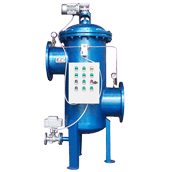
Raw water sequentially flows through multimedia filter, activated carbon filter and liquid filter. This procedure removes suspended solids, residual chlorine and large colloidal impurities, reduces water turbidity and SDI value, and provides qualified inflow conditions for the 1 T/H RO main unit.
Stage2: Dosing adjustment and pressurization
Anti-scaling agent and biocide are added quantitatively according to raw water quality characteristics to suppress membrane scaling and microbial growth. Pretreated qualified water is boosted by compact high-pressure pump to reach the optimal working pressure of RO membrane elements.
Stage3: Reverse osmosis deep purification separation
Pressurized raw water enters membrane pressure vessels. RO membranes intercept ionic and particulate pollutants. Water is separated into two streams: low-conductivity purified water for production and laboratory use, and high-salinity concentrated wastewater. Purified water is stored in clean water tank for on-demand use.
Stage4: Intelligent monitoring and automatic flushing
PLC intelligent control system continuously monitors effluent conductivity, operating pressure and liquid tank level. Automatic cross-flow flushing activates during shutdown to wash pollutants attached on membrane surfaces. Operators can set regular chemical cleaning cycles according to raw water quality.
For laboratory ultra-pure water projects, two-stage reverse osmosis configuration can be adopted on the basis of this single-stage 1 T/H RO equipment.

3. Core Technical Parameters
We provide personalized customized design based on daily water consumption, raw water quality and user’s water quality standards. Standard technical indicators of 1 T/H output reverse osmosis equipment are as follows:
Rated water production capacity: 1m³/h (custom adjustable)
Single-pass salt rejection rate: ≥97%
System water recovery rate: 65% ~ 75%, adjustable based on raw water salinity
Outlet water conductivity: adjustable; two-stage RO option available for conductivity below 10μS/cm
Inlet water requirements after pretreatment: Turbidity ≤1 NTU, SDI ≤5, residual chlorine <0.1mg/L
Working temperature: 5℃ ~ 40℃
Control mode: Full-automatic PLC control, online conductivity monitoring, high-low pressure protection, automatic membrane flushing
Material specification: Compact anti-corrosion skid frame; FRP membrane housing; UPVC or 304 stainless steel pipeline; industrial anti-fouling reverse osmosis membrane
4. Product Quality Standard
All 1 T/H output reverse osmosis equipment complies with small industrial water treatment equipment manufacturing specifications.
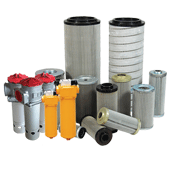
Firstly, core RO membrane elements adopt industrial anti-fouling reverse osmosis membranes. Supporting liquid filter uses high dirt-holding filter material to guarantee stable pretreatment effect and prevent particle scratch on membrane surfaces. Pumps, sensors and valves adopt reliable industrial brands suitable for intermittent operation.
Secondly, each complete unit passes hydraulic pressure test and continuous running stability test before delivery. The compact skid base adopts anti-rust anti-corrosion coating. We supply complete flow drawings, installation guidelines and operation manuals.
Thirdly, our professional technical team provides remote online guidance and optional on-site commissioning service. Standardized maintenance plans effectively slow down scaling and organic fouling, extend membrane service life and ensure stable purified water supply for laboratories and small workshops.

5. Application Fields of 1 T/H Output Reverse Osmosis Equipment
This mini industrial reverse osmosis system is widely used in small-scale production and research scenarios:
R&D laboratory: Chemical experiment, biological medium preparation purified water
Small cosmetic workshop: Sample development, small batch formula blending water
Small fine chemical factory: Pilot synthesis and reagent dilution process water
Startup food processing site: Small-batch product testing and equipment cleaning water
Small electroplating prototype workshop: Workpiece trial rinsing purified water
Medical and health product pilot production line: Raw material preparation supporting water
Different application scenarios have different requirements on water conductivity and microbial indicators. Our engineers optimize pretreatment scheme and operation parameters after analyzing local raw water samples, to match user’s production and experimental standards.
Frequently Asked Questions
FAQ1
Q: What is the difference between 1 T/H industrial RO equipment and household reverse osmosis machines?
A: Household RO machines are only suitable for domestic use. 1 T/H industrial reverse osmosis equipment adopts industrial membranes, complete pretreatment and automatic flushing system, which can adapt long-term intermittent industrial operation and meet industrial production water standards.
FAQ2
Q: Can I upgrade the 1 T/H RO system to higher capacity later?
A: Yes. Multiple 1 T/H equipment can run in parallel. If production expands greatly, users can directly upgrade to Compact 5 T/H Reverse Osmosis Equipment for Workshop Purified Water or 10 T/H Output Reverse Osmosis System for Medium Industrial Production.
FAQ3
Q: What function does liquid filter perform in 1 T/H reverse osmosis equipment?
A: Liquid filter intercepts sediment, colloids and suspended particles in raw water, prevents blockage and scratch of RO membrane surface, reduces cleaning frequency and extends membrane service life under intermittent operation.
FAQ4
Q: Can 1 T/H reverse osmosis equipment run unattended automatically?
A: Yes. Equipped with PLC automatic control, high/low pressure protection and automatic flushing function. After commissioning, it can realize unattended operation for small workshops and laboratories.
FAQ5
Q: Is two-stage reverse osmosis necessary for laboratory projects?
A: Single-stage RO meets general experiment demands. Two-stage reverse osmosis is recommended for high-precision analytical experiments requiring ultra-low ionic impurities.
FAQ6
Q: What regular maintenance needs to be carried out on 1 T/H RO equipment?
A: Regularly replace filter cartridges inside liquid filter; control anti-scaling agent dosage reasonably; enable automatic membrane flushing; record effluent conductivity data regularly; perform chemical cleaning once scaling causes water yield decline.
Other products you want to know about:
Precision water filter
High Flow Cartridge Filter
Ultrafiltration equipment