Reverse Osmosis Membrane Element for Industrial Water Treatment Systems
Reverse osmosis membrane element acts as the core separation component for water desalination and industrial water purification projects. This high‑performance liquid filter removes dissolved salts and contaminants to produce high‑quality permeate water for manufacturing and municipal facilities. Paired with reliable pre‑filtration consumables, the ro membrane element achieves stable salt rejection and extended service life, supporting long‑term continuous operation of water treatment and ultrafiltration combined process.
Product Introduction
Water treatment plants widely combine reverse osmosis and ultrafiltration technology for municipal water supply, industrial wastewater reuse, seawater desalination and boiler feed‑water preparation. As the heart of desalination equipment, reverse osmosis membrane element separates dissolved salts, heavy metal ions and organic pollutants from raw water under driving pressure. However, membrane surfaces are extremely susceptible to fouling caused by suspended solids, colloids and granular impurities from incoming water. Without effective pre‑filtration protection, particulate contaminants will scratch and block membrane channels, leading to declined water yield, reduced salt rejection and premature membrane failure.
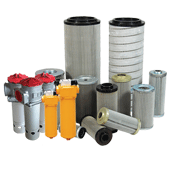
System designers and project integrators always attach great importance to pretreatment configuration when deploying RO‑UF combined units. Before raw water enters reverse osmosis membrane element, pre‑filtration adopts Pall High Flow Filter Element and Parker High Flow Filter to intercept particles and colloids. These security filter consumables play a vital barrier role and reduce fouling risk for downstream reverse osmosis and ultrafiltration equipment. Reverse osmosis membrane element is assembled by multi‑layer rolled polyamide composite membrane sheets, flow‑channel mesh and central perforated tube. Under pressure drive, water molecules pass through the membrane surface while most dissolved salts are intercepted. For full‑scale water plants, operators also install Pentair High Flow Filter to further stabilize incoming water quality and mitigate membrane pollution.
The service lifespan of reverse osmosis membrane element largely depends on inlet SDI value. Strict pre‑filtration by Membrane Filter Cartridge keeps SDI below 3, which is the key condition to maintain rated flux and salt rejection. In actual operation, ultrafiltration equipment is usually arranged before reverse osmosis unit as primary pretreatment. Ultrafiltration removes colloids and large‑molecule organics, then security filter cartridges do final particle trapping, jointly protecting reverse osmosis membrane element. When membrane performance degrades to the threshold, users need to replace membrane elements and matching pre‑filtration cartridges to restore whole‑system performance.

Working Principle
Reverse osmosis membrane element works based on reverse osmosis separation principle. Under external pressure higher than solution osmotic pressure, water molecules penetrate through polyamide composite membrane, while most dissolved salts, heavy metal ions, colloids and macromolecular organics are rejected on the raw‑water side. Concentrated wastewater flows along the membrane surface and is discharged as concentrate water, and purified permeate water flows into central collecting tube for collection.
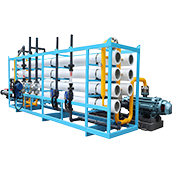
In practical RO‑UF combined process, raw water first flows into ultrafiltration equipment. Ultrafiltration intercepts suspended solids, bacteria and colloids. After ultrafiltration treatment, water goes through security pre‑filtration by high‑flow filter cartridges, removing residual fine particles. Qualified feed water is then pumped into reverse osmosis membrane element. The membrane element separates salt content and outputs desalted permeate water.
Fouling is the main factor damaging reverse osmosis membrane element. Particle deposition, organic adsorption and biological growth will cover membrane surface, narrow flow channels and reduce water flux. This explains why pre‑filtration and ultrafiltration pretreatment cannot be omitted. Even with ultrafiltration protection, fine residual particles still need to be captured by security filter cartridges to avoid particle abrasion on membrane sheets. Once the membrane element suffers irreversible fouling, chemical cleaning can only recover partial performance, and element replacement becomes necessary.
Technical Parameters
| Item | Specification |
|---|
| Membrane Material | Polyamide Thin‑Film Composite |
| Operating pH Range | 2.0‑11.0 |
| Maximum Operating Temperature | 45℃ |
| Maximum Operating Pressure | 4.14 MPa |
| Typical Salt Rejection Rate | 99.2%‑99.7% |
| Feed Water SDI Requirement | ≤3 |
| Feed Water Turbidity | ≤1 NTU |
| Common Element Size | 4040, 8040 |
| Matching Pretreatment | Ultrafiltration + High flow security filter cartridge |
| Chemical Cleaning pH Range | 1.0‑12.0 |
Different working scenarios require corresponding membrane model selection. For seawater desalination, high‑pressure seawater‑resistant reverse osmosis membrane element shall be adopted. For brackish‑water treatment, low‑pressure membrane elements are preferred. Our technical team can provide model‑selection suggestion according to raw‑water report, system flow rate and pre‑treatment configuration including ultrafiltration and security filter.
Quality Assurance
Stable‑quality reverse osmosis membrane element determines long‑term performance of whole water‑treatment system. Qualified membrane elements go through multi‑item performance inspection before factory delivery. Manufacturers test initial flux, salt rejection, pressure resistance and anti‑fouling property for every batch. Membrane sheets must be free of pinhole defects, and winding tightness is strictly controlled to prevent channel‑short‑circuit risk under high‑pressure operation.
Except for membrane element itself, supporting pretreatment consumables also need strict quality control. Poor‑quality security filter cartridges may bring fiber shedding risk, which will scratch membrane surface and cause permanent performance loss. Our matching pre‑filtration products are manufactured under ISO9001 quality‑management system. Each batch completes bubble‑point test, pressure‑resistance test and dirt‑holding capacity inspection. Test reports can be offered for large‑scale EPC water‑treatment projects.
Regular on‑site monitoring is required after installation. Operators record permeate flow, salt rejection, inlet‑outlet pressure difference and feed‑water SDI value. When pressure difference rises rapidly, check ultrafiltration operating status and replace security filter cartridges timely, so as to reduce fouling speed of reverse osmosis membrane element and extend its service cycle.

Application Fields
Reverse osmosis membrane element is widely applied in water‑treatment projects matched with ultrafiltration pretreatment.
Seawater and Brackish Water Desalination: Remove salt content to produce drinking water and industrial make‑up water.
Electronics and Semiconductor Industry: Produce high‑purity deionized water after ultrafiltration‑RO combined process.
Power Plant Boiler Feed‑water Treatment: Reduce ion content of boiler feed water to prevent pipeline scaling.
Industrial Wastewater Reuse: Treat factory wastewater after ultrafiltration, realize water recycling by reverse osmosis.
Food & Beverage Production: Purify process water for beverage, food processing lines.
Municipal Water Reclamation: Municipal sewage advanced treatment to realize water resource reuse.
In above‑mentioned projects, ultrafiltration acts as primary pretreatment, high‑flow security filter serves as safety barrier, and reverse osmosis membrane element undertakes core desalination work. Reasonable combination of these units lowers overall operating cost and improves system stability.
FAQ
Q1: What is the difference between reverse osmosis membrane element and ultrafiltration membrane?
A1: Reverse osmosis membrane element intercepts dissolved salts, ions and small‑molecule organics under high pressure. Ultrafiltration mainly removes colloids, bacteria and suspended solids, and cannot remove dissolved salts. Ultrafiltration is usually used as pretreatment for reverse osmosis system.
Q2: Why does reverse osmosis membrane element need high‑flow filter cartridge for protection?
A2: Even after ultrafiltration treatment, trace fine particles may still exist in water. Security filter cartridges capture residual particles, avoiding scratch and abrasion on RO membrane sheets, and lowering membrane fouling probability.
Q3: What SDI value of feed‑water is suitable for reverse osmosis membrane element?
A3: Standard requirement is feed‑water SDI ≤3. Stable SDI index relies on joint guarantee of ultrafiltration equipment and security pre‑filtration. If SDI keeps high, check ultrafiltration operating status and filter‑cartridge replacement cycle.
Q4: Can chemical cleaning fully restore the performance of fouled reverse osmosis membrane element?
A4: Chemical cleaning can recover partial flux for reversible fouling. For irreversible damage such as membrane surface scratch, fiber pollution or membrane sheet degradation, cleaning cannot work and membrane‑element replacement is required.
Q5: How long is the service life of reverse osmosis membrane element?
A5: Under qualified feed‑water quality and standardized operation, service life is generally 3‑5 years. Poor pretreatment, frequent impact of unqualified incoming water will shorten its service life greatly.
Q6: What supporting spare parts do I need to prepare for reverse osmosis‑ultrafiltration combined system?
A6: You need to prepare reverse osmosis membrane element replacements, security high‑flow filter cartridges, ultrafiltration maintenance chemicals, and testing instruments for SDI, pressure and water‑quality indicators.
Other products you may want to know about:
cartridge filter housing
self-cleaning filter
PP melt-blown filter