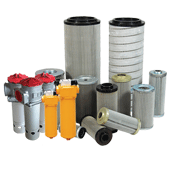
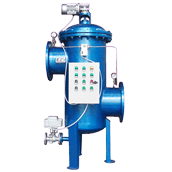
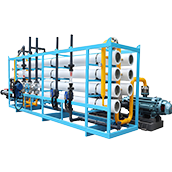
RO Security Filter Cartridge: Protecting Reverse Osmosis Systems and Ensuring Pure Water Quality
An
RO security filter cartridge is the final pre-filtration stage installed directly upstream of a
reverse osmosis (RO) membrane in any water purification train. Its job is to capture residual sediment, rust flakes, activated carbon fines, colloidal particles and suspended solids that slip through earlier filters, so that the delicate RO membrane surface is never scratched, blocked or fouled. This one small cartridge protects permeate quality, stabilizes operating pressure, extends membrane life and lowers the total cost of ownership across home drinking water systems, commercial boilers, food and beverage processing, electronics manufacturing and industrial water recycling.
1. Product Introduction
The RO security filter cartridge is a high-efficiency pre-filtration element designed specifically to sit between the post-carbon or sediment stage and the reverse osmosis membrane housing. Compared with ordinary sediment filters, it uses a dense, uniformly graded media structure and tighter micron rating, typically between 1 and 5 micrometers, so that particles which would otherwise reach the membrane are removed before they can do harm. Most housings follow standard 10-inch, 20-inch or big-blue dimensions, which makes the cartridge a direct drop-in upgrade for existing RO skids and under-sink units without any re-plumbing. Inside, the water passes through a tightly wrapped melt-blown or pleated polypropylene matrix, supported by a rigid inner core that prevents collapse even under pressure spikes. The outer shell is food-grade, BPA-free polypropylene, with no adhesives, binders or chemical leaching, so it is safe for potable water contact.
2. Application Scenarios
You will find an RO security filter cartridge almost anywhere a reverse osmosis system is expected to run unattended for long periods. In residential under-sink RO units, it guards the domestic membrane against sand and rust from old building pipes. In coffee shops, restaurants and bottled water plants, it protects the membrane feeding the ice machine, espresso boiler or bottling line. In hospital dialysis pre-treatment and laboratory pure-water loops, it stabilizes inlet turbidity so that the RO permeate consistently meets ultrapure requirements. Electronics fabs, pharmaceutical plants and power station boiler feed systems also rely on it, because any particle breakthrough means membrane fouling, downtime and expensive cleaning. Wherever raw water quality fluctuates with the season, pipeline flushing or municipal switchover, this cartridge is the safety net that keeps the RO membrane clean.
3. Technical Parameters
A typical RO security filter cartridge measures 10, 20 or 30 inches in length, with a 2.5-inch standard diameter or a 4.5-inch big-blue diameter for higher flow. Nominal filtration rating ranges from 1 μm for critical ultrapure applications to 5 μm for general protection; a 1 μm version is most often chosen directly upstream of an RO membrane. Operating pressure is commonly rated up to 125 psi (about 8.6 bar), and working temperature between 5 °C and 45 °C. Recommended flow is roughly 2 to 5 gpm per 10-inch cartridge, depending on micron rating, and replacement interval is normally 3 to 6 months, or earlier when the differential pressure across the housing rises above 10 to 15 psi. Media is 100 % polypropylene melt-blown or pleated microfiber, with a nominal dirt-holding capacity of 80 to 250 grams per cartridge, depending on length and pleat count.
4. Product Advantages
The strongest advantage of a well-made RO security filter cartridge is that it protects a component that is far more expensive than itself. A scratched or fouled RO membrane can cost ten to one hundred times the price of the cartridge to replace, and downtime can be measured in days. Because the cartridge uses a depth-graded structure rather than a simple surface screen, it captures particles throughout the media instead of only on the outside, which gives it a much higher dirt-holding capacity and longer service life. The polypropylene construction is chemically inert, so it will not shed fibers, support bacterial growth in standby, or react with chloramine and residual chlorine. Standard dimensions mean easy stocking, fast change-outs and no tooling cost for the installer. Above all, it gives operators a predictable pressure drop and a visible replacement schedule, so membrane protection becomes routine rather than reactive.
5. How It Is Used in the Treatment Train
In practice, the RO security filter cartridge sits as the last filter before the high-pressure pump and membrane inlet. Raw water usually first passes through a multi-media or sand filter, then a 5 μm sediment filter, then an activated carbon block that removes chlorine and organics; the security cartridge then polishes the stream to 1 to 5 μm before it reaches the RO membrane. Installation is straightforward: depressurize the housing, unscrew the sump, remove the old cartridge, rinse the housing seat, insert the new cartridge with the end caps seated squarely, close the sump by hand plus a quarter turn, and slowly open the inlet valve to bleed air. Operators should log the install date and the inlet/outlet pressure, and check the differential pressure at every service visit. Once the pressure drop exceeds the manufacturer's threshold, or the cartridge reaches its rated service life, it must be replaced even if the water still looks clear.
6. Quality Standards
Reputable RO security filter cartridges are manufactured and tested against internationally recognized standards for potable water contact. The media and housing materials should comply with NSF/ANSI 42 for aesthetic effects and relevant FDA food contact clauses, and the production line should follow an ISO 9001 quality management system. Each cartridge is normally individually pressure-tested for leaks and integrity-tested for bubble point at rated micron size before packaging. Traceability is important: every box should carry a batch number, production date, micron rating, dimensions and flow data. In pharma and food-grade installations, certificates of compliance, material safety data sheets and dimensional drawings should be available on request, so that the cartridge can be qualified under the site's own change-control procedure.
7. Working Principle
The RO security filter cartridge works by combining three physical mechanisms at once: straining, inertial impaction and adsorption within the fiber matrix. As water flows from the outside of the cartridge toward the inner core, large particles are strained at the outer layer, medium particles are trapped by interception when a particle follows a flow line that passes within one radius of a fiber, and fine colloids are captured by inertial impaction and van der Waals attraction as they change direction around the fibers. Because the media is depth-graded, the outer layer is more open and captures bulk dirt, while the inner layers become progressively tighter and polish the water to the rated micron size. Clean water exits through the slotted inner core at the top connector, leaving all contaminants locked inside the spent cartridge for safe disposal at replacement.
8. Future Prospects
Demand for the RO security filter cartridge is expected to keep growing alongside the global expansion of reverse osmosis in seawater desalination, brackish water treatment, municipal reuse and industrial zero-liquid-discharge systems. Two trends are reshaping the product. First, pleated and nanofiber media are replacing simple melt-blown cartridges in premium lines, offering higher surface area, lower pressure drop and longer service life. Second, smart housings with built-in pressure sensors and flow meters are turning the cartridge into a data point in the plant SCADA system, so replacement can be planned on actual fouling rather than a fixed calendar. Environmentally, recyclable single-polymer cartridges that can be melted and re-extruded are gradually replacing multi-material designs, which helps water-treatment operators meet their own sustainability targets.
9. Conclusion
A good RO security filter cartridge is one of the smallest investments in a water treatment plant and one of the most important. It is the last, best chance to stop particles before they reach the reverse osmosis membrane, and it directly determines permeate quality, membrane life, energy consumption and operating cost. Choosing the right micron rating, a food-grade polypropylene media and a supplier that can provide real test certificates pays back many times over in avoided membrane damage and avoided downtime.
10. Frequently Asked Questions
Q1. What micron rating should I choose for an RO security cartridge?
A. For direct protection of a reverse osmosis membrane, 1 μm is the most common choice; 5 μm is acceptable when a tighter sediment stage already exists upstream.
Q2. How often should the cartridge be replaced?
A. Typically every 3 to 6 months, or whenever the differential pressure across the housing rises above 10 to 15 psi, whichever comes first.
Q3. Can I clean and reuse the cartridge?
A. No. Depth-graded polypropylene cartridges are designed to be disposable; back-washing does not restore the original rating and may shed trapped particles back into the water.
Q4. Does it remove chlorine, taste or odor?
A. No. Chlorine, taste and odor are handled by activated carbon stages; the security cartridge only removes particles, and it must be installed after the carbon stage to protect the RO membrane from carbon fines.
Q5. Are standard dimensions interchangeable across brands?
A. Standard 10-inch and 20-inch 2.5-inch cartridges share the same end-cap geometry and are normally interchangeable, but always confirm the O-ring type and inner-core connection before installation.