High Flow Filter Cartridge: Performance, Applications, and Future Prospects
1. Product Introduction
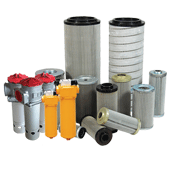
A high flow filter cartridge is a compact, high-efficiency filtration element engineered to process large volumes of fluid at elevated flow rates while preserving superior filtration performance. Unlike conventional filter cartridges that require multiple units to handle substantial flows, a single high flow filter cartridge can deliver comparable throughput with far fewer elements, reducing housing footprint, capital investment, and operational complexity. These cartridges are manufactured with pleated filter media arranged radially, maximizing the effective filtration area within a small footprint. They are widely used across industrial, municipal, and commercial applications where reliability, durability, and cost efficiency are paramount. Whether the task involves removing particulate contaminants from water, protecting downstream equipment in oil and gas operations, or ensuring product purity in food processing, the high flow filter cartridge delivers consistent, repeatable results.
2. Application Scenarios
The high flow filter cartridge finds its place in a broad spectrum of scenarios where high-volume filtration is essential. In municipal water treatment plants, these cartridges provide final polishing of potable water, ensuring clarity and safety for millions of residents. In the oil and gas sector, they protect critical rotating equipment, injection wells, and refining processes from abrasive particulates, extending equipment life and reducing unplanned downtime. Power generation facilities use them to guard boiler feed water and cooling systems against scale and particulate build-up. The chemical and petrochemical industries rely on high flow filter cartridges for process stream purification and catalyst protection. In addition, desalination plants, mining operations, pulp and paper mills, and pharmaceutical facilities all benefit from the cartridge's ability to handle high flow rates without sacrificing filtration quality. Across these diverse settings, the cartridge's core role remains consistent: reliable, efficient particulate removal that safeguards both product quality and downstream assets.
3. Technical Parameters
Understanding the technical parameters of a high flow filter cartridge is essential for correct selection and optimal performance. Typical cartridges offer filtration ratings ranging from 1 to 100 microns, allowing precise matching to specific contaminant profiles. Nominal flow rates can reach hundreds of cubic meters per hour per cartridge, depending on the media, length, and pressure conditions. Operating temperature ranges generally span from 5°C to 80°C for polypropylene media, while specially engineered media can endure higher temperatures. Maximum operating pressure commonly reaches around 3.5 MPa, ensuring robustness under demanding process conditions. Cartridge lengths typically range from 20 to 60 inches, accommodating various housing designs and installation requirements. The filter media is usually composed of polypropylene, polyester, or other chemically resistant materials, offering broad chemical compatibility across acids, alkalis, and solvents. Each cartridge's specifications—including filtration efficiency, pressure drop, and dirt-holding capacity—are documented to support engineering decisions and system design.
4. Product Advantages
The high flow filter cartridge delivers a compelling set of advantages that directly translate into lower total cost of ownership and superior operational performance. First, its large effective filtration area reduces the number of cartridges required, cutting both capital expenditure and replacement costs. Second, the high flow design minimizes pressure drop across the element, enabling energy-efficient operation and reducing pumping costs. Third, fewer cartridges mean fewer change-outs, reducing labor time, downtime, and disposal volumes. The cartridge's robust construction ensures long service life and reliable performance even under fluctuating pressure and flow conditions. Its modular design allows for simple, tool-free installation and replacement, minimizing maintenance requirements. Additionally, the high flow filter cartridge offers excellent dirt-holding capacity, extending operational intervals between replacements. Together, these advantages make it an economically and operationally superior choice for high-volume filtration applications.
5. Applications
Beyond general scenarios, specific applications of the high flow filter cartridge illustrate its versatility. In seawater desalination, it serves as a pre-filtration stage protecting reverse osmosis membranes from fouling, significantly enhancing membrane lifespan and system efficiency. In food and beverage production, it ensures clarity and hygiene of process water and ingredients, meeting stringent quality and safety standards. In hydraulic systems and lubrication circuits, it removes wear particles and contaminants that would otherwise cause premature component failure. The cartridge is also essential in condensate polishing, boiler water treatment, and cooling tower water filtration within power plants. In the semiconductor and electronics industries, ultra-clean filtration protects delicate manufacturing processes from particulate contamination. Furthermore, in environmental applications such as wastewater treatment and water reuse, the high flow filter cartridge supports sustainable resource management. Each application leverages the cartridge's core strengths: high throughput, reliable filtration, and long service life.
6. Quality Standards
Quality and consistency are fundamental to the high flow filter cartridge. These products are manufactured and tested in accordance with internationally recognized standards, ensuring dependable performance and safety. Common standards include ISO 9001 for quality management systems, which governs manufacturing processes and continuous improvement. Filtration performance is often validated against methods such as ISO 16889 (multi-pass test) for hydraulic filtration, providing quantifiable efficiency and capacity data. The materials used, including food-grade and drinking-water-approved media, comply with relevant regulations such as NSF/ANSI 42 and FDA requirements where applicable. Each cartridge undergoes rigorous quality checks, including media integrity testing, pressure testing, and dimensional verification, to ensure batch-to-batch consistency. Traceability is maintained through batch records and serial numbers, enabling full accountability from raw material to final product. These stringent quality measures give end users confidence in the cartridge's reliability and regulatory compliance.
7. Working Principle
The working principle of a high flow filter cartridge is elegantly simple yet highly effective. Fluid enters the cartridge housing and flows radially inward or outward through the pleated filter media. The media consists of a highly porous structure with precisely controlled pore sizes that physically trap particles larger than the rated micron size while allowing clean fluid to pass through. The pleated configuration dramatically increases the effective filtration area within a compact volume, which is the key to achieving high flow rates with low pressure drop. As filtration proceeds, captured particles accumulate on the media surface, gradually increasing differential pressure across the element. When the pressure drop reaches a predetermined level—or the cartridge's dirt-holding capacity is exhausted—the element is replaced with a fresh cartridge. This depth-filtration mechanism ensures that even particles smaller than the nominal rating are effectively removed through tortuous path capture, delivering consistently clean output across the full service life.
8. Future Prospects
The future of the high flow filter cartridge is bright, driven by growing global demand for clean water, energy efficiency, and industrial sustainability. Advances in filter media technology, including nanofiber and gradient-density materials, promise even higher filtration efficiency and dirt-holding capacity with lower pressure drop. Smart filtration systems incorporating sensors and IoT connectivity are emerging, enabling real-time monitoring of pressure drop, remaining life, and predictive maintenance. This digital integration will further reduce downtime and optimize replacement schedules. Environmental considerations are also reshaping product development, with an increasing focus on recyclable, biodegradable, and reusable filter media that minimize waste. As industries worldwide tighten environmental regulations and pursue operational efficiency, the high flow filter cartridge is positioned to remain a cornerstone of liquid filtration for years to come. Its adaptability ensures it will continue to evolve alongside emerging technologies and evolving customer needs.
9. Conclusion
In conclusion, the high flow filter cartridge represents a significant advancement in industrial liquid filtration, combining high throughput, exceptional efficiency, and cost-effective operation in a single, compact element. From municipal water treatment to oil and gas production, from power generation to food processing, its applications are as broad as they are critical. Its technical parameters enable precise selection for diverse conditions, while its numerous advantages deliver tangible economic and operational benefits. Rigorous quality standards and a reliable working principle ensure consistent, trustworthy performance. Looking ahead, ongoing innovation and digital integration promise to make the high flow filter cartridge even more capable and sustainable. For engineers, plant operators, and procurement professionals seeking a dependable, high-performance filtration solution, the high flow filter cartridge is a proven choice that balances performance, reliability, and value.
10. Frequently Asked Questions
Q1: How often should a high flow filter cartridge be replaced?Replacement intervals depend on operating conditions, contaminant load, and the differential pressure threshold. In general, a cartridge should be replaced when the pressure drop exceeds the manufacturer's recommended limit, typically when it approaches the maximum working pressure. Regular monitoring of pressure drop provides the most reliable indicator for scheduling change-outs.
Q2: Can a high flow filter cartridge remove dissolved contaminants?No. A high flow filter cartridge is designed for particulate removal and cannot remove dissolved substances, such as salts, dissolved metals, or gases. For dissolved contaminants, additional treatment methods such as activated carbon adsorption, ion exchange, or reverse osmosis are required.
Q3: What is the difference between nominal and absolute filtration ratings?Nominal rating refers to the particle size at which a specified percentage of particles (often 90%) is removed, while absolute rating indicates the size above which essentially all particles are captured. Absolute-rated cartridges offer more consistent and predictable filtration performance.
Q4: Can the cartridge be cleaned and reused?Most high flow filter cartridges are designed as disposable elements for optimal performance and hygiene. While some media may be backwashed, this typically reduces efficiency and is not recommended. Replacing with a fresh cartridge ensures consistent filtration quality and reliability.
Q5: How does flow rate affect filtration performance?Higher flow rates generally increase pressure drop and may reduce filtration efficiency as particles pass through the media more quickly. Selecting a cartridge with sufficient filtration area for the required flow rate is essential to maintain optimal performance and service life.