Reliable Industrial RO Equipment Brands for Global Manufacturing Water Projects
Industrial RO equipment brands cover a full spectrum of domestic and international reverse osmosis water treatment manufacturers with differentiated performance, cost and compliance advantages for diverse industrial water demands. It is critical to match standard liquid filter assemblies compatible with your chosen RO brand as the first pretreatment barrier to trap suspended contaminants and protect brand-specific membrane elements from premature fouling. Buyers can cross-compare complete system solutions from our brand lineup including Industrial Reverse Osmosis Pure Water Machine: Compact Factory Unit and Modular Reverse Osmosis System: Scalable Water Solution to select the most suitable brand for raw water conditions, budget and industry standards. Our brand evaluation service compares core component quality, technical support, spare parts supply, energy efficiency and long-term operational stability across mainstream industrial RO brands. Branded units range from small compact workshop skids to large modular industrial park water stations. Widely referenced by pharmaceutical, semiconductor, food, chemical and power plant project purchasers, this article elaborates brand classification, RO membrane separation principle, brand core technical indicators, brand quality audit standards, industry brand matching scenarios and common brand selection pitfalls to support your industrial water equipment brand comparison & procurement decision-making.

1. Product & Brand Introduction
Industrial RO equipment brands refer to all professional manufacturers that independently design, produce and assemble full-set industrial reverse osmosis water treatment systems, split into imported high-end brands, cost-effective domestic mainstream brands and customized specialized niche brands. Many factory project buyers face severe confusion during procurement: how to distinguish brand performance gaps, whether brand spare parts are universally interchangeable, which brand fits high-salinity raw water, which brand meets GMP electronic ultra-pure water compliance standards. Blind brand selection often leads to high maintenance cost, short membrane service life and unstable effluent conductivity after project delivery. Our full brand comparison framework sorts the advantages, weaknesses and applicable working conditions of all mainstream industrial RO equipment brands to solve purchasers’ brand screening pain points.
The core precondition to maintain stable performance of any branded RO system is matched pretreatment configuration. High-performance liquid filter is a universal standard supporting component for all industrial RO brands. Timely replacement of brand-compatible filter cartridges can cut membrane fouling frequency by over 60%, maximizing the service life of proprietary brand RO membrane elements.
We divide brand matching schemes by factory production scale and industry compliance threshold: small and medium workshop general water demand can select cost-effective domestic brands represented by Industrial Reverse Osmosis Pure Water Machine: Compact Factory Unit, with fast spare parts delivery and low overall investment; large industrial parks with 24-hour uninterrupted production and strict water quality standards can choose international high-end brands built on Modular Reverse Osmosis System: Scalable Water Solution, supporting multi-module parallel expansion and remote intelligent cloud monitoring. For biopharmaceutical and semiconductor ultra-pure water projects requiring strict hygiene certification, we recommend imported high-desalination, anti-oxidation brand RO equipment with complete international validation documents. If enterprises plan production capacity expansion in later stages, modular brand systems reserve unified parallel interfaces without full pipeline reconstruction.
Most maintenance teams fail to realize that different RO brands adopt proprietary membrane rack structures, pressure vessel sizes and control program logic. Mismatched third-party spare parts will cause flow imbalance, membrane scratch and system alarm. Our industrial RO equipment brand screening service includes raw water analysis, brand performance test comparison, spare parts supply cycle evaluation, after-sales service response speed and long-term energy consumption calculation. After selecting a matched brand RO system, the unit can steadily produce qualified pure water for raw material blending, workpiece cleaning, boiler feed water and circulating cooling replenishment. Comprehensive brand comparison has become an essential pre-procurement link for enterprises investing in industrial pure water stations.

2. Reverse Osmosis Working Principle & Brand Differentiation Logic
Reverse osmosis relies on pressure-driven physical membrane separation technology. Under driving pressure higher than raw water natural osmotic pressure, water molecules penetrate semi-permeable polyamide RO membranes, while dissolved salts, heavy metal ions, colloids and suspended particles are trapped on the concentrate side to complete raw water desalination. The core differentiation point between various industrial RO equipment brands lies in membrane material formula, hydraulic pipeline layout, high-pressure pump matching and PLC control algorithm, which directly determine long-term flux, salt rejection rate and anti-fouling capacity.
The four-stage standard industrial RO workflow and brand matching key points are as follows:
Stage1: Multi-stage precision pretreatment filtration
Raw water flows through multimedia filter, activated carbon filter and liquid filter. All mainstream RO brands require standardized liquid filter as mandatory front protection. Filter housing size and cartridge specification must match the brand’s design flow rate to avoid bypass leakage of unfiltered raw water.
Stage2: Dosing regulation and pressurization unit
Premium brands adopt frequency conversion high-pressure pumps with low energy consumption, while entry-level brands use fixed-speed pumps. Our brand comparison evaluates pump energy efficiency and anti-corrosion material grade as core scoring indicators.
Stage3: Reverse osmosis deep purification separation main unit
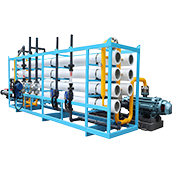
High-end imported brands equip self-developed high salt rejection membrane elements; mainstream domestic brands adopt universal standard membranes with stable cost performance. Small workshop projects adopt compact branded skids such as Industrial Reverse Osmosis Pure Water Machine: Compact Factory Unit, while large water parks adopt parallel multi-module layout from high-end brands of Modular Reverse Osmosis System: Scalable Water Solution.
Stage4: Intelligent monitoring and automatic flushing
Top-tier brands support remote cloud data transmission and intelligent fouling early warning; medium brands only retain local PLC automatic control without remote access function. We contrast control system functions clearly in brand evaluation reports.
For two-stage ultra-pure water and EDI supporting systems, we provide segmented brand recommendation schemes for front and rear RO modules.
3. Core Technical Evaluation Standards For Industrial RO Equipment Brands
We formulate unified brand evaluation indicators to score each industrial RO brand based on factory daily water output, raw water TDS and industry water quality standards. Universal comparison technical standards are listed below:
Applicable brand capacity range: 1m³/h ~ 200m³/h, compact brand models like Industrial Reverse Osmosis Pure Water Machine: Compact Factory Unit and large modular brand series Modular Reverse Osmosis System: Scalable Water Solution fully covered
Brand membrane salt rejection benchmark: General domestic brands ≥97%, imported high-end brands ≥99.2%
System overall water recovery rate by brand: 60% ~ 78%, high water-saving brands optimize hydraulic layout to reach upper limit
Allowable inlet pretreatment standard for all brands: Turbidity ≤1 NTU, SDI ≤5, realized by matched liquid filter
Operating energy consumption index: Frequency conversion brand equipment saves 20–35% power compared with fixed-speed brands
Working environment adaptability: Premium brands adopt 316L stainless steel pipeline for food/pharma hygiene, entry-level brands use ordinary UPVC
Spare parts supply cycle benchmark: Domestic brands 3–7 days, imported brands 15–45 days depending on customs clearance

4. Brand Quality Control Audit Standard
All mainstream industrial RO equipment brands pass strict factory inspection, with obvious gaps in quality control depth between tiers:
Firstly, core membrane inspection standard: Top brands conduct full batch salt rejection and flux testing; entry-level brands only carry out spot check. Supporting liquid filter must adopt high dirt-holding filter media regardless of brand tier to guarantee pretreatment protection.
Secondly, finished skid acceptance standard: High-end brands implement 72-hour full-load continuous operation test before delivery; small domestic brands only conduct short 2-hour debugging. Complete P&ID drawings and validation documents are only provided by certified premium brands.
Thirdly, after-sales technical support benchmark: Famous brands provide 24-hour remote response and optional on-site service; small niche brands only offer email delayed consultation. Standardized operation manuals will be delivered to extend RO membrane service life after brand equipment handover.
5. Application Scenarios For Different Industrial RO Equipment Brands
Different brand tiers match distinct industrial manufacturing sectors with differentiated water station demands:
Pharmaceutical & biopharmaceutical factory: Imported high-end RO brands with GMP validation documents
New energy semiconductor workshop: Premium anti-fouling high salt rejection brand equipment for ultra-pure water
Food and beverage production line: Cost-effective domestic mainstream brands matched with Industrial Reverse Osmosis Pure Water Machine: Compact Factory Unit
Fine chemical plant: General medium-tier domestic brands for medium-hardness raw water
Small manufacturing workshop: Entry-level compact brand skids for low daily water yield
Large industrial centralized water park: High-end modular brand series with multiple parallel sets of Modular Reverse Osmosis System: Scalable Water Solution
Raw water hardness, organic content and continuous production hours vary greatly by region. Our engineers recommend the most cost-performance brand after analyzing local water samples to match long-term factory operation requirements.
Frequently Asked Questions
FAQ1
Q: What dimensions should be compared when evaluating different industrial RO equipment brands?
A: Core comparison items include membrane desalination performance, energy consumption, spare parts delivery cycle, liquid filter matching specification, after-sales response speed, compliance certification and long-term operation cost, covering compact Industrial Reverse Osmosis Pure Water Machine: Compact Factory Unit and large Modular Reverse Osmosis System: Scalable Water Solution.
FAQ2
Q: Can membrane elements and spare parts of different RO brands be mixed and replaced?
A: Not recommended. Different brands adopt proprietary pressure vessel sizes, membrane flux and control parameters. Mixed installation will cause flow imbalance and accelerated fouling.
FAQ3
Q: Why is liquid filter a universal supporting component for all industrial RO equipment brands?
A: Liquid filter intercepts sediment and colloidal particles in raw water. No matter which brand RO system you select, overdue or mismatched filter cartridges will directly scratch brand-specific RO membrane surfaces and cause irreversible performance loss.
FAQ4
Q: Are imported high-end RO brands always better than domestic mainstream brands?
A: Not absolutely. Domestic mainstream brands have obvious advantages in spare parts delivery cycle and total investment cost, fully suitable for general industrial purified water projects. Imported brands are only recommended for ultra-pure water and high-salinity brackish water scenarios.
FAQ5
Q: How to judge whether a RO brand meets GMP and electronic ultra-pure water compliance standards?
A: Request complete factory validation documents, material certification and third-party water quality test reports before procurement. Only certified premium brands can provide full compliance paperwork.
FAQ6
Q: What routine maintenance can extend the service life of any brand industrial RO equipment?
A: Regularly replace liquid filter cartridges; stabilize anti-scaling agent dosage; keep automatic membrane flushing enabled; record daily pressure and conductivity data; arrange chemical cleaning timely once pressure difference rises obviously.
Other products you may want to know about:
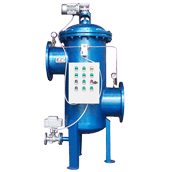
Self Cleaning Filters
Ultrafiltration equipment
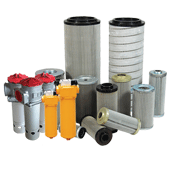
High Flow Filter Element