RO System for Central Air Conditioning Cooling Water Treatment
RO system for central air conditioning cooling water is an efficient membrane purification unit to realize circulating water recycling and scale control for commercial and industrial HVAC systems. It is equipped with high-precision liquid filter as core pretreatment barrier, and you can refer to mature models such as 5 tons/hour reverse osmosis equipment and 10 tons/hour reverse osmosis system for standardized scheme design. This system effectively removes hardness ions, suspended solids and dissolved salts to reduce cooling tower blowdown. We provide scalable units ranging from small skids to large-scale 100 tons/hour reverse osmosis system to match different building cooling demands. Widely adopted in shopping malls, factories and office complexes, this article elaborates product composition, working principle, core parameters, quality standards, application scenarios and typical operation problems to support your HVAC water conservation project planning.

1. Product Introduction
RO system for central air conditioning cooling water is customized industrial reverse osmosis equipment developed to solve common troubles of HVAC circulating cooling water, including scaling, corrosion, microorganism breeding and excessive blowdown discharge. In central air conditioning cooling circulation systems, continuous water evaporation leads to constant concentration of calcium and magnesium hardness, salts and suspended impurities. Direct supplement of raw water cannot fundamentally control scaling, while frequent cooling tower blowdown wastes a huge amount of freshwater. This RO treatment system purifies makeup water or treats blowdown wastewater for recycling, cutting water consumption and lowering chemical dosing dosage.
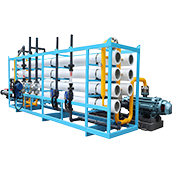
The whole system adopts compact skid-mounted integrated design, suitable for equipment room installation of commercial buildings and industrial plants. The front pretreatment unit is equipped with high-performance liquid filter to intercept sediment, suspended particles and colloids, preventing membrane element fouling and extending service life. During scheme design, engineers can select standard mature frames. Small and medium commercial buildings can adopt 5 tons/hour reverse osmosis equipment and 10 tons/hour reverse osmosis system; large industrial parks and super shopping malls can choose 20 tons/hour reverse osmosis equipment or 50 tons/hour reverse osmosis equipment. For large comprehensive industrial zones, multiple units can operate in parallel to form a 100 tons/hour reverse osmosis system.
Many property management companies and factory energy-saving departments compare this RO system with traditional chemical dosing treatment. Chemical agents can only relieve scaling temporarily, while reverse osmosis fundamentally removes hardness and salt ions. The treated water can be reused as cooling tower makeup water, greatly reducing tap water supplement volume and wastewater discharge. Different from wastewater concentrated RO equipment, central air conditioning cooling water RO system focuses on stable continuous operation, low noise and compact footprint, matching indoor equipment room environment. It has become a mainstream energy-saving and water-saving supporting facility for green buildings and factory energy transformation.
2. Working Principle of RO System For Central Air Conditioning Cooling Water
Reverse osmosis relies on pressure-driven membrane separation technology. Driven by external pressure, water molecules pass through semi-permeable RO membranes, while calcium magnesium ions, soluble salts, suspended solids and organic pollutants are intercepted on the concentrated water side.
The complete cooling water treatment workflow is divided into four core stages:
Stage1: Pretreatment filtration
Raw makeup water or cooling tower blowdown water sequentially flows through multi-media filter, activated carbon filter and liquid filter. This procedure removes suspended impurities and reduces inlet water SDI value, which is essential to avoid membrane blockage.
Stage2: Dosing and pressurization
Scale inhibitor and bactericide are added as required to prevent membrane surface scaling and microbial reproduction. Qualified water is boosted by high-efficiency pump to reach the rated operating pressure of RO membranes.
Stage3: Reverse osmosis purification separation
Pressurized water enters membrane pressure vessels equipped with anti-fouling brackish water RO membrane elements. After separation, qualified low-hardness product water and concentrated wastewater are generated. Purified water is delivered to cooling tower as circulating makeup water.
Stage4: Intelligent monitoring and automatic flushing
PLC control system continuously monitors conductivity, operating pressure and water tank liquid level. Automatic cross-flow flushing will be activated during shutdown to wash away pollutants attached on membrane surfaces. Operators can set automatic running cycles according to central air conditioning working hours.
For projects with extremely strict circulating water requirements, two-stage reverse osmosis configuration can be adopted to further improve hardness removal efficiency.

3. Core Technical Parameters
We carry out personalized customized design according to building cooling scale, daily makeup water demand and raw water quality. Standard technical indicators of RO system for central air conditioning cooling water are as follows:
Water production capacity: 0.5m³/h ~ 100m³/h, customizable; classic models include 5 tons/hour reverse osmosis equipment, 10 tons/hour reverse osmosis system, 20 tons/hour reverse osmosis equipment and 100 tons/hour reverse osmosis system
Outlet water conductivity: Adjustable according to circulating water control requirements
Single-pass salt rejection rate: ≥97%
System water recovery rate: 65% ~ 80%
Inlet water requirements after pretreatment: Turbidity ≤1 NTU, SDI ≤5, residual chlorine <0.1mg/L
Working temperature: 5℃ ~ 40℃
Control mode: Full-automatic PLC intelligent control, online conductivity monitoring, high-low pressure protection, automatic membrane flushing
Optional materials: FRP or stainless steel membrane housing; pipeline optional UPVC, 304 stainless steel, suitable for indoor equipment room environment
4. Product Quality Standard
All RO system for central air conditioning cooling water follows strict commercial water treatment equipment specifications.
Firstly, core RO membrane elements adopt anti-fouling brackish water membrane suitable for long-term continuous operation. Supporting liquid filter uses high dirt-holding filter material to guarantee stable pretreatment effect. Pumps, valves and sensors select low-noise commercial-grade brands to adapt indoor equipment room installation.
Secondly, every complete set of equipment passes hydraulic pressure test and continuous running test before delivery. The skid base adopts anti-rust coating, compact layout to save equipment room space. We supply complete P&ID flow diagrams, installation guidance and operation manual.
Thirdly, our technical team provides remote operation guidance and optional on-site commissioning service. Standardized maintenance suggestions can effectively reduce unexpected shutdown risks during air conditioning operation seasons.

5. Application Fields of RO System For Central Air Conditioning Cooling Water
This circulating cooling water reverse osmosis system is widely used in the following scenarios:
Large commercial complexes: Shopping malls, office buildings, hotels and exhibition centers
Industrial manufacturing plants: Factory central air conditioning and production cooling circulating water
Hospital, school and public institution HVAC cooling water reuse
Data center precision air conditioning cooling water treatment
Green building supporting water-saving and energy-saving facilities
Park comprehensive energy station circulating water purification
Raw water hardness varies greatly in different regions. Our engineers optimize pretreatment scheme and membrane configuration after analyzing local water quality reports, to reach target concentration ratio of cooling circulating water.
Frequently Asked Questions
FAQ1
Q: What advantages does RO system have compared with traditional chemical dosing for cooling water?
A: Chemical treatment can only suppress scaling temporarily. RO system removes hardness and salt fundamentally, increases cooling tower concentration ratio, reduces blowdown volume, saves freshwater and cuts long-term chemical purchasing cost.
FAQ2
Q: Which model is suitable for medium-sized office building projects?
A: Medium commercial projects can choose 5 tons/hour reverse osmosis equipment or 10 tons/hour reverse osmosis system. Large industrial parks can select 20 tons/hour reverse osmosis equipment or expand to 100 tons/hour reverse osmosis system.
FAQ3
Q: Why is liquid filter indispensable in the pretreatment of this RO system?
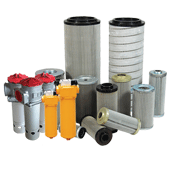
A: Cooling water contains dust, suspended solids and biological slime. High-precision liquid filter intercepts particulate pollutants, avoids rapid membrane fouling, reduces cleaning frequency and extends RO membrane service life.
FAQ4
Q: Can this RO system work continuously together with central air conditioning all year round?
A: Yes. We adopt continuous operation optimized design. When air conditioning runs intermittently, the system can set automatic standby and regular flushing mode to protect membrane elements.
FAQ5
Q: Can the purified water from RO system directly enter cooling tower as makeup water?
A: Yes. The produced water has low hardness and low conductivity, effectively inhibiting scaling inside pipelines and chillers. You can add supplementary sterilization equipment if microbial control needs to be strengthened.
FAQ6
Q: How much freshwater can be saved after installing the cooling water RO system?
A: The water saving amount depends on original cooling tower blowdown volume. Normally the system can reduce blowdown volume by 60%~80%, achieving remarkable water-saving benefits for large buildings and factories.
Other products you may want to know about:
Ultrafiltration equipment
Self Cleaning Filters
High-Flow Filter Cartridges