Reverse Osmosis Treatment For Landfill Leachate Wastewater Purification
Reverse osmosis treatment for landfill leachate is a mature membrane separation solution to treat high-concentration organic wastewater from landfill sites. It is equipped with high-precision liquid filter as core pretreatment barrier, and you can refer to mature configurations such as 5 tons/hour reverse osmosis equipment and 20 tons/hour reverse osmosis equipment for modular design. Compared with traditional biochemical processes alone, this RO system achieves stable removal of ammonia nitrogen, salt and refractory organics. We provide scalable units ranging from 10 tons/hour reverse osmosis system up to large-scale 100 tons/hour reverse osmosis system to match different landfill processing capacity. Focusing on anti-fouling and anti-corrosion design, this article elaborates product composition, working principle, technical specifications, quality standards, application limits and typical operation problems to support your wastewater project design.

1. Product Introduction
Reverse osmosis treatment for landfill leachate adopts special anti-pollution reverse osmosis equipment to treat complex wastewater generated from municipal solid waste landfills. Landfill leachate features high COD, high ammonia nitrogen, high salinity and abundant refractory organic pollutants, which poses huge challenges for conventional water treatment equipment. Standard industrial RO units cannot adapt to such complex water quality, so landfill leachate RO treatment system is optimized with targeted material and process upgrades.
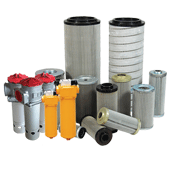
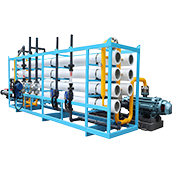
The complete set adopts skid-mounted modular construction. Front-end pretreatment unit is equipped with high-performance liquid filter to intercept suspended solids, colloids and sludge impurities, effectively protecting the special RO membrane elements from irreversible contamination. Project designers can select mature standard frames as reference, including 5 tons/hour reverse osmosis equipment, 10 tons/hour reverse osmosis system and 20 tons/hour reverse osmosis equipment for small and medium landfill stations. For large sanitary landfill parks, the system can be expanded to 50 tons/hour reverse osmosis equipment or 100 tons/hour reverse osmosis system to meet large-volume continuous wastewater treatment demands.
Many environmental engineering companies compare this membrane process with single biochemical treatment. Biochemical methods struggle to remove soluble salts and residual persistent organics, while reverse osmosis treatment for landfill leachate can intercept ionic pollutants and macromolecular organics simultaneously. Normally, landfill leachate RO system works after biochemical pretreatment; the combination greatly improves wastewater discharge compliance rate. All equipment adopts anti-corrosion pipeline and high-pressure resistant structure to adapt to corrosive leachate environment.
The system separates raw leachate into clean permeate water and concentrated brine. Permeate can be discharged up to standard or reused on site; concentrated liquid can be further treated by evaporation or recharged according to local environmental regulations. This solution has become a mainstream technical route for new and upgraded landfill leachate renovation projects worldwide.
2. Working Principle of Reverse Osmosis Treatment For Landfill Leachate
The core technology relies on pressure-driven membrane separation. Different from ordinary pure water RO systems, landfill leachate reverse osmosis equipment uses special anti-fouling RO membranes. Under sufficient driving pressure, water molecules pass through semi-permeable membranes, while heavy metal ions, soluble salts, residual organics, macromolecular pollutants and bacteria are trapped on the concentrate side.
The full treatment workflow is divided into five core links:
Stage 1: Advanced Pretreatment Filtration
After biochemical and sedimentation treatment, leachate sequentially flows through security liquid filter and multi-stage precision filter. This step lowers inlet SDI value, removes sludge particles, and avoids surface scaling and blockage of membrane modules, which is critical to extend membrane service life.
Stage 2: PH Adjustment & Dosing Treatment
Automatic dosing system adds acid, antiscalant and flocculant as required to suppress membrane surface scaling and reduce organic pollution risk.
Stage 3: High-pressure Reverse Osmosis Separation
Pretreated wastewater is boosted by high-pressure anti-corrosion pump and sent into membrane pressure vessels. Under operating pressure, raw water is separated into two streams: qualified permeate water and high-salinity concentrated leachate.
Stage 4: Concentrate Disposal & Permeate Collection
Permeate water is collected and monitored online for water quality before discharge or reuse. Concentrated leachate with high salinity and high pollutants can enter subsequent evaporation system or reflow to landfill according to local environmental policies.
Stage 5: Intelligent Monitoring & Automatic Membrane Cleaning
PLC control system continuously monitors pressure, flow rate, conductivity and pH value. Timed automatic cross-flow flushing and periodic online chemical cleaning are set to remove pollutants attached on membrane surface.
In most engineering cases, two-stage reverse osmosis configuration is adopted for landfill leachate to further improve pollutant interception efficiency and guarantee stable effluent indicators under fluctuating raw water quality.

3. Core Technical Parameters
We carry out customized process design according to raw leachate water quality, daily wastewater volume and local emission standards. Standard technical indicators of reverse osmosis treatment for landfill leachate are as follows:
Processing capacity: 5m³/h ~ 100m³/h, customizable; classic models include 5 tons/hour reverse osmosis equipment, 20 tons/hour reverse osmosis equipment, 50 tons/hour reverse osmosis equipment and 100 tons/hour reverse osmosis system
Permeate water quality: Subject to raw water conditions, most pollutants including salinity, heavy metals and macromolecular organics are effectively intercepted
System water recovery rate: 50% ~ 70% (adjusted based on raw water TDS and organic concentration)
Inlet water requirements after pretreatment: SDI ≤5, turbidity ≤1 NTU
Working temperature: 10℃ ~ 35℃
Control mode: Full automatic PLC intelligent control, online multi-parameter monitoring, automatic flushing, online chemical cleaning function
Material selection: 316L stainless steel / FRP pressure vessels; anti-corrosion UPVC or stainless steel pipelines; anti-fouling special RO membrane elements
4. Product Quality Standard
All reverse osmosis equipment for landfill leachate follows strict environmental wastewater equipment specifications.
First of all, core components adopt anti-fouling and acid-resistant RO membrane elements suitable for high-pollution wastewater. Supporting liquid filter uses high dirt-holding filter material to stabilize pretreatment effect. High-pressure pumps, valves and sensors are selected anti-corrosion industrial brands adapted to complex wastewater environment.
Secondly, each complete equipment passes pressure resistance test, continuous running test and water simulation test before delivery. The skid base adopts heavy-duty anti-corrosion coating to adapt outdoor landfill working conditions. For medium and large projects such as 50 tons/hour reverse osmosis equipment and 100 tons/hour reverse osmosis system, we supply complete P&ID drawings, operation manual and installation guidance documents.
Thirdly, our environmental engineering technical team provides remote operation guidance and on-site commissioning service. Standardized periodic maintenance suggestions can effectively reduce membrane pollution speed, lower replacement frequency and control long-term project operating cost.

5. Application Fields of Reverse Osmosis Treatment For Landfill Leachate
This targeted RO wastewater treatment system is mainly applied in the following scenarios:
Municipal solid waste sanitary landfill leachate treatment
Waste transfer station compressed wastewater treatment
Old landfill site leachate upgrading and reconstruction projects
Hazardous waste landfill wastewater treatment (with upgraded anti-corrosion configuration)
Waste incineration plant percolate advanced treatment
Industrial solid waste disposal site wastewater purification
It should be noted that landfill leachate water quality changes greatly with landfill age. Our engineers will optimize pretreatment process, membrane grade and system recovery rate after analyzing on-site water sample test reports, to match local environmental protection discharge standards.
Frequently Asked Questions
FAQ1
Q: Can reverse osmosis treatment completely solve landfill leachate pollution problems?
A: RO system effectively removes salts, heavy metals and refractory organics. Normally it needs to be matched with biochemical pretreatment. Meanwhile, the generated concentrated leachate must be disposed in compliance with local environmental laws and cannot be discharged directly.
FAQ2
Q: Which model is suitable for small-scale landfill stations?
A: Small projects can adopt 5 tons/hour reverse osmosis equipment or 10 tons/hour reverse osmosis system. For medium landfills, 20 tons/hour reverse osmosis equipment is the mainstream choice. Large landfill parks can choose 50 tons/hour reverse osmosis equipment or 100 tons/hour reverse osmosis system.
FAQ3
Q: Why is liquid filter essential in landfill leachate RO pretreatment?
A: Landfill leachate contains lots of suspended sludge and colloids. High-precision liquid filter intercepts particulate pollutants, prevents rapid membrane fouling, reduces cleaning frequency and extends RO membrane service life.
FAQ4
Q: How to slow down membrane fouling during landfill leachate RO system operation?
A: Optimize the pretreatment process and install qualified liquid filter; add antiscalant and biocide reasonably; activate regular automatic flushing and periodic chemical cleaning; stabilize raw water inflow volume and water quality.
FAQ5
Q: Is single-stage RO enough for landfill leachate treatment?
A: It depends on emission requirements. Single-stage RO meets basic treatment demands for some projects. If higher effluent standard is required, two-stage reverse osmosis configuration is recommended for advanced purification.
FAQ6
Q: Can this RO system run stably all year round outdoors at landfill sites?
A: Yes. We adopt anti-corrosion frame, rainproof control cabinet and temperature protection design. For cold regions, heat preservation and heating components can be added to ensure stable winter operation.
Other products you may want to know about
RO membrane element
Ultrafiltration equipment
Self Cleaning Filters