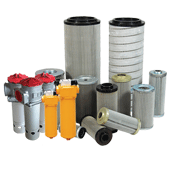
Low Pressure Drop Filter Cartridge HFU640UY045J for UF Pre-treatment
This article introduces the low pressure drop filter cartridge HFU640UY045J, an extra-wide pleated element built for ultrafiltration pretreatment where energy efficiency and stable flow matter. This liquid filter combines high-permeability polypropylene media with a deep pleat geometry, so the initial differential pressure stays low while a large contaminant volume is still retained. Its low pressure drop behaviour can be cross-referenced with High Flow Pleated Liquid Filter Cartridge HFU660UY060J for UF when engineers compare pressure curves for the same duty point. Lower pressure loss means less pump energy, gentler loading on housings and longer usable cycles before the terminal differential pressure is reached.
1. Product Introduction
The low pressure drop filter cartridge HFU640UY045J is a wide-body pleated high flow element designed for ultrafiltration pretreatment duty, where the cost of pushing water through a filter is almost as important as the filtration result itself. Pressure drop is the resistance a cartridge adds to the flow path. Every bar of resistance has to be paid for twice: once at the feed pump, and again in the margin that must be reserved on the downstream ultrafiltration membrane skid. A cartridge that opens up the flow path, therefore, does more than lower a gauge reading; it trims continuous power consumption, reduces mechanical stress on housings and seals, and delays the moment when the element has to be pulled out and replaced.
Three design choices keep this element in the low-resistance category. First, the media is a high-permeability polypropylene grade with a controlled pore gradient, so water passes through the wall without an abrupt pressure step. Second, the pleat count and pleat depth are deliberately increased, which multiplies the effective filtration area inside the same 4.5 inch envelope; more open area means a lower face velocity at any given flow rate. Third, the inner core and outer cage are ribbed reinforced polypropylene rather than a smooth thin tube, so the media is supported without being compressed, and the flow channel behind the pleats is kept open.
The cartridge is built for standard high flow housings and is supplied in 20 inch, 40 inch and 60 inch lengths with a nominal 4.5 inch outer diameter, which allows it to sit in the same cavity as other elements of this family. Users who need to compare pressure curves across the range can place it alongside High Flow Rate Filter Cartridge for Ultrafiltration Pre-treatment and review the flow-to-pressure relationship at the actual operating temperature. When the downstream membrane requires a tighter particle cut, the same housing can be loaded with Absolute Micron Rating High Flow Filter for UF Pre-treatment as a polishing stage, with the low pressure drop element doing the bulk removal work in front of it.
In practice, these elements are rarely used alone. A common train pairs a coarse, high-capacity element at the front, a mid-grade element in the middle, and a fine element immediately before the membrane. Designers comparing options can review Nominal Micron Rating High Flow Cartridge for UF Pre-treatment for the graded middle stage and 10 Micron High Flow Filter Cartridge for Ultrafiltration Pre-treatment for the final guard, keeping the low pressure drop cartridge where the largest particle mass arrives. Part numbers quoted in this article are used only for dimensional and performance cross-reference. They do not imply any affiliation with, or endorsement by, other manufacturers.

2. Working Principle
Filtration in this element follows the radial outside-in path typical of pleated high flow cartridges. Raw water enters at the outer cage, passes through the pleated media wall, and leaves through the perforated inner core toward the outlet port. Two mechanisms act at the same time: surface screening, where particles larger than the pore opening are held on the outer face of the media, and depth capture, where smaller solids are trapped inside the fibre matrix before they can reach the core.
Pressure drop is generated mainly by two resistances in series. The media resistance depends on pore size, thickness and permeability; the geometric resistance depends on how much open area is available and how tortuous the flow path is around the pleats and through the core. A low pressure drop cartridge reduces both. Higher permeability lowers the media term, while deeper pleating and a ribbed core lower the geometric term. Because the two resistances add up, a design that improves only one of them usually shows a modest gain; this element targets both at once.
As solids accumulate, the effective open area shrinks and the differential pressure climbs. The rise is gradual at first, then accelerates once the surface layer becomes dense. Operation is therefore governed by a terminal differential pressure rather than by calendar time. A low-resistance element starts from a lower baseline, so it has more usable pressure head available before it reaches the change-out limit, which in practice translates into a longer service interval at the same solids loading.
There is also a membrane-protection angle. Ultrafiltration modules are sensitive to both particulate fouling and to feed pressure excursions. A cartridge with a gentle pressure curve smooths out spikes when upstream demand changes, so the membrane sees a steadier feed. That stability is often worth more than the filter itself costs, particularly on skids that run close to their design flux.
3. Technical Parameters
Model reference: HFU640UY045J. Filter media: gradient pleated polypropylene with high permeability. Inner core and outer cage: ribbed reinforced polypropylene. Outer diameter: 4.5 inch nominal, fitting standard high flow housings. Available lengths: 20 inch, 40 inch and 60 inch. Micron grades available across the family: 1, 5, 10, 25, 50 and 100 micron nominal. Maximum continuous operating temperature: 82 degrees Celsius for polypropylene media. Maximum allowable differential pressure: 3.4 bar at 20 degrees Celsius water. Recommended change-out differential pressure: 2.5 bar. Gasket options: EPDM, silicone and Viton, selected according to liquid chemistry and temperature.
Flow capacity depends on length, micron grade, water temperature and suspended solids concentration. A 60 inch element in the coarse grades carries the largest single-cartridge flow, while finer grades in the same envelope run at a lower flow for an equivalent pressure loss. All figures are established under controlled laboratory conditions with clean water; site values should be confirmed against the actual turbidity and temperature of the raw water. End cap configurations can be customised for housings with non-standard connections.
4. Quality Assurance
Every element is produced under an ISO 9001 quality management system, with incoming media inspected for thickness consistency, pore uniformity and tensile strength before pleating begins. Pleat geometry is set by automated equipment so that the folded area and the gap between pleats stay uniform along the full length of the cartridge; inconsistent pleating is the most common hidden cause of a pressure curve that drifts from batch to batch.
Finished cartridges pass a bubble point integrity check, a pressure resistance test and a full visual inspection before packing. The support cage is checked for rib deformation, since a collapsed core restricts the outlet channel and quietly raises pressure drop even when the media itself is sound. Elements are cleaned and packed in a controlled environment to limit fibre contamination before delivery.
Batch test records can be supplied with each order, and third-party inspection is accepted on request. The media is tested for fibre shedding, because loose fibre reaching a membrane module causes fouling that is difficult to attribute and expensive to clean. Where a project requires documented performance, pressure drop curves measured at the specified flow and viscosity can be provided for review before shipment.

5. Application Fields
5.1 Ultrafiltration Pretreatment
The primary duty. The element sits ahead of the membrane skid and removes the bulk of suspended solids, holding feed turbidity and silt density within the range the membranes were designed for.
5.2 High-Flow Municipal and Industrial Water Plants
Large plants run continuous duty at high flow, where pump energy is a recurring cost. A low resistance element reduces the head the feed pump must develop, and the saving applies every hour the plant operates.
5.3 Seawater and Brackish Water Desalination
Intake water carries fine sediment and algal fragments. Pretreatment elements that hold a large solids load without a steep pressure rise help keep the membrane train stable through tidal and seasonal turbidity swings.
5.4 Power Plant Condensate and Cooling Water Systems
Condensate polishing and cooling water circuits tolerate only limited pressure loss, because the available head is fixed by the existing pump set. Low resistance cartridges fit such retrofits where housing pressure ratings cannot be raised.
5.5 Industrial Water Reuse and Process Liquid Polishing
Reuse streams vary in solids content from hour to hour. A cartridge with a gentle pressure curve absorbs those swings, protects downstream membrane and resin beds, and keeps change-out intervals predictable for maintenance planning.
6. FAQ
Q1: What does low pressure drop mean for a filter cartridge in practice?
A: It means the cartridge adds less resistance to the flow path at the same flow rate and viscosity. The benefit appears as lower pump energy, a wider margin before the terminal differential pressure is reached, and less mechanical load on housings and seals. The exact gain depends on flow rate, micron grade and water temperature.
Q2: Does a low pressure drop cartridge hold less dirt than a standard one?
A: Not necessarily. Pressure drop and dirt holding capacity are separate properties. This design increases effective media area through deeper pleating, so a lower initial resistance is achieved while contaminant storage volume is maintained or increased. The two are traded off only when media permeability is raised without adding area.
Q3: How do I confirm the pressure curve for my own duty point?
A: Provide the flow rate per housing, water temperature, micron grade and expected suspended solids level. We can supply measured differential pressure data at those conditions, or advise the cartridge count needed to stay under your target pressure loss.
Q4: When should this cartridge be replaced?
A: On differential pressure, not on a fixed calendar. The usual terminal value is 2.5 bar, or earlier if downstream differential pressure on the membrane begins to rise. Because the starting pressure is low, the usable interval is often longer than with a higher-resistance element under the same solids load.
Q5: Can it replace elements already installed in our existing housings?
A: In most cases yes, provided the housing accepts a 4.5 inch diameter element with the same length and end connection. Send the housing drawing or the current element dimensions and we will confirm the fit, including gasket type and end cap style.
Q6: Is the element suitable for liquids other than water?
A: Polypropylene media and the standard gasket options suit many aqueous and mildly acidic or alkaline liquids within the stated temperature limit. For solvents, oils or strong chemical service, share the fluid data sheet so that media and elastomer compatibility can be assessed before selection.
Other products you may want to know about:
PP melt-blown filter
self-cleaning filter
cartridge filter housing