High flow filter element: Reliable Industrial Liquid Filtration Solution
A High flow filter element is a large-diameter pleated filter component for industrial liquid filtration. It captures suspended particles, silt and impurities at high throughput, lowers pressure drop, cuts maintenance work, and protects downstream membranes, pumps and precision equipment. This article systematically introduces its specifications, advantages, operation rules, quality standards, filtration mechanism, market trend and frequently asked questions for industrial water and process fluid projects.
1. Product Introduction
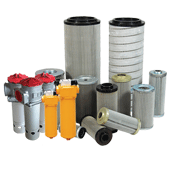
A High flow filter element is a high-capacity pleated depth filter component developed for large-volume liquid filtration in industrial systems. Unlike traditional small-diameter filter inserts that require dozens of units to meet flow demands, this High flow filter element adopts an optimized radial pleated structure, which greatly expands the effective filtration area inside a single element. It is mainly used to remove suspended solids, sediment, rust, fine colloids and particulate pollutants from feed liquid. The mainstream structure uses all-polypropylene graded-density fiber material, with integrated thermally bonded end caps and reinforced inner support core. There is no adhesive or secondary contaminant release risk. Its core design goal is to achieve stable high flow, high dirt holding capacity and low pressure drop at the same time. For water treatment, chemical fluid purification and raw liquid pre-treatment, this element can effectively reduce the number of filter housings, simplify the layout of skid equipment, and bring stable and continuous filtration performance for long-cycle industrial operation.
2. Application Scenarios
The High flow filter element has a wide range of mature application scenarios in fluid treatment industries. In water treatment engineering, it serves as prefiltration for RO and ultrafiltration systems, seawater desalination intake water filtration, municipal water supply and reclaimed water reuse treatment. In power industry, it filters boiler make-up water, circulating cooling water and condensed water to protect heat exchangers and spray nozzles. In petrochemical and fine chemical production, it is applied for circulating fluid, amine solution, quenching water and raw material liquid purification. In food and beverage industry, it filters production water, blending liquid and CIP cleaning return liquid. In pharmaceutical and biotech workshops, it is used for purified water pretreatment and raw material liquid clarification. It is also widely used in microelectronics ultra-pure water systems, oilfield reinjection water filtration, textile wastewater recycling and paint liquid filtration. In all these scenarios, the High flow filter element solves the common pain point of high flow rate with unstable solid content, avoiding frequent blocking and frequent replacement of conventional small filter elements.
3. Technical Parameters
The standard High flow filter element adopts a 6-inch outer diameter (152 mm) design. Optional lengths include 20 inch, 30 inch and 40 inch. The effective filtration area of a single element ranges from 5 m² to 18 m² according to different lengths. Filtration precision covers 1 μm to 100 μm, and the commonly used absolute precision grades are 5 μm, 10 μm and 20 μm. Under clean water condition, the rated flow of a single 40-inch element can reach up to 60 m³/h. The standard wetted material is polypropylene, which can continuously work under 80 ℃. Optional glass fiber or nylon media can adapt to special high-temperature and solvent working conditions. The maximum working pressure is 10 bar, and the maximum allowable differential pressure is 2.4 bar. The end connection forms are 222 or 226 double O-ring sealing, which can match standard large-flow filter housings. All material formulas are strictly controlled to reduce extractables and avoid secondary pollution to the filtrate.
4. Product Advantages
The core advantages of the High flow filter element come from its integrated structural optimization. First of all, the radial pleated gradient media structure provides a larger effective filtration area, which directly reduces the flow velocity on the surface of the filter layer, so the initial pressure drop is low and the operation energy consumption is saved. Secondly, it has excellent dirt holding capacity, which is usually 3–5 times that of conventional 2.5-inch filter cartridges. The service cycle is significantly extended, and the frequency of shutdown replacement is reduced. Third, one High flow filter element can replace multiple ordinary small filter elements, which greatly reduces the quantity of filter housings, occupied space of the skid, piping layout and installation labor cost. Fourth, the all-polypropylene thermal bonding structure does not add chemical adhesives, with excellent chemical compatibility, and it will not release organic substances into the liquid. In addition, the integrated handle design makes on-site disassembly and replacement easier, reduces the risk of operator contact with contaminated liquid, and improves the safety of daily maintenance.
5. Application Procedures
Standard operation of the High flow filter element follows standardized field steps. Before installation, confirm the fluid medium, temperature, flow rate, micron rating and interface size to select the correct model. When installing, first close the inlet and outlet valves of the filter housing, release internal pressure and empty the liquid. Open the housing, take out the old failed element, check whether the O-ring is aging or damaged, and clean the sediment inside the housing. Lubricate the sealing ring with compatible lubricant, put the new High flow filter element into the base vertically and lock it firmly to prevent bypass leakage. After closing the housing, slowly open the inlet valve, exhaust the air inside the housing, and carry out low-flow flushing until the outlet liquid is clear. During normal operation, record the inlet and outlet pressure regularly. When the differential pressure reaches the preset threshold, stop the system for replacement. It is not recommended to repeatedly clean and reuse the depth pleated filter element, because backwashing cannot restore the original gradient pore structure.
6. Quality Standards
All High flow filter element products are produced under the ISO 9001 quality management system, and the whole process from raw material incoming inspection to finished delivery is traceable through batch numbers. Polypropylene materials meet the requirements of FDA 21 CFR 177.1520 for food contact materials. Pharmaceutical-grade versions comply with USP Class VI biological reactivity requirements. Every finished element will pass bubble point test and integrity leakage test before packaging to ensure that the actual filtration efficiency matches the marked micron rating. Production is completed in a controlled dust-free environment, and independent sealed packaging is adopted to avoid fiber pollution during transportation and storage. Complete supporting documents can be provided, including material certificate, batch test report and MSDS, to meet the audit and qualification requirements of regulated industries such as pharmacy, food and electronics.
7. Working Principle
The High flow filter element adopts the depth filtration principle with gradient density media. In the mainstream outside-in flow mode, the raw liquid flows from the outer surface of the pleated filter media and penetrates radially inward to the central perforated support core. The outer layer of the fiber matrix has loose pores, which preferentially intercept large particles such as sand grains and rust flakes. The inner fiber density gradually increases and the pore size decreases, capturing fine silt, colloids and tiny particulate impurities. The particles are trapped through three mechanisms: interception, inertial collision and fiber adsorption. The pleated design multiplies the effective filtration area, so the face velocity of the fluid passing through the media remains low. It can prevent the trapped pollutants from being washed away by hydraulic shear force, and the pressure rise curve is gentle and predictable. This design makes full use of the thickness of the filter media, instead of only relying on surface interception, so it achieves both high flow and high dirt holding capacity.
8. Future Prospects
The market demand for High flow filter element will keep growing with the global water treatment and industrial upgrading trend. First, the promotion of water reuse, zero liquid discharge and desalination projects drives the demand for large-scale, low-maintenance prefiltration equipment. Plant operators prefer high-flow elements to reduce manual maintenance frequency and realize automatic monitoring. Second, increasingly strict environmental discharge and drinking water quality standards put forward higher requirements for filtration efficiency and material safety, which pushes the continuous upgrading of filter media. Third, the intelligent filtration trend is rising. Combined with differential pressure transmitters and SCADA system, the High flow filter element can realize predictive maintenance instead of fixed-cycle replacement. In terms of material research and development, recyclable polymer media and composite functional media will become the development direction, which can further improve pollutant interception performance and reduce the overall carbon footprint of filtration systems.
9. Conclusion
The High flow filter element is a practical and efficient industrial filtration solution oriented to high-flow working conditions. It breaks the limitation of traditional small filter elements, balances high flow rate, low pressure drop and long service life, and provides reliable protection for downstream RO membranes, pumps, precision nozzles and process equipment. Whether it is used for new skid construction, old filter system transformation or spare parts supply, selecting the matched High flow filter element can effectively reduce maintenance cost, save equipment layout space and stabilize the continuity of production. As the core prefiltration component of fluid treatment system, it will continue to play an irreplaceable role in water treatment, chemical, food, pharmaceutical and power industries.
10. Frequently Asked Questions
Q1: How to choose the micron rating of the High flow filter element?
A: It depends on the protected downstream equipment. RO prefiltration usually selects 5 μm absolute rating. For circulating water with heavy sediment, 10 μm or 20 μm is a common choice. Higher precision brings higher pressure drop, so balance protection performance and energy consumption.
Q2: What is the normal service cycle?
A: There is no fixed time limit. It should be replaced when the differential pressure reaches 1.5–2.0 bar. In general RO pretreatment, the service cycle is about 3–6 months, affected by raw water turbidity.
Q3: Can this element be used for chemical liquid other than water?
A: Standard polypropylene version is compatible with most aqueous acid, alkali and salt solutions within the temperature range. Please provide detailed fluid information for compatibility evaluation before ordering.
Q4: Can I backwash and reuse the element?
A: It is not recommended. The pollutants are trapped inside the gradient fiber layer. Backwashing cannot restore the original pore structure and filtration efficiency.
Q5: Does it fit my existing filter housing?
A: The standard 6-inch OD with 222/226 sealing structure fits most mainstream large-flow housings. Confirm the end cap type of the housing before purchase.