Stainless Steel High Flow Filter Cartridge for Demanding UF Service
This article covers the stainless steel high flow filter cartridge, the metal-media option used ahead of ultrafiltration membrane trains where polymer elements cannot survive. A liquid filterbuilt with stainless steel media or cage offers a working temperature range and chemical resistance that polypropylene cannot match, and it can be cleaned and returned to service. Our cartridge is dimensionally cross-referenced with High Flow Pleated Liquid Filter Cartridge HFU660UY060J for UF, which lets a plant trial metal elements in existing 4.5 inch housings before committing a line to a permanent change-over. The result is a guard filter that holds its rating through hot caustic cleaning cycles, steam sterilisation and solvent service, rather than being discarded after a single loading.
1. Product Introduction
The stainless steel high flow filter cartridge exists for the cases where the standard polypropylene element runs out of capability. Polypropylene is an effective, inexpensive medium, but it has two hard limits: continuous service stops at roughly 82 degrees Celsius, and concentrated oxidising agents, aromatic solvents and many aggressive chemical streams attack it. In ultrafiltration plants those limits are reached more often than expected. Hot caustic cleaning loops, steam sterilisation of process lines, ozonated or peroxided water, solvent-bearing process liquids and high-temperature condensate all push the polymer element past its envelope, and the filter then either deforms or fails outright.
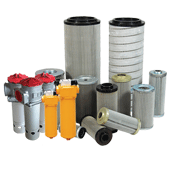
Moving the wetted structure to stainless steel removes both limits. Depending on the configuration, the element either uses a stainless steel medium throughout (sintered stainless fibre, woven mesh or pleated stainless screen) or combines a polymer medium with stainless steel end caps, core and cage where only mechanical strength and end connections need to be metallic. The first type is cleanable and reusable and is chosen for hot, corrosive or solvent service; the second type is chosen where a plant wants the disposal economics of a polymer medium but needs metal end hardware for housing compatibility, high-temperature joints or repeated handling.
The functional benefit in an ultrafiltration train is continuity. A metal element that can be backflushed, caustically cleaned or steam sterilised does not require the line to stop for a consumable change on the same schedule as a disposable cartridge. Instead, the element is cleaned and returned, and the disposable element remains in the fine guard position where its lower cost is justified. That split is the sensible architecture for plants running hot CIP regimes: metal upstream for the bulk solids and heat, polymer downstream for the final particle cut.
Dimensions follow the standard high flow envelope so that metal elements can be evaluated without rebuilding the skid: 4.5 inch nominal outer diameter, lengths from 20 to 60 inch, and end cap configurations to match common housings. Where a plant already runs polymer elements, the natural reference point for fit and flow comparison is High Flow Pleated Liquid Filter Cartridge HFU660UY060J for UF, and finer final-stage duties can be reviewed against Absolute Micron Rating High Flow Filter for UF Pre-treatment where a defined particle cut is required rather than a nominal one.

2. Working Principle
Retention in a stainless steel element depends on which medium is used, and the two families behave differently. Sintered stainless fibre media forms a rigid, three-dimensionally bonded pore structure; particles are captured through the full depth of the wall, and the element is cleaned by reversing flow, which drives the captured solids back out of the same pore path. Woven or pleated stainless mesh behaves more like a surface screen: the pore openings are geometrically regular, capture happens largely at the surface, and cleaning is a matter of removing the surface cake.
Both are depth-capable to different degrees, but the cleaning mechanism is what separates them from a polymer element. A polypropylene pleat pack holds solids inside a fibre matrix that cannot be opened up again; once loaded, the element is finished. A metal medium can be reopened because the structure is rigid and the bonds between fibres are metallurgical rather than mechanical. That reversibility is the technical core of the product, and it changes the operating economics from consumable cost to cleaning cost.
Flow in the high flow format is radial, outer cage to inner core, with the medium supported against the differential pressure. Because the structure is rigid, differential pressure can be run higher than a polymer element would tolerate, and temperature excursions during cleaning do not distort the pack. The operating signal remains differential pressure: change or clean when the value reaches the element limit, which for metal media is set by the structure rather than by a softening point.
One consequence deserves attention in membrane protection. A metal medium cannot shed fibre, because there is no fibre to shed in the polymer sense and no binder resin to migrate. For a membrane module that has already suffered an unexplained fouling event, replacing a shedding polymer stage with a metal element removes one candidate cause permanently. The trade-off is that metal media generally cost more per unit area and have a higher clean-water pressure drop at the same micron rating, so they are specified where temperature, chemistry or cleaning justifies the premium rather than as a blanket upgrade.
3. Technical Parameters
Construction options: all-metal element with sintered stainless fibre or pleated stainless mesh medium, or hybrid element with polymer medium and stainless steel end caps, core and cage. Stainless grades: 304 and 316L, with 316L specified for chloride-bearing and more corrosive service. Outer diameter: 4.5 inch nominal, compatible with standard high flow housings. Available lengths: 20 inch, 40 inch and 60 inch. Micron ratings: 1, 5, 10, 25, 50 and 100 micron, with tighter ratings available in sintered media. Maximum continuous operating temperature depends on the medium and the seal: all-metal elements with PTFE or metal seals are rated well above polymer limits, while hybrid elements are constrained by their polymer medium. Maximum differential pressure: rated per element type and confirmed at order, since the metal structure allows higher values than a polymer pack. Seal options: EPDM, Viton, PTFE and metal-to-metal where the application requires it.
Cleaning methods that can be applied include reverse flow backflush, ultrasonic cleaning, hot caustic circulation and, for all-metal elements, steam sterilisation. The number of cleaning cycles a medium can sustain before its rating drifts is a function of the solids load and the cleaning regime, and it should be established on site rather than assumed. Compatibility with the process fluid should be confirmed from a fluid data sheet: 316L covers a wide range but is not immune to chlorides at elevated temperature, and the seal material is usually the limiting component in aggressive chemistry.

4. Quality Assurance
Production follows an ISO 9001 quality management system, with incoming stainless media checked for grade certificate, pore uniformity and, for sintered material, bond integrity. Mesh is inspected for weave regularity and aperture consistency, since an irregular weave produces a rating that cannot be relied upon in service. Welded and moulded joints are examined for penetration and cleanliness, and the element is passivated where the specification calls for it so that free iron on the surface does not become a corrosion initiation point.
Finished elements pass a bubble point or equivalent integrity check, a pressure resistance test that exceeds the intended operating differential, and a full visual and dimensional inspection. Cleanliness is verified because a metal element is frequently used in a position where particulate contamination would be carried straight into a membrane module. Batch material certificates can be issued with each shipment, and third-party inspection is accepted on request. Where repeat cleaning is part of the duty, we can advise on a verification interval and supply the integrity test method so that rating drift is detected before it reaches the membrane.
5. Application Fields
5.1 High-Temperature Ultrafiltration Pretreatment
Where feed or cleaning temperatures exceed the polypropylene limit, a metal element in the guard position keeps the train running through hot caustic circulation and steam cycles without a consumable change.
5.2 Chemical and Solvent-Bearing Process Liquids
Aromatic solvents, chlorinated organics and aggressive process streams that attack polymer media can be handled by a 316L element with a compatible seal, allowing filtration to continue where a PP cartridge would fail.
5.3 Power Plant Condensate and High-Purity Water
Condensate polishing and high-purity loops benefit from an element that can be cleaned in place, does not shed fibre and tolerates the temperature excursions common in these systems.
5.4 Ozonated and Oxidising Water Streams
Where the pretreatment includes ozone, peroxide or other oxidising chemistry, metal media avoids the degradation that shortens polymer element life, removing a recurring consumable cost.
5.5 Reusable Guard Stages in Staged Trains
Plants running coarse-to-fine architectures can place a cleanable metal element at the front to absorb bulk solids, keeping disposable elements such as 50 Micron High Flow Filter Cartridge for Ultrafiltration Pre-treatment and Nominal Micron Rating High Flow Cartridge for UF Pre-treatment in the positions where their cost per unit of filtrate is lowest.
6. FAQ
Q1: When should I specify a stainless steel element instead of a polypropylene one?
A: When temperature, chemistry or cleaning regime exceeds what polypropylene can take: continuous service above roughly 82 degrees Celsius, oxidising or solvent-bearing streams, or a hot caustic and steam cleaning routine. Below those limits a polymer element is usually the more economical choice.
Q2: Can the element really be reused, and how many cycles?
A: All-metal elements can be cleaned by backflush, ultrasonic treatment or hot caustic circulation and returned to service. The number of viable cycles depends on solids load and the aggressiveness of cleaning, so it is established on site by tracking integrity test results rather than quoted as a fixed number.
Q3: Does metal media change the micron rating I need?
A: Ratings are defined the same way, but pressure drop at a given rating is generally higher than for a polymer pack, and the capture profile differs between sintered depth media and surface mesh. Share your flow and differential pressure budget so the element type and rating can be matched together.
Q4: Will it fit the housing we already use for polymer cartridges?
A: In most cases yes, because the standard 4.5 inch envelope and end connections are shared. Confirm the length, end cap style, seal type and the housing pressure rating, since a metal element may be operated at a higher differential pressure than the original polymer element.
Q5: Are 304 and 316L interchangeable?
A: Not for chloride-bearing or more corrosive service. 316L with molybdenum addition resists pitting better and is the usual choice where chlorides are present, including seawater-adjacent duties. 304 is adequate for benign aqueous streams where the specification allows it.
Q6: Does a metal element remove the need for a fine final filter?
A: No. It typically takes the bulk solids and heat load, which allows the fine disposable element behind it to run longer. Keeping a polymer or fine metal stage immediately before the membrane is still the standard practice.
Other products you may want to know about:
PP melt-blown filter
self-cleaning filter
cartridge filter housing