Polypropylene High Flow Filter Cartridge for Ultrafiltration Pretreatment
This article looks at the polypropylene high flow filter cartridge, the standard wide-body pleated element used ahead of ultrafiltration membrane trains in industrial water systems. A liquid filter built entirely from polypropylene has one clear advantage: the media, the core and the cage behave the same way in the same fluid, so there is no galvanic or chemical mismatch inside the element. Our cartridge is dimensionally and functionally cross-referenced with High Flow Pleated Liquid Filter Cartridge HFU660UY060J for UF, which makes it easy to slot into existing housings during a change-out. PP construction also keeps the element free of binder resins and loose fibre, a point that matters when the filtrate goes straight into a membrane skid.
1. Product Introduction
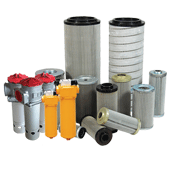
The polypropylene high flow filter cartridge is a wide-diameter pleated element whose wetted parts are made from one material family: the filter medium, the inner core and the outer support cage are all polypropylene. That single-material construction is not a cost shortcut; it is the design decision that defines how the cartridge behaves in service. Polypropylene is chemically inert across a wide band of aqueous liquids, it does not shed binder resin because no resin is used to bind the fibres, and it holds its shape in continuous water service well below its thermal limit. For ultrafiltration pretreatment, where the filtrate passes almost immediately into a membrane module worth many times the price of the filter, those three properties matter more than any single headline number.
The media itself is a melt-blown polypropylene layer pleated into a deep, dense fold pack. Grading is built into the sheet rather than applied as a separate pre-layer, so larger particles are held near the outer face and finer ones are captured deeper inside the wall. The pleat pack is supported on a ribbed polypropylene core and enclosed by a moulded outer cage. Because all three parts share the same thermal expansion behaviour, the element does not develop the internal clearances that appear when mixed materials are heated and cooled through repeated cleaning cycles.
Dimensions follow the common high flow envelope: 4.5 inch nominal outer diameter and 20, 40 or 60 inch lengths, with end cap styles and gasket options to suit standard housings. Graded versions of the same construction span 1 to 100 micron, and users comparing options in the range can review High Flow Rate Filter Cartridge for Ultrafiltration Pre-treatment for flow-capacity data, or step to Absolute Micron Rating High Flow Filter for UF Pre-treatment where the membrane requires a defined particle cut rather than a nominal one.
Where a plant runs a staged train, the usual arrangement is a coarse PP element at the front to take the mass load, a mid grade behind it, and a fine element directly ahead of the membrane. Coarse front-stage candidates include 50 Micron High Flow Filter Cartridge for Ultrafiltration Pre-treatment, while 5 Micron High Flow Filter Cartridge for Ultrafiltration Pre-treatment is the typical final guard. Keeping every stage in the same PP construction simplifies spares, and it avoids the situation where one stage tolerates a cleaning chemical that another stage cannot.

2. Working Principle
Flow in this element is radial, from the outer cage inward through the pleated wall and out through the perforated core. Two retention mechanisms operate together. Surface screening holds back particles larger than the pore opening at the outer face; depth capture traps smaller solids within the fibre matrix as the flow path folds back and forth between fibres. A graded sheet turns this into a sequence rather than a single barrier, so the wall fills progressively instead of blinding at the surface.
Polypropylene's role in that mechanism is more than structural. The fibre surface is hydrophobic and has low surface energy, which limits the adhesion of some organic and oily species compared with a hydrophilic medium; where the feed carries residual oil or organic colloid, this changes how the filter loads and how it is cleaned. The same surface chemistry is why PP is a poor choice for strongly oxidising service and a good one for dilute acid, dilute alkali and neutral brine within the temperature limit.
Pressure differential is the operating signal. As captured solids reduce open area, resistance climbs, slowly at first and then sharply once a dense surface layer forms. Cartridges are therefore changed on differential pressure, commonly at 2.5 bar and never beyond the element rating. Because the starting differential pressure of a deep-pleated wide-body element is low, a large part of the available head remains usable after the first layer of solids has formed, which lengthens the interval between change-outs at a given solids load.
One further mechanism deserves mention for membrane protection. Media that does not shed fibre cannot deliver loose strands downstream. A membrane that receives fibre has a fouling problem that looks like colloidal fouling but does not respond to the usual cleaning regime, and the cause is hard to trace once the evidence is inside the module. PP construction with no binder resin removes that failure mode at the source.
3. Technical Parameters
Model reference for cross-comparison: HFU660UY060J family. Wetted materials: pleated melt-blown polypropylene media, polypropylene inner core, polypropylene outer cage. Outer diameter: 4.5 inch nominal, compatible with standard high flow housings. Available lengths: 20 inch, 40 inch and 60 inch. Micron grades: 1, 5, 10, 25, 50 and 100 micron nominal. Maximum continuous operating temperature: 82 degrees Celsius. Maximum allowable differential pressure: 3.4 bar at 20 degrees Celsius water. Recommended change-out differential pressure: 2.5 bar. Gasket materials: EPDM, silicone or Viton, chosen for the fluid rather than for the media, since the elastomer is usually the limiting component in chemical service.
Flow capacity varies with length, micron grade, temperature and solids concentration. Coarse grades in a 60 inch element carry the highest single-cartridge flow; the same envelope in a fine grade carries less at equivalent pressure loss. Published figures are clean-water laboratory values and should be checked against site turbidity and temperature before the cartridge count is fixed. End cap configurations can be customised where a housing uses a non-standard connection.
Chemical compatibility is the parameter that most often decides whether PP is the right choice. Dilute acids, dilute alkalis, neutral brine and most aqueous process streams are acceptable within the temperature limit; concentrated oxidising agents, aromatic solvents and some chlorinated organics are not. Where the feed chemistry is uncertain, sheeting the actual composition is faster than inferring compatibility from a generic chart.
4. Quality Assurance
Production runs under an ISO 9001 quality management system. Incoming polypropylene media is checked for thickness consistency, pore uniformity and tensile strength before it enters the pleater, because a batch of uneven sheet produces a batch of unpredictable pressure curves. Automated pleating holds the fold geometry constant along the full length of the element, keeping the effective area and the inter-pleat gap within a narrow band.
Each finished cartridge passes a bubble point integrity check, a pressure resistance test and a full visual inspection. The ribbed core is inspected for deformation, since a partially collapsed core narrows the outlet channel and raises pressure drop without any defect being visible in the media. Elements are cleaned and packed in a controlled area to limit contamination before delivery.
Batch records can be issued with each shipment and third-party inspection is accepted on request. Media is tested for fibre release, both because loose fibre is a membrane risk and because a shedding medium cannot hold a stable micron rating over a full service cycle. Where a project requires documented performance, differential pressure curves measured at the specified flow, grade and viscosity can be supplied for review ahead of shipment.

5. Application Fields
5.1 Ultrafiltration Pretreatment
The main duty. Wide-body PP elements sit ahead of the membrane skid to hold feed turbidity and silt density within the design window, without introducing fibre or resin into the filtrate.
5.2 RO and NF Membrane Security Filtration
Reverse osmosis and nanofiltration trains use the same construction as a guard stage. PP elements tolerate the dilute acid and alkali regimes used in membrane cleaning better than media that depend on a binder.
5.3 Municipal and Industrial Water Plants
Large plants run continuous duty at high flow, where a low starting differential pressure translates directly into pump energy saved across thousands of operating hours.
5.4 Desalination and Brackish Water Intake
Intake water carries fine sediment and algal fragments that vary with tide and season. A cartridge with a graded PP wall absorbs those swings and keeps the downstream membrane train on a steady feed.
5.5 Chemical and Process Liquid Clarification
Dilute acid, dilute alkali and neutral brine streams in chemical plants use PP elements for clarification before ion exchange, resin beds or membrane separation, provided the fluid stays inside the compatibility and temperature envelope.
6. FAQ
Q1: Why choose polypropylene rather than another media for a high flow cartridge?
A: Polypropylene is chemically inert across most aqueous service, needs no binder resin, and does not shed loose fibre. It is also the cheapest route to a fully compatible element, because media, core and cage can all be made from the same material. It is not suitable for concentrated oxidising agents or aromatic solvents.
Q2: What is the temperature limit and what happens above it?
A: Continuous service is rated at 82 degrees Celsius. Above that the polypropylene softens, the pleat pack can deform and the retention rating becomes unreliable. For hotter streams, discuss alternative media with our engineers rather than operating above the limit.
Q3: Is the PP element affected by the chemicals used to clean the membrane?
A: Dilute citric acid, dilute caustic and the usual neutral detergent regimes are generally acceptable within the temperature limit. Strong oxidising cleaners such as high-concentration hypochlorite are not, and neither are aromatic or chlorinated solvents. Confirm the cleaning regime before the change-over.
Q4: How do I know the element will fit my existing housing?
A: Send the housing drawing, or the dimensions of the element currently installed: outer diameter, overall length, end cap configuration and gasket type. We will confirm fit against the standard 4.5 inch envelope and advise on any customisation needed.
Q5: When should the cartridge be replaced?
A: On differential pressure, normally at 2.5 bar, or earlier if membrane feed pressure starts to climb. Calendar replacement is unreliable because solids loading varies with raw water turbidity and season.
Q6: Can the element run in oil or solvent service?
A: Standard PP construction is intended for aqueous liquids. For oils, hydrocarbons or solvent streams, share the fluid data sheet so that media and gasket compatibility can be assessed; in many of those services a different polymer or a glass-fibre construction is the better route.
Other products you may want to know about:
cartridge filter housing
self-cleaning filter
PP melt-blown filter