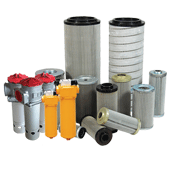
Large Flow Filter Cartridge: High-Capacity Solutions for Industrial Liquid Filtration Needs
1. Product Introduction
A
large flow filter cartridge is a high-performance depth-filter element engineered to handle extremely high volumetric throughput while removing suspended solids, sediments, and particulate contaminants from a wide range of process fluids. Unlike conventional small-diameter cartridges that require dozens of units inside a single housing, our
large flow filter cartridge consolidates the same or even greater filtration area into a single 6-inch diameter, up to 40-inch long element. This design shift is exactly why plant engineers around the world are replacing multiple-big-bag and multi-cartridge vessels with a smaller number of high-capacity elements. At the heart of the design is a
graded-density melt-blown polypropylene fiber matrix that traps particles progressively from the outer to the inner layers, combining high dirt-holding capacity with low initial pressure drop. Whether you operate a reverse-osmosis pre-treatment loop, a circulating cooling water system, or a chemical process line, the element is built to protect downstream membranes, pumps, nozzles, and instruments reliably and predictably.
2. Application Scenarios
Our large flow filter cartridge has been deployed across a broad spectrum of industrial scenarios. In power generation, it serves as pre-filtration for turbine condenser cooling water and make-up water to boiler systems. In petrochemical and chemical processing, it filters circulating water, amine solutions, and solvent streams where corrosion and fouling must be kept under tight control. In microelectronics and semiconductor manufacturing, it protects ultra-pure water loops before final polishing. In food and beverage production, it treats process water, CIP return streams, and edible-liquid pre-filtration. It is also widely used in municipal drinking water treatment, seawater desalination pre-treatment, iron and steel metallurgy, pulp and paper, and pharmaceutical water-for-injection loops. In every one of these scenarios, the cartridge solves the same operational pain: high flow rates combined with heavy solids loading, where traditional elements would foul within days and demand frequent, costly change-outs.
3. Technical Specifications
We design the element around a clearly defined set of performance boundaries so that engineers can size it with confidence. Standard outside diameter is 6 inches (152 mm), with lengths available in 20, 30, and 40 inches, yielding effective filtration areas from approximately 5 m² up to more than 15 m² per cartridge. Nominal and absolute ratings range from 1 µm to 100 µm, with the most common selections being 5, 10, 20, and 50 µm. Single-element flow capacity reaches up to 60 m³/h in clean water, depending on viscosity and differential-pressure allowance. The standard polypropylene media and core are compatible with water and most aqueous chemicals up to 80 °C; optional glass-fiber variants handle higher-temperature oils and solvents. Operating pressure is rated up to 10 bar with a maximum allowable differential pressure of 2.4 bar. End caps use a 222/226 double O-ring or flat-face connector configuration to fit standard large-vessel housings, and all wetted parts comply with food-contact and pharmaceutical-grade material declarations.
4. Product Advantages
The core advantages of our large flow filter cartridge come from four engineering decisions working together. First, the pleated and radial-graded media structure exposes a far larger effective area to the fluid than a spun-bonded element of the same size, which directly translates into lower pressure drop and longer service life. Second, the high dirt-holding capacity — often three to five times that of conventional 2.5-inch cartridges — means fewer change-outs per year and lower spare-parts inventory. Third, because one element replaces up to ten standard cartridges, the overall vessel footprint, piping, and installation labor are dramatically reduced. Fourth, the all-polypropylene construction delivers excellent chemical compatibility and releases negligible extractables, so it is safe for sensitive RO and UF membrane protection. Plant operators consistently tell us that the most noticeable benefit is not the filtration performance itself, but the predictable, stable differential pressure curve over weeks of operation, which lets them plan maintenance rather than react to sudden fouling events.
5. Application Procedures
Successful deployment follows a disciplined four-step procedure. During selection, we evaluate fluid viscosity, operating temperature, target particle size, required flow rate, and the available housing interface, and then recommend the appropriate micron rating and length. During installation, the vessel is opened, the old element is removed, O-rings are inspected and lightly lubricated with a compatible grease, and the new cartridge is seated firmly so that unfiltered liquid cannot bypass around the seal. During start-up, the inlet valve is opened slowly over five to ten minutes to allow trapped air to escape and to avoid a sudden pressure spike that could collapse the media; the initial flush is normally diverted to drain until the effluent runs clear. During operation, operators monitor inlet and outlet pressure gauges and trigger a change-out when differential pressure reaches the calibrated limit, or when the outlet quality begins to drift. Documenting each change-out in the equipment log is a simple habit that pays back handsomely in root-cause analysis later.
6. Quality Standards
Every cartridge leaves our production line under a controlled quality system certified to ISO 9001:2015. The melt-blown media is manufactured in a clean-room environment and tested for nominal efficiency, bubble-point, and membrane compatibility before pleating. All polypropylene components meet FDA 21 CFR 177.1520 food-contact requirements, and pharmaceutical-grade variants are produced under GMP conditions and supplied with a full documentation package including Certificate of Origin, Material Safety Data Sheet, and batch-specific test report. Each finished cartridge is individually pressure-tested for integrity and leakage, and serial-number traceability links the element back to the raw-media lot. We also support customer-specific qualification programs — including SAE Air Freight / Recommended Practice RG series validation protocols and customer-owned FAT/SAT acceptance tests — so that installation in regulated industries proceeds without surprises.
7. Working Principle
The large flow filter cartridge operates on a depth-filtration principle in which contaminated fluid typically enters from the outside and flows radially inward through the pleated media. The fiber matrix is deliberately built with a coarse-to-fine density gradient: the outer layers capture larger particles and debris, while progressively finer inner layers trap smaller and smaller micron-size contaminants. Particles are removed through a combination of interception, inertial impaction, and adsorption onto the fiber surface. Because the pleated design presents an extended surface area to the flow, the actual face velocity through the media stays low, which both reduces pressure drop and prevents captured particles from being dislodged by hydraulic shear. The filtered liquid then exits through the slotted inner core and out of the vessel. This outside-in flow direction also makes physical cleaning or back-pulsing practical in selected pre-treatment duties, extending the usable life of the element before final disposal.
8. Future Prospects
Looking ahead, the market for large flow filter cartridges is being reshaped by three powerful trends. First, increasingly stringent environmental discharge standards are pushing plants to adopt more reliable and more easily monitored pre-filtration upstream of membranes and zero-liquid-discharge systems. Second, the global drive toward water and energy conservation rewards elements that deliver stable low differential pressure, because every bar of pressure drop across a filter bank translates directly into pumping energy cost. Third, we see growing demand for smart-filter integration, in which differential-pressure transmitters and flow meters feed performance data into plant SCADA platforms, enabling predictive maintenance rather than calendar-based change-outs. On the material side, we are advancing bio-based and recyclable polymer media, enhanced nanofiber surface layers, and multi-layer composite structures that push absolute efficiency higher without sacrificing throughput. For end users, the practical implication is clear: specifying the right large-flow element today is becoming not just a procurement decision, but a long-term investment in plant uptime and regulatory compliance.
9. Conclusion
In summary, a large flow filter cartridge is far more than a bigger version of a conventional filter element. It is a purpose-engineered, high-area, depth-filtration solution that consolidates multiple housings, lowers pressure drop, extends service life, and protects the most valuable equipment in your fluid-handling train — reverse-osmosis membranes, circulating pumps, process nozzles, and analytical instruments. By combining graded-density media, all-polypropylene construction, rigorous quality certification, and a clear installation and change-out procedure, the element delivers predictable performance across power, chemical, food, microelectronics, and municipal water applications. For engineers evaluating filtration upgrades, the question is no longer whether large-flow technology is worth considering, but how quickly it can be specified and installed to start reducing change-out labor and operating cost.
10. Frequently Asked Questions
Q1. How do I choose the correct micron rating?
Start from the protected equipment: RO membranes commonly require 5 µm absolute pre-filtration, while circulating water systems often use 20–50 µm. Higher efficiency means higher pressure drop, so balance protection against energy cost.
Q2. How often should the cartridge be changed?
There is no fixed calendar interval. Change it when differential pressure reaches 2.0–2.4 bar, or when outlet turbidity or particle count drifts above the target baseline. Operators typically see 3 to 6 months in pre-treatment service.
Q3. Can it handle chemicals other than water?
The standard polypropylene version is compatible with most aqueous acids, bases, and solvents within rated temperature. Contact our engineering team with the specific fluid list for a compatibility review before installation.
Q4. Is the element reusable by back-washing?
Outside-in large-flow cartridges can tolerate limited back-pulsing in coarse pre-filtration duties, but they are fundamentally consumable depth-media. For maximum integrity, we recommend scheduled replacement rather than repeated cleaning.