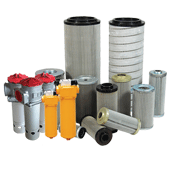
Fiberglass High Flow Filter Cartridge for Fine UF Pretreatment
This article covers the fiberglass high flow filter cartridge, the fine-grade element used in the last pretreatment position before an ultrafiltration or reverse osmosis membrane block. A liquid filterbuilt on glass microfibre media reaches high particle efficiency at ratings where polypropylene struggles, because the fibre diameter is far smaller and the pore structure is correspondingly tighter. Our cartridge is dimensionally cross-referenced with High Flow Pleated Liquid Filter Cartridge HFU660UY060J for UF, so it can be trialled in existing 4.5 inch housings against the polymer element already in service. The practical result is a lower silt density index on the membrane feed, achieved with a pressure drop that stays manageable across a full loading cycle.
1. Product Introduction
The fiberglass high flow filter cartridge occupies a specific niche in the pretreatment train: the fine polishing position immediately ahead of the membrane block, where particle removal efficiency matters more than unit cost. Glass microfibre media is made from fibres an order of magnitude finer than the melt-blown polypropylene used in general-purpose cartridges. Finer fibres pack into a tighter pore structure, and a tighter pore structure removes smaller particles at the same nominal rating. That is the whole reason the material exists in liquid filtration, and it is why a glass element at 1 or 3 micron will typically deliver a lower filtrate turbidity than a polypropylene element carrying the same number on its label.
The trade-off is equally clear. Glass media has a higher clean-water pressure drop for the same area and rating, it loads faster because it captures more of what passes through, and it depends on a binder system to hold the fibre mat together. Those three facts shape how the element should be specified. It belongs downstream, not upstream: after the coarse and mid-grade stages have taken the bulk solids, so that the fine stage is protecting the membrane rather than doing the plant's primary filtration. A glass element placed first in a high-turbidity stream will blind quickly and cost more per cubic metre than the arrangement it replaced.
Construction follows the high flow format. The pleated glass media pack is supported on a rigid core with an outer cage, and end caps are matched to standard housings at 4.5 inch nominal diameter in 20, 40 and 60 inch lengths. Because the medium is less tolerant of mechanical abuse than polypropylene, the support structure matters: a pack that flexes under pulsating flow loses area, and a fine medium that loses area stops delivering the efficiency it was specified for.
Where a plant is converting an existing skid, the reference element for dimensional comparison is High Flow Pleated Liquid Filter Cartridge HFU660UY060J for UF. For plants that need documented retention rather than a nominal figure, the fine-stage duty can also be reviewed against Absolute Micron Rating High Flow Filter for UF Pre-treatment, since glass media is frequently specified precisely where a defined particle cut is required.
Staging decisions usually look like this: a coarse element absorbs debris at the intake, a mid grade follows, and the glass element closes the train. Front-stage candidates include 10 Micron High Flow Filter Cartridge for Ultrafiltration Pre-treatment, and where the membrane is tolerant of a slightly coarser final cut, 5 Micron High Flow Filter Cartridge for Ultrafiltration Pre-treatment can serve the same protective role at a lower pressure cost. The choice between the two is set by what the membrane manufacturer specifies for feed silt density, not by a general preference for finer ratings.

2. Working Principle
Flow in the glass element is radial, outer cage to inner core through the pleated wall. Retention happens predominantly by depth capture rather than surface screening, because the medium is a three-dimensional mat of fine fibres rather than a geometrically regular screen. Particles follow the flow path between fibres, and the probability of contact rises steeply as the path lengthens and the fibre spacing narrows. That is why a glass mat can hold particles considerably smaller than its nominal rating while still offering a usable flow rate.
The efficiency curve of a glass medium is also steeper than that of a melt-blown polymer. A polymer element tends to pass a fraction of particles near its rating, with the fraction falling gradually as particle size increases. A glass mat cuts over more sharply, which in practice means the filtrate is cleaner at the same label value, and the downstream membrane sees a lower and more stable particle count.
Loading behaviour follows from the same structure. Because the mat captures material throughout its depth rather than only at the surface, it holds a substantial mass of solids before the surface layer forms. Pressure drop climbs gradually through that phase and then accelerates once the front face is covered. The operating signal is therefore differential pressure, and the change-out point is reached sooner than with a coarser polymer element under identical solids loading; that is a property of the medium, not a defect.
Two material facts govern service life. Glass fibre is chemically resistant to most acids but is attacked by strong alkali and by hydrofluoric acid, so the cleaning regime has to be checked before the element is installed. And the binder that holds the mat together has its own temperature and solvent limits, which in practice means the element is rated below the melting behaviour of the glass itself. Both limits are specified per product rather than assumed, and both should be confirmed against the actual cleaning chemicals used on the membrane.
3. Technical Parameters
Construction: pleated glass microfibre media with a rigid support core and outer cage, end caps matched to standard high flow housings. Outer diameter: 4.5 inch nominal. Available lengths: 20 inch, 40 inch and 60 inch. Micron ratings: typically 0.5, 1, 3, 5 and 10 micron, with the finer ratings reaching efficiencies that polypropylene media cannot match in the same envelope. Maximum continuous operating temperature depends on the binder system and is confirmed per product; glass media generally tolerates higher service temperatures than standard polypropylene elements, but the rating should be taken from the data sheet rather than inferred. Maximum differential pressure and recommended change-out differential pressure are specified per element type, since a fine glass mat reaches its limit earlier than a coarse polymer pack. Seal options: EPDM, silicone and Viton, selected for the process fluid.
Flow capacity is lower than an equivalent-area polymer element at the same rating, because the pore structure is tighter. Published figures are clean-water laboratory values; site performance depends on turbidity, temperature and the particle size distribution of the solids. Where a project has a fixed pressure budget, the cartridge count should be calculated from the measured pressure curve at the actual flow rather than scaled from a general table. End cap configurations can be customised where a housing uses a non-standard connection.
Chemical limits that should be checked before specification: strong alkali at elevated temperature, hydrofluoric acid, and solvents that attack the binder system. Most neutral and mildly acidic aqueous streams, including seawater, brine and dilute acid cleaning solutions, are compatible within the temperature limit.

4. Quality Assurance
Production runs under an ISO 9001 quality management system. Incoming glass media is inspected for fibre uniformity, basis weight consistency and binder distribution, because variations in any of these shift both the efficiency curve and the pressure curve. Automated pleating holds the fold geometry constant, and the pack is examined for crushed crests and open channels before assembly, as a fine medium is less forgiving of geometric defects than a coarse one.
Finished elements pass a bubble point or particle challenge integrity check, a pressure resistance test and a full visual and dimensional inspection. Media is tested for fibre release: glass media carries a higher shedding risk than polypropylene, and loose fibre reaching a membrane module produces fouling that is difficult to diagnose and expensive to correct. Elements are cleaned and packed in a controlled area to limit contamination before delivery. Batch records and, where required, particle challenge test data can be issued with each shipment, and third-party inspection is accepted on request.
5. Application Fields
5.1 Fine Polishing Before UF and RO Membranes
The primary duty. A glass element in the last pretreatment position lowers feed silt density and particle count, which is what membrane manufacturers actually specify when they set a warranty condition.
5.2 Condensate Polishing and High-Purity Water
Fine glass media removes residual particulate and metal oxide fragments from condensate and high-purity loops, where filtrate cleanliness matters more than consumable cost.
5.3 Desalination Final Guard Stages
Intake pretreatment removes the mass load; the glass stage behind it keeps fine sediment and algal fragments from reaching the membrane block during turbidity excursions.
5.4 Fine Chemical and Process Liquid Clarification
Where a process stream requires low particulate content before ion exchange, resin beds or membrane separation, a glass element provides the efficiency that a coarser medium cannot reach in the same housing.
5.5 Coalescing and Separation Support Duties
Glass media is also used as a coalescing or pre-coalescing stage in some separation skids, where its fine structure promotes droplet capture ahead of a separator element.
6. FAQ
Q1: Why choose glass fibre rather than polypropylene for a high flow cartridge?
A: Glass microfibre removes smaller particles at the same nominal rating, so the filtrate is cleaner for a given label value. It is the right choice for a final polishing stage before a membrane. The costs are a higher pressure drop and a faster loading cycle, which is why it belongs downstream of coarser stages.
Q2: How does the element behave with alkaline cleaning chemicals?
A: Glass fibre is attacked by strong alkali, particularly at elevated temperature, and by hydrofluoric acid. Dilute caustic at moderate temperature is normally acceptable within the stated limits, but the exact concentration, temperature and contact time should be confirmed against the data sheet before the cleaning routine is adopted.
Q3: Does glass media shed fibre into the filtrate?
A: It carries a higher shedding risk than polypropylene, which is why elements are tested for fibre release and why the downstream position matters. A properly bound medium with a supported pack does not release fibre in normal service, but the risk is real enough that verification data should be requested for membrane-protection duties.
Q4: What micron rating should I select for the final stage?
A: Follow the membrane manufacturer's feed specification rather than a general preference. In most surface-water ultrafiltration duties, 1 to 5 micron covers the requirement; tighter ratings raise pressure drop and shorten the cycle without necessarily improving membrane life.
Q5: How often does the glass element need replacing?
A: On differential pressure, at the value specified for the element type, which is reached earlier than with a coarse polymer pack under the same solids load. Track the pressure curve from the first cycle so the interval is planned from measured data rather than estimated.
Q6: Will it fit our existing high flow housings?
A: In most cases yes, because the 4.5 inch envelope and end connections are shared with the polymer elements in the same family. Confirm length, end cap style, seal type and housing pressure rating before ordering, and check that the differential pressure the element will see is within the housing's rating.
Other products you may want to know about:
PP melt-blown filter
self-cleaning filter
cartridge filter housing