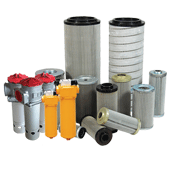
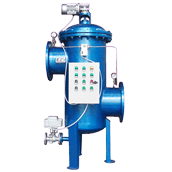
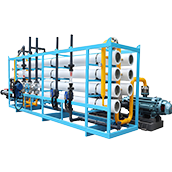
Industrial water filter cartridge is a replaceable core filtration component built for industrial liquid purification systems, widely installed inside filter housings to separate solid pollutants from process water, circulating water and raw water. Unlike household filter elements, this product is engineered for continuous heavy-load operation, stable flow and consistent filtration accuracy under fluctuating pressure. Common media options include polypropylene melt-blown, pleated membrane, string-wound, activated carbon and sintered metal. Each media type serves different removal targets: sediment, suspended solids, colloids, rust, organic contaminants and residual chlorine. As a primary or precision pre-filtration unit, Industrial water filter cartridge acts as a protective barrier for reverse osmosis membranes, ion exchange resins, heat exchangers and precision instruments, cutting equipment failure risk caused by particle contamination.
Typical application scenarios cover multiple industrial sectors. In food and beverage manufacturing, Industrial water filter cartridge purifies production water for beverage mixing, bottle washing and raw material processing to meet hygiene control requirements. In chemical processing, it filters process fluid, circulating cooling water and cleaning water, protecting pumps, valves and reaction units from abrasive particles. Power plants use these cartridges for boiler feedwater and condensate polishing to reduce pipe scaling and corrosion. Electronics and semiconductor factories adopt high-precision grades to produce ultrapure water for chip cleaning. Water recycling and wastewater reuse systems install Industrial water filter cartridge as an intermediate treatment step to capture residual solids before advanced treatment. Other common fields include pharmaceutical production, printing and dyeing, mining water treatment and commercial boiler water conditioning.
The main technical parameters of Industrial water filter cartridge are standardized for flexible matching. Filtration precision ranges from 0.2 μm to 100 μm to satisfy coarse and fine filtration needs. Standard lengths include 10 inches, 20 inches, 30 inches and 40 inches; custom lengths are available for special housings. Outer diameters are normally 2.5 inches or 4.5 inches. Operating temperature limits depend on filter media: polypropylene versions work steadily from 5°C to 60°C, while metal or PES media support higher temperature up to 80–90°C. Recommended working pressure falls between 0.1 MPa and 0.6 MPa, and the maximum allowable differential pressure before replacement is usually 0.3 MPa. Flow rate varies by size and micron rating; a 20-inch 5 μm pleated Industrial water filter cartridge can reach roughly 10–15 L/min under rated pressure. End cap styles include DOE, SOE and flat caps for different filter housing interfaces.
The core product advantages make Industrial water filter cartridge popular in industrial purification. First, it delivers stable filtration efficiency and high dirt holding capacity, which lengthen service cycles and reduce shutdown frequency. Second, most versions adopt thermal bonding without extra adhesive, preventing secondary contamination and fiber shedding. Third, modular and standardized design allows fast, tool-free replacement to cut maintenance time. Fourth, excellent chemical compatibility enables stable operation in neutral water, weak acid and weak alkaline environments. Fifth, low flow resistance minimizes energy consumption for water pumps. Sixth, multiple media and micron options support customized grading filtration schemes, from pre-filtration to terminal polishing. These strengths jointly lower the overall operating cost of the water treatment system.
Standard application procedures follow clear steps. Before installation, inspect the Industrial water filter cartridge for damage and confirm that micron grade, size and sealing ring match the housing. Close inlet and outlet valves and release residual pressure inside the filter vessel. Remove the old cartridge, clean the housing interior and check for sediment accumulation. Place the new cartridge vertically and align the sealing end correctly to avoid bypass leakage. Tighten the housing sump properly and reopen valves slowly to vent air gradually. Record initial pressure difference. During operation, track pressure gauge readings daily. When differential pressure hits the preset threshold, prepare for replacement. After replacement, run forward flushing for 5–10 minutes before putting the system back into formal production. Keep maintenance logs for traceability.
Strict quality standards control the performance of Industrial water filter cartridge. Production follows ISO 9001 quality management system. Materials contacting water comply with food contact and water safety specifications. Each batch goes through integrity testing, bubble point testing and flow inspection to verify no leakage and qualified precision. High-grade models for pharmaceutical and drinking water related projects can pass NSF certification. Raw material inspection, semi-finished sampling and finished-product random inspection form three testing links. All product labels mark micron rating, material, temperature limit and batch number to ensure traceability.
The working principle of Industrial water filter cartridge relies on depth filtration or surface filtration. Depth filter media have irregular, stacked porous structures. When water flows radially from outside to inside, large particles are trapped on the outer layers, while fine contaminants are intercepted in deeper pores. Pleated membrane cartridges mainly adopt surface sieving; particles larger than the rated pore size are blocked on the membrane surface. With continuous operation, contaminant loading increases and pressure difference rises. Once the pores are heavily blocked, flow drops obviously and the cartridge must be replaced. The radial flow design balances filtration area and holding capacity, avoiding rapid clogging under high solid content.
The future prospect of Industrial water filter cartridge stays positive. Global stricter wastewater discharge rules and rising demand for industrial water reuse push manufacturers to upgrade filter media. Nanofiber composite media, anti-fouling coating materials and biodegradable filter materials become important research directions. Intelligent monitoring gradually combines with filter cartridges; built-in pressure and water quality sensors can send replacement reminders automatically. The market also sees growing demand for high-temperature resistant and strong solvent resistant cartridges for special chemical working conditions. As enterprises value water conservation and circular production, graded pre-filtration with Industrial water filter cartridge will become a standard configuration in more water treatment lines.
In conclusion, Industrial water filter cartridge is an economical, reliable and essential component in industrial water treatment. It provides graded particle removal, protects downstream high-value equipment and stabilizes outlet water quality. With flexible specifications, mature installation procedures and complete quality control, it adapts to diverse industrial scenarios. Continuous material innovation and intelligent transformation will further expand its value in water recycling and low-carbon industrial production.
Frequently Asked Questions
Q1: How to select the micron rating of Industrial water filter cartridge?
A1: Choose higher micron (10–50 μm) for pre-filtration to intercept large sediment; select 0.2–5 μm for precision filtration before RO or ultrapure water systems.
Q2: What causes short service life of the cartridge?
A2: Excessive suspended solid content in raw water, wrong micron selection, poor sealing leakage or frequent pressure impact will accelerate clogging.
Q3: Can the Industrial water filter cartridge be cleaned and reused?
A3: Common PP melt-blown and pleated membrane cartridges are disposable. Sintered metal types can be cleaned by backwash for limited reuse cycles.
Q4: What risks will poor sealing bring?
A4: Unsealed bypass lets unfiltered water pass directly, which damages downstream membranes and precision equipment.