Surface filter cartridge: Reliable Filtration for Industrial Fluid Treatment
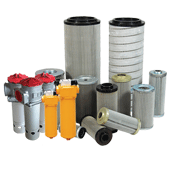
If you are looking for stable, predictable particle removal for liquid and gas processing, the Surface filter cartridge is one of the most practical filtration elements available in modern industrial systems. Unlike depth filter cartridges that trap contaminants inside the fiber matrix, the Surface filter cartridge captures suspended particles mainly on the outer surface of its filter medium, following a screening mechanism. Most models adopt pleated media design to expand effective filtration area within a compact cylindrical body. Common media materials include polypropylene, nylon, PTFE and polyester, selected based on chemical compatibility, temperature and cleanliness requirements. Its simple replaceable structure allows fast installation and removal inside standard filter housings, which greatly reduces downtime during routine maintenance. This product is built for clear particle cutoff, consistent filtration efficiency and easy visual inspection of contaminant loading.
The application scenarios of the Surface filter cartridge span a broad range of liquid and gas purification sectors. In water treatment, it handles raw water pre-filtration, circulating water polishing and reverse osmosis pre-protection, intercepting sediment, rust flakes and colloidal particles before they damage membrane systems. In food and beverage production, it filters wine, syrup, edible oil and beverage base liquid to remove foreign particles and improve product clarity. The pharmaceutical industry uses it for buffer liquid filtration, reagent purification and sterile pre-filtration to meet high cleanliness demands. Chemical processing plants deploy it for solvent filtration, plating solution purification and fine chemical clarification. It also serves electronics manufacturing for ultra-pure water preparation, power plants for boiler feedwater treatment, and paint and ink production to filter agglomerates and undissolved solids. For compressed air and inert gas pipelines, the Surface filter cartridge removes dust, oil aerosols and fine particulates to protect downstream instruments and valves.
Core technical parameters define the performance boundary of each Surface filter cartridge. Filtration precision ranges from 0.22 micron to 100 micron, with absolute rated options for critical processes. Standard lengths cover 10, 20, 30 and 40 inches to match mainstream filter housings. The maximum operating temperature varies by media: polypropylene versions withstand up to 80°C, nylon up to 120°C and PTFE media can work steadily near 135°C. Recommended working pressure is less than 0.4 MPa, and the maximum allowable differential pressure before replacement sits at 0.3 MPa. Flow capacity depends on micron grade and pleat area; a 20-inch 5-micron Surface filter cartridge typically supports 5–10 L/min for water-based fluids. It supports outside-in radial flow as the standard flow path. Adhesive-free thermal bonding is used in many versions to avoid extractable contamination. Chemical compatibility is tested against acids, alkalis, alcohols and common organic solvents before delivery.
The advantages of the Surface filter cartridge make it stand out in many process filtration tasks. First, its surface sieving mechanism delivers clear, predictable particle retention. Operators can judge clogging status directly by observing the cake layer on the outer surface. Second, the pleated structure creates large filtration area, supporting high flow rates with relatively low initial pressure drop. Third, the surface loading mode simplifies cleaning and recovery for reusable media; after backwashing or ultrasonic cleaning, many cartridges can return to service. Fourth, it generates consistent effluent quality and avoids fiber shedding risks when manufactured properly. Fifth, modular size design fits most standard filter vessels, so users can upgrade or replace without modifying existing piping. Finally, compared with complex separation equipment, the Surface filter cartridge has low procurement cost and low maintenance threshold.
In daily application procedures, operators should follow standardized steps to maximize service life and filtration stability. Before installation, inspect each Surface filter cartridge for surface damage and verify material compatibility with the process fluid. Confirm correct sealing gaskets to prevent bypass leakage. After installation, perform gradual venting to eliminate trapped air inside the housing, as air locking will cause unstable flow and false pressure readings. Monitor inlet and outlet pressure drop continuously; once differential pressure reaches the preset limit, stop operation and replace or clean the cartridge. When handling corrosive or high-temperature fluid, start the system with low flow and ramp up pressure slowly. Record running hours, pressure data and fluid condition for batch traceability. Dispose of contaminated cartridges according to local waste regulations, especially when filtering hazardous chemicals.
Strict quality standards control every batch of Surface filter cartridge. Production follows industrial filtration quality management systems. Each finished unit undergoes integrity testing, including bubble point test for membrane grades to confirm no pinhole defects. Filtration efficiency is verified with standardized particle challenge tests. Material extractable testing ensures no harmful substances leach into food, pharmaceutical or ultrapure water streams. Dimensions, gasket flatness and sealing performance are checked one by one. Raw material certificates and test reports are attached for traceability. The product meets general industrial hygiene requirements, and special grades comply with food contact and bioprocess industry norms. All test data is archived to support batch review and customer audit.
The working principle of the Surface filter cartridge relies mainly on mechanical straining. Fluid flows radially from outside toward the central support core under system pressure. Particles larger than the defined pore size are blocked and accumulate on the outer surface of the filter media, forming a filter cake. This cake layer can further intercept finer particles, improving overall filtration precision during operation. Particles smaller than pores pass through the media together with clean fluid and flow out from the inner core. Different from depth filtration, few particles penetrate deep into the media body. The rising pressure drop signals that the surface cake has covered most available pores. At this stage, the Surface filter cartridge loses flow capacity and needs cleaning or replacement. Proper flow direction is essential; reverse flow may peel off captured contaminants and cause secondary pollution.
Looking into the future, the market demand for Surface filter cartridge keeps growing alongside stricter environmental and product quality regulations. More factories upgrade their fluid purification links to reduce waste and improve finished product qualification rates. New media materials with better temperature resistance, solvent tolerance and anti-fouling performance are continuously developed. Integrated smart filtration systems combine pressure sensors and automatic alarm modules with Surface filter cartridge assemblies to realize predictive maintenance. Water recycling, zero-liquid-discharge projects and green chemical plants will become major growth markets. Customized sizes and special media for high-viscosity fluid filtration will expand application boundaries. Although new separation technologies emerge, the Surface filter cartridge will remain a foundational, cost-effective solution for pre-filtration and fine polishing in most industrial processes.
To sum up, the Surface filter cartridge is a mature, flexible surface interception filter element built for reliable solid-liquid and solid-gas separation. Its clear filtration cutoff, large pleated area, convenient replacement and controllable quality fit diverse industrial purification needs. It protects expensive downstream equipment, stabilizes product quality and lowers overall operating cost. As process requirements become more precise, correct selection, regular monitoring and standardized operation will unlock its full value. It will continue to serve as a basic and irreplaceable component in the global filtration supply chain.
Frequently Asked Questions
Q1: What is the difference between a Surface filter cartridge and a depth filter cartridge?
A1: A Surface filter cartridge traps particles mostly on the media surface by sieving. Depth filters capture contaminants inside the porous media layer. Surface types are easier to inspect and clean, while depth filters usually have higher dirt holding capacity for heavy turbidity fluid.
Q2: Can I reuse the Surface filter cartridge after clogging?
A2: It depends on media type. Nylon, stainless steel mesh and some polyester pleated versions can be backwashed or ultrasonically cleaned. Disposable polypropylene membrane grades are not recommended for reuse once fouled.
Q3: How do I select the micron rating of a Surface filter cartridge?
A3: Choose according to downstream protection targets. Use larger micron grades for pre-filtration, then finer grades for polishing. Always consider fluid viscosity, temperature and chemical compatibility together.
Q4: Why does pressure drop rise quickly on a new Surface filter cartridge?
A4: Common causes include excessive incoming solid load, wrong flow direction, air locking inside the housing or mismatched micron grade. Check upstream pre-treatment first.