Depth Filter Cartridge: Reliable Liquid Purification for Industrial Processes
When industrial operators talk about consistent pre-filtration and particle removal, Depth filter cartridge often becomes the preferred solution. Unlike surface filters that only trap contaminants on the outer layer, Depth filter cartridge uses gradient-density fiber media to capture impurities inside the full thickness of the filter matrix. This core design makes it suitable for fluids with wide particle size distribution and high solid loading. In this article, we will walk you through product introduction, application scenarios, technical parameters, core advantages, standard operating procedures, quality standards, working principle, future outlook, conclusion and frequently asked questions about Depth filter cartridge.
Product Introduction
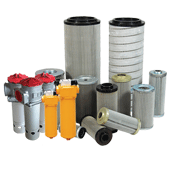
A Depth filter cartridge is a cylindrical disposable filter element constructed by melt-blown or wound fiber materials around a rigid perforated inner support core. The media forms a natural graded pore structure: outer layers have loose, large pores, while inner layers turn progressively denser with finer pores. Common raw materials include polypropylene, glass fiber and cellulose. No extra adhesive is added to most melt-blown styles, which effectively avoids media shedding and secondary contamination. As a typical depth filtration unit, it is mainly used as pre-filter or primary clarification filter before fine filters, membrane systems and process equipment.
Application Scenarios
Depth filter cartridge serves diversified liquid purification sectors. In biopharmaceutical production, it clarifies fermentation broths, cell cultures and buffer solutions to reduce particle load before sterile filtration. In food and beverage processing, it filters fruit juice, syrup, edible oil and brewing liquid to remove pulp, sediment and colloids. Water treatment plants use it for raw water filtration, reverse osmosis pre-treatment and boiler feed water purification. The chemical industry applies it for solvent filtration, coating liquid and additive purification. It is also widely adopted in electronics manufacturing for ultrapure water production, as well as automotive and lubricant processing for oil clarification.
Technical Parameters
Standard specifications of Depth filter cartridge are configurable according to system requirements. The micron rating ranges from 0.5 μm to 100 μm. Common lengths cover 10, 20, 30 and 40 inches. Outer diameter is normally 60–70 mm and inner diameter 28–30 mm. The maximum working temperature for polypropylene versions reaches 65°C, and glass fiber types can withstand up to 120°C. Recommended operating differential pressure is below 0.35 MPa; the maximum allowable differential pressure before replacement is 0.42 MPa. Available end cap connections include DOE, 222 and 226. Material compatibility covers most water-based liquids, weak acid and weak alkali solutions. Custom sizes and special end structures are supported for non-standard filter housings.
Product Advantages
The biggest advantage of Depth filter cartridge is its high dirt-holding capacity, thanks to the three-dimensional depth capture structure. Large particles are intercepted on outer loose layers while fine particles are trapped deep inside, delaying filter blinding and extending service life. It delivers stable filtration efficiency and low initial pressure drop under continuous flow. Binder-free fiber media guarantees low fiber release, which is critical for hygiene-sensitive industries. Installation and replacement take minimal time without complex pre-treatment. It supports flexible selection of micron grades and materials to match different fluid properties. Compared with many precision filters, it brings lower overall operation cost by reducing replacement frequency and protecting expensive downstream membranes.
Application Procedures
Before installing a Depth filter cartridge, confirm the filter housing is clean and all sealing surfaces are intact. Check that the selected micron grade, material and length match process parameters. Place the cartridge vertically into the housing, align the end cap and seal ring properly, then tighten the housing. Start the system at low flow first to exhaust air inside the housing, and gradually adjust to rated flow. Record inlet and outlet pressure regularly. Replace the cartridge once the differential pressure hits the preset threshold. After replacement, flush the pipeline and confirm the outlet clarity before resuming formal production. Used cartridges should be disposed of according to local waste and hazardous material rules.
Quality Standards
All Depth filter cartridge follows strict production and inspection standards. Raw material batches are tested for purity, extractable substances and fiber migration. Finished products pass bubble point test, integrity test and visual inspection. Food-grade and pharmaceutical grades comply with relevant hygiene requirements for non-toxic materials. Each batch keeps complete production records, inspection reports and batch traceability data. Dimensional consistency, sealing performance and chemical compatibility are verified before delivery. Random sampling is carried out periodically to stabilize product quality.
Working Principle
The filtration principle of Depth filter cartridge relies on combined mechanical interception and inertial adsorption. When fluid flows radially from outside to inside through the fiber matrix, large particles are blocked by outer coarse layers. Medium-sized particles are trapped in the middle fiber layers, and tiny colloids are captured by adsorption inside dense inner layers. Particles are distributed across the whole media depth rather than stacking only on the surface. This graded capture mechanism prevents fast surface clogging and maintains stable flow for a longer running cycle.
Future Prospect
The market demand for Depth filter cartridge keeps rising, pushed by stricter industrial purification regulations. Biopharmaceutical, food safety and ultrapure water sectors are the main growth drivers. Future development directions focus on sustainable fiber materials, higher contaminant holding capacity and customized single-use structures. Combined with online pressure monitoring sensors, intelligent early warning will realize predictive cartridge replacement to cut unplanned shutdowns. New composite media will expand compatibility with strong solvent and high-temperature fluids. As manufacturers pursue lower waste and cleaner production, high-performance Depth filter cartridge will remain an irreplaceable upstream clarification component across global liquid filtration chains.
Conclusion
To sum up, Depth filter cartridge is a mature, cost-effective depth filtration element built on gradient fiber media. It balances reliable particle retention, high dirt loading and easy maintenance. From pre-treatment of RO systems to clarification of biotech feedstock, it reduces impurity burden for downstream precision filtration equipment and stabilizes final product quality. Choosing suitable micron rating and material according to fluid characteristics can maximize its value. With continuous material and process innovation, Depth filter cartridge will keep supporting cleaner, safer and more efficient liquid production.
Frequently Asked Questions
Q1: What is the difference between Depth filter cartridge and pleated filter cartridge?
A1: Depth filter cartridge captures particles inside the media with higher dirt holding capacity for heavy sediment fluids. Pleated filters mainly filter on the surface with larger filtration area for low-contaminant fine filtration.
Q2: Can a blocked Depth filter cartridge be cleaned and reused?
A2: Most standard Depth filter cartridge are disposable. Once saturated with contaminants, backwashing cannot fully restore performance and may cause fiber shedding.
Q3: How do I select the micron grade of Depth filter cartridge?
A3: It depends on downstream protection targets. For RO pre-filtration, 5 μm is widely used; for beverage clarification, 1–3 μm is common.
Q4: Will polypropylene Depth filter cartridge resist alcohol and weak chemicals?
A4: Polypropylene media shows good compatibility with alcohol, weak acid and weak alkali, but compatibility testing is recommended for special organic solvents.