High capacity filter cartridge: A Complete Guide for Industrial Liquid Filtration
Every hydraulic, lubrication, or process system runs on clean fluid, and the component that quietly decides how long that cleanliness lasts is the high capacity filter cartridge. This guide explains what it is, where it works best, what makes it valuable, and what to check before buying one. Whether you maintain mobile machinery, run a production line, or buy filters for a whole plant, you will finish with a practical picture of what a high capacity filter cartridge can do for your system.
1. Product Introduction
After years in industrial filtration, I have learned one thing: the
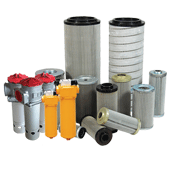
filter cartridge is the unsung hero of every fluid system. A high capacity filter cartridge takes that idea further. Instead of relying on a small amount of media, it uses deep, finely pleated media to pack a much larger filtration area into the same housing. More media area means more room to store contaminant, which translates directly into higher dirt holding capacity and a longer service life between change-outs.
Built around a rigid center tube and precision-formed pleats, it absorbs pressure surges and harsh conditions without collapsing. The result is an element that does more work, lasts longer, and protects downstream components better than a conventional filter of the same size.
2. Application Scenarios
Where does a high capacity filter cartridge earn its keep? Practically anywhere that clean fluid matters. In hydraulic systems it protects pumps, valves, and servo components from abrasive particles. In lubrication systems it guards gearboxes, bearings, and engines. It is equally at home in mobile equipment, power stations, mining machinery, marine vessels, and process industries.
The real value shows up in high-contaminant environments such as construction sites, foundries, and offshore platforms, where dust and wear debris enter the fluid continuously. There, the high capacity filter cartridge buys precious time between service intervals and prevents the sudden failures that stop production.
3. Technical Parameters
Honest selection starts with numbers. A typical high capacity filter cartridge is rated by its filtration efficiency, expressed as a beta ratio and tested to ISO 16889. Common ratings run from beta-3 of 200 or higher up to beta-25 of 1000 or higher, meaning it removes most particles at and above the rated micron size. Nominal and absolute ratings typically span 1 to 25 micrometers.
Other parameters worth comparing include media surface area, often 1.5 to 3 times that of a standard element; dirt holding capacity in grams; maximum operating pressure; collapse pressure; maximum operating temperature; and initial pressure drop. The cartridge must also be compatible with mineral oils, synthetic fluids, water-glycol mixtures, and fuels. Dimensions, outer diameter, inner diameter, length, and gasket or O-ring size, must match the housing exactly; even a perfect element cannot perform if it does not seal.
4. Product Advantages
What I always tell buyers is simple: look at the cost per hour, not the price per cartridge. The high capacity filter cartridge wins on total cost because it holds more contaminant before reaching its change-out pressure limit. That means fewer elements, fewer labor hours, less oil drained, and fewer system shutdowns over the same period.
It also keeps pressure drop lower for longer, so pumps work less hard and energy consumption stays down. The reinforced pleat pack improves fatigue resistance in systems with frequent flow surges. And because the media area is larger, efficiency is maintained even as the element loads up, giving consistent protection to the end of its life.
5. Applications
Beyond the classic hydraulic and lubrication roles, the high capacity filter cartridge fits a wide range of application programs. Hydraulic power units and servo systems need the highest protection; gearboxes and circulating oil systems use it to control wear; compressors and turbines rely on it for oil cleanliness; process industries apply it to water, coolant, and fuel filtration.
Retrofit is a key application. Because the cartridge uses the same envelope as standard elements, a plant can upgrade an existing housing simply by switching to a high capacity element, gaining capacity and service life without replacing the filter head, bowls, or piping.
6. Quality Standards
Quality is not a claim; it is a test result. A trustworthy high capacity filter cartridge is verified against international standards: ISO 16889 for multi-pass filtration performance and contaminant capacity, ISO 2941 for collapse and burst pressure rating, ISO 2942 for fabrication integrity and bubble point, ISO 2943 for material compatibility with fluids, ISO 3724 for resistance to flow fatigue, and ISO 3968 for pressure drop versus flow characteristics. Fluid cleanliness coding follows ISO 4406.
Manufacturers serious about consistency run their plants under ISO 9001 quality management systems and perform integrity testing on production batches. When you see these standard numbers in a datasheet, you know the element was tested, not just designed.
7. Working Principle
How does a high capacity filter cartridge actually work? Fluid enters from the outside and passes through the pleated media into the central channel, then leaves through the outlet. Particles are captured by direct interception, inertial impaction, and diffusion, with the media's pore structure doing the sieving work.
The genius of the high capacity design is depth loading. Because the media is thicker and the pleats are deeper, particles are trapped inside the media matrix instead of forming a surface cake, so the element keeps absorbing dirt until the differential pressure approaches the change-out limit. A bypass valve protects the system during cold starts, and an indicator tells the operator when replacement is due.
8. Future Prospects
Filtration is moving fast, and the high capacity filter cartridge is at the center of that movement. Nanofiber layers boost efficiency without raising pressure drop, and synthetic and biodegradable media cut disposal cost and environmental impact. Smart filtration is also arriving: sensors track differential pressure and remaining capacity, feeding data to condition-monitoring systems so elements are changed only when truly needed.
I expect filter housings to stay largely unchanged while elements get smarter, which is exactly why the high capacity format, a drop-in upgrade that works with existing hardware, is well positioned for the next decade.
9. Conclusion
The high capacity filter cartridge is not a marketing phrase; it is a proven engineering solution that delivers more capacity, longer service life, and lower operating cost in the same footprint. For any system that struggles with frequent filter changes, pressure-related failures, or high contamination levels, it is the most practical upgrade available. Choose a verified element with clear test data, install it correctly, and monitor the differential pressure, and it will quietly pay for itself many times over.
10. Frequently Asked Questions
Q1: How often should a high capacity filter cartridge be replaced?
There is no fixed interval. Replace it when the differential pressure indicator reaches the manufacturer's limit, or when fluid analysis shows cleanliness falling below target. In clean systems this usually means fewer change-outs than with standard elements.
Q2: Can a high capacity filter cartridge fit my existing housing?
In most cases, yes. As long as the outer dimensions, thread or gasket type, and O-ring size match, the high capacity element is a direct drop-in replacement. Always confirm the envelope and flow rating before ordering.
Q3: What micron rating should I choose?
Match the rating to the sensitivity of your components. Servo valves and fine clearances need finer ratings such as 3 or 5 micrometers, while general hydraulics usually perform well at 10 to 25. Your target fluid cleanliness under ISO 4406 should guide the decision.
Q4: Why does pressure drop matter?
Pressure drop is the resistance the element creates. A higher drop makes pumps work harder and wastes energy; a blocked element can starve a system. A high capacity filter cartridge keeps the drop low for longer because of its large media area.
Q5: Can the element be cleaned and reused?
Generally, no. Pleated media filters are designed for single use; washing forces contaminant deeper into the media and damages the pleat structure, which defeats the purpose and risks component damage. Replacement is the economical and safe practice.
Q6: How should I store spare cartridges?
Keep them sealed in their original packaging, away from sunlight, heat, and humidity, and store them upright. Properly stored, most elements last for years.