Industrial High Flow Filter Cartridges: Efficiency, Reliability and Long-Term Value
1. Product Introduction
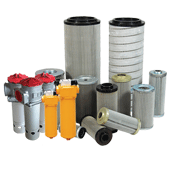
The industrial high flow filter cartridge is a large-diameter, pleated filtration element engineered to deliver very high flow rates from a single unit. Unlike conventional cartridges that rely on multiple small-diameter elements packed into a cluster, a high flow cartridge uses deep radial pleats and a much larger filtration area to pass a high volume of fluid at a relatively low pressure drop. Because of this, a single 40-inch high flow element can often replace several standard cartridges, which simplifies the overall system design and dramatically shrinks the footprint of the filter station. These cartridges are manufactured from materials such as polypropylene, polyester and PTFE, and are offered in a broad range of micron ratings. The result is a flexible, dependable filtration solution that can be tailored to the exact requirements of the process.
2. Application Scenarios
High flow filter cartridges are used wherever large volumes of liquid must be filtered quickly and reliably without becoming a bottleneck. In the water treatment industry, they protect reverse osmosis membranes and clarify process water before reuse or discharge. In the petrochemical and oil & gas sectors, they remove particulates from process streams, cooling water and injection water. Food and beverage plants use them to clarify syrups, juices and brewing liquids while meeting strict hygiene requirements. Pharmaceutical and biopharmaceutical facilities rely on them for pre-filtration and for protecting downstream sterile filters. Power generation and steel plants depend on them to keep turbine oils, hydraulic fluids and cooling systems free of harmful contamination. In every scenario the goal is the same: consistent removal of impurities without slowing down production or compromising product quality.
3. Technical Parameters
Several key technical parameters determine whether a cartridge truly fits the application. Common lengths are 20, 40 and 60 inches, and a single 40-inch cartridge can handle nominal flow rates up to roughly 1,300 litres per minute. Filtration ratings typically range from 1 to 100 microns, allowing precise matching to the particle removal required by the process. Operating temperature limits vary by media, from around 80°C for standard polypropylene up to 120°C or more for specialty materials such as PTFE. Maximum operating pressure for most housings falls between 0.6 and 4.0 MPa depending on construction. The cartridge core, cage and end caps are often made of polypropylene or stainless steel to ensure chemical compatibility and mechanical strength. Choosing the right combination of media, rating, length and sealing is essential to achieving stable performance, predictable replacement cycles and a long service life.
4. Product Advantages
The most obvious advantage is high flow capacity: one high flow cartridge replaces several standard cartridges, which reduces the number of elements and shrinks the housing. Fewer cartridges mean fewer seals and fewer potential leak points, and that improves overall system reliability. The large filtration area produces a low pressure drop, which in turn lowers the energy consumed by the pump. A longer service life means less frequent change-outs, less downtime and lower disposal costs. Even though the unit price per cartridge may be higher, the total cost of ownership is significantly lower over time. For plant operators, this combination of capacity, reliability and economy is precisely what matters most in day-to-day operation.
5. Application & Installation
Installing a high flow filter cartridge is straightforward and follows a clear procedure. The operator first isolates the filter housing and relieves system pressure to ensure safety. The old cartridge is removed and the housing interior is cleaned to prevent cross-contamination. The new cartridge is then inserted onto the locating pin or guide, making sure the gasket seats correctly so that no fluid can bypass the media. The housing cover is closed and torqued to the recommended setting, and the system is slowly repressurized. After a short flush to remove any loose fibres, the filter is returned to service. Regular monitoring of the pressure differential across the housing tells the operator when the cartridge is loaded and due for replacement, which keeps maintenance predictable and cost-effective.
6. Quality Standards
Reputable high flow filter cartridges are manufactured and tested against recognised standards. Production facilities typically operate under ISO 9001 quality management systems to ensure consistent workmanship. Filtration performance is validated using ISO 16889 multi-pass testing, which measures particle removal efficiency and dirt-holding capacity. Integrity is verified through bubble point testing in line with ISO 2942, confirming that the media and seals are free of defects. For applications that demand strict cleanliness, cartridges may be manufactured and packaged under cleanroom conditions. These standards give users confidence that the cartridge will perform consistently from batch to batch and will meet the demands of critical processes.
7. Working Principle
The working principle of a high flow filter cartridge combines mechanical sieving with depth filtration. Fluid enters through the outer surface and passes through the pleated media into the hollow core. Particles larger than the pore size are captured on the surface, while smaller contaminants are retained within the depth of the media. The deep pleats maximise the filtration area, which allows high flow at a low pressure drop while providing a high dirt-holding capacity. As particles accumulate, the pressure differential rises gradually until the cartridge reaches its change-out limit. This simple yet robust mechanism delivers consistent filtration quality and predictable replacement cycles throughout the cartridge's life.
8. Future Prospects
The future of high flow filtration points toward higher efficiency, greater sustainability and smarter operation. Media technology is advancing toward finer ratings with lower pressure drop, enabling cleaner results without sacrificing flow. There is growing demand for recyclable and lower-carbon cartridges that reduce waste and help plants meet environmental targets. Digital monitoring and predictive maintenance are beginning to track pressure differential and remaining service life in real time, so operators can change cartridges exactly when needed instead of following fixed intervals. As industries push for cleaner processes and lower operating costs, the high flow filter cartridge will remain a central and evolving technology.
9. Conclusion
The industrial high flow filter cartridge is a proven, cost-effective solution for high-volume liquid filtration. Its high flow capacity, low pressure drop, long service life and compact footprint deliver clear operational and economic benefits. When selected and installed correctly, it provides reliable contaminant removal across water, petrochemical, food, pharmaceutical and power applications. With ongoing advances in media efficiency and sustainability, it is well positioned to remain a workhorse of process filtration for years to come.
10. Frequently Asked Questions
Q1: How often should a high flow filter cartridge be replaced?
A1: Replacement depends on pressure differential and process conditions. As a general rule, change the cartridge when the pressure drop across the housing reaches the manufacturer's recommended limit, typically once it has risen noticeably from the initial reading.
Q2: Can one high flow cartridge replace several standard cartridges?
A2: Yes. A single 40-inch high flow element can often replace three to four standard cartridges, reducing housing size and maintenance frequency.
Q3: What is the typical service life?
A3: Service life varies with contaminant load, but high flow cartridges generally last longer than conventional elements because of their large surface area and high dirt-holding capacity.
Q4: Are these cartridges suitable for high-temperature applications?
A4: Yes, provided the correct media is selected. Specialty materials such as PTFE support higher temperatures, while standard polypropylene is suited to moderate temperatures.
Q5: How do I choose the right micron rating?
A5: Choose the micron rating based on the particle size you need to remove and the requirements of downstream equipment. When in doubt, start with a rating that protects the most sensitive component in the system