RO vs Ion Exchange Equipment Comparison for Industrial Water Treatment Solutions
The RO vs ion exchange equipment comparison helps industrial users understand the differences between reverse osmosis and ion exchange technologies in purification performance, operating costs, maintenance requirements, and application suitability. LEFILTER provides advanced Liquid Filters, Industrial RO System, and customized water treatment solutions to help industries achieve stable, efficient, and sustainable water purification.
With the increasing demand for high-quality industrial water treatment, selecting the right purification technology has become an important decision for manufacturers and engineering companies. The RO vs ion exchange equipment comparison is frequently considered by industrial users who need to evaluate purification efficiency, operating costs, maintenance requirements, and long-term reliability before choosing a suitable water treatment solution.
LEFILTER specializes in industrial filtration and water purification technologies, providing professional Liquid Filters, Industrial RO System, and customized Reverse Osmosis Equipment for various industrial applications. Compared with traditional purification technologies, reverse osmosis systems offer excellent contaminant removal performance, stable water quality, and flexible system design, making them widely used in modern industrial water treatment projects.
Both Reverse Osmosis Equipment and Ion Exchange Equipment are effective technologies for water purification, but they work based on different principles and are suitable for different application requirements. Understanding the differences between these two technologies allows customers to select the most suitable solution according to raw water conditions, required water quality standards, production capacity, and operating costs.

Product Introduction of Industrial RO System and Ion Exchange Equipment
An Industrial RO System is an advanced water purification system that uses reverse osmosis membrane technology to remove dissolved salts, impurities, microorganisms, and unwanted substances from water. It is widely used in industries that require continuous and reliable purified water production, including pharmaceuticals, food processing, electronics manufacturing, chemical production, and power generation.
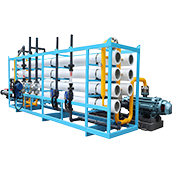
LEFILTER Industrial RO Equipment integrates multiple components, including pretreatment filters, high-pressure pumps, RO membrane modules, control systems, and monitoring devices. Through professional engineering design, the system can be customized according to different water sources and production requirements.
For customers looking for efficient industrial water purification solutions, LEFILTER provides:
Industrial RO Equipment for Stable Industrial Water Production
(Insert product link: Industrial RO Equipment)
This equipment is designed for long-term operation with stable performance, optimized energy consumption, and reliable water quality output.
Professional Reverse Osmosis Equipment for Industrial Applications
(Insert product link: Reverse Osmosis Equipment)
This solution provides efficient purification performance for factories and industrial facilities requiring high-quality process water.
Compared with RO technology, Ion Exchange Equipment uses ion exchange resin to remove specific ions from water. It is commonly used for water softening, demineralization, and polishing treatment applications where extremely low conductivity water is required.
Although ion exchange systems can achieve excellent ion removal performance, they usually require regular resin regeneration and chemical consumption, which may increase operation complexity and maintenance requirements.
Working Principle Comparison Between RO and Ion Exchange Equipment
The main difference in the RO vs ion exchange equipment comparison lies in their purification mechanisms.
An Industrial RO System works through pressure-driven membrane separation. During operation, raw water first enters the pretreatment section, where suspended particles, chlorine, and other substances are removed to protect the RO membrane.
After pretreatment, water is pressurized by a high-pressure pump and enters the reverse osmosis membrane. The membrane allows water molecules to pass through while blocking dissolved salts, heavy metals, bacteria, and organic contaminants. The purified water becomes the product water, while concentrated water can be recycled or further treated.
Modern RO systems can also be integrated with advanced monitoring technologies, including automatic control, conductivity detection, pressure monitoring, and remote management systems.
In contrast, Ion Exchange Equipment operates through chemical exchange between water ions and resin materials. When water passes through the resin bed, unwanted ions such as calcium, magnesium, and other dissolved minerals are exchanged with other ions stored in the resin.
The ion exchange process is highly effective for specific purification purposes, but the resin requires regeneration after saturation. This regeneration process normally involves chemicals, additional water consumption, and wastewater treatment.
Therefore, in many industrial applications, RO technology provides a more convenient and environmentally friendly solution for general water purification, while ion exchange is often used as a supplementary polishing process.

Technical Parameters Comparison of RO and Ion Exchange Systems
When evaluating RO vs ion exchange equipment comparison, technical parameters are important factors for industrial users.
LEFILTER Industrial RO Equipment typically features high-efficiency membrane technology, automatic PLC control, stainless steel construction, and customized production capacity.
Typical technical parameters include:
The operating pressure is generally designed according to raw water conditions and system capacity, commonly ranging from 1.0 to 1.5 MPa. The recovery rate can be customized according to customer requirements, and many industrial RO systems can achieve recovery rates above 75%.
The system includes:
High-efficiency RO membranes
Stainless steel pipelines
Automatic control cabinet
Online conductivity monitoring
High-pressure pump system
Customized water production capacity
For advanced water recycling applications, LEFILTER also provides:
Zero Liquid Discharge RO Concentration System for Industrial Water Recycling
(Insert product link: Zero Liquid Discharge RO Concentration System)
This technology helps industries improve water recovery efficiency and reduce wastewater discharge.
Ion exchange equipment parameters mainly depend on resin type, exchange capacity, regeneration frequency, and water quality requirements. While ion exchange can achieve extremely low mineral content, its operation usually requires chemical regeneration management.
Quality Advantages of LEFILTER Industrial RO Equipment
Quality and reliability are essential considerations when selecting industrial water treatment equipment. LEFILTER applies strict quality control procedures throughout the manufacturing process to ensure stable equipment performance.
The company focuses on professional engineering design, reliable component selection, and comprehensive testing before delivery. Each Industrial RO System undergoes inspection procedures including equipment structure checking, pipeline pressure testing, electrical system verification, and performance evaluation.
The advantages of LEFILTER water treatment solutions include:
Stable system operation, optimized energy consumption, customized engineering design, and intelligent monitoring capability.
Compared with traditional water treatment solutions, modern RO systems provide easier automation management and reduced chemical consumption, helping customers lower operating costs and improve production efficiency.
For customers requiring upgraded management functions, LEFILTER provides:
Intelligent RO Equipment Remote Monitoring System for Industrial Applications
(Insert product link: Intelligent RO Equipment)
This system allows operators to monitor equipment operation status, improve maintenance efficiency, and reduce unexpected downtime.

Application Fields of RO and Ion Exchange Equipment
The application range is an important factor in the RO vs ion exchange equipment comparison.
Industrial RO systems are widely used in pharmaceutical manufacturing, where purified water quality is critical for production safety. In food and beverage industries, RO equipment helps maintain consistent water quality and improve product reliability.
In electronics manufacturing, high-purity water is required for precision production processes. Industrial RO systems effectively remove dissolved impurities that may affect product quality.
Chemical industries use RO technology for process water preparation, while power plants often combine RO and ion exchange systems for boiler feed water treatment.
Ion exchange equipment remains valuable in applications requiring final polishing treatment, such as ultra-pure water production and specific ion removal processes.
In many advanced industrial projects, the combination of RO and ion exchange technologies provides the most effective solution by using RO as the main purification process and ion exchange as the final treatment stage.
Future Development of Industrial Water Treatment Technology
With increasing global attention toward water conservation, environmental protection, and sustainable manufacturing, industrial water treatment technology continues to develop rapidly.
Future Industrial RO System solutions will focus on higher recovery rates, lower energy consumption, intelligent operation, and improved water recycling capabilities. Advanced membrane materials, digital monitoring systems, and automation technologies will further improve system efficiency.
The demand for environmentally friendly water treatment solutions is expected to increase, especially in industries facing strict wastewater regulations and resource management requirements.
As a professional industrial filtration manufacturer, LEFILTER continues to develop innovative Reverse Osmosis Equipment and customized water treatment solutions to support global customers in achieving efficient and sustainable water management.
FAQ About RO vs Ion Exchange Equipment Comparison
1. What is the main difference between RO and ion exchange equipment?
The main difference is the purification method. RO uses membrane separation technology, while ion exchange uses resin-based chemical exchange to remove specific ions.
2. Is an Industrial RO System better than ion exchange equipment?
It depends on the application. RO is generally better for removing a wide range of dissolved contaminants, while ion exchange is suitable for specific ion removal and polishing applications.
3. Can RO and ion exchange systems work together?
Yes. Many high-purity water systems combine RO and ion exchange technology to achieve better purification results.
4. Which system has lower operating costs, RO or ion exchange?
In many industrial applications, RO systems have lower chemical consumption and easier automation, which can reduce long-term operating costs.
5. What industries use Industrial RO Equipment?
Industrial RO equipment is widely used in pharmaceuticals, food and beverage, electronics, chemicals, power generation, and wastewater recycling industries.
6. How should companies choose between RO and ion exchange equipment?
Companies should consider raw water quality, required purity level, production capacity, maintenance requirements, and operating costs before selecting a system.
Other products you may want to know about:
High Flow Filter Element
Ultrafiltration equipment
Precision water filter