Big Blue Filter Cartridge: A Complete Guide to Applications, Advantages and Long-Term Performance
The Big Blue Filter Cartridge is a large-diameter, high-capacity filtration element trusted across residential, commercial and industrial water treatment. Its core functions are sediment removal, taste and odor improvement, and pre-filtration protection for downstream equipment. This article introduces the product, its application scenarios, technical parameters, key advantages, quality standards and working principle, and looks at its future prospects — a complete reference for buyers, engineers and trading partners.
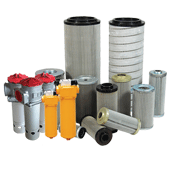
The Big Blue Filter Cartridge has earned its place as one of the most trusted workhorses in modern water treatment. Measuring 4.5 inches in diameter and typically available in 10-inch, 20-inch and 40-inch lengths, it offers filtration surface area and dirt-holding capacity far beyond that of conventional slim cartridges. Manufactured from high-grade polypropylene melt-blown media, pleated polyester or string-wound fiber, it is designed to fit standard big blue housings and to deliver dependable filtration for months at a time. Whether you need to protect a household well system, polish drinking water for a café, or guard expensive industrial equipment, this cartridge provides a simple, affordable and highly effective first line of defense.
One of the greatest strengths of the Big Blue Filter Cartridge is its versatility across different settings. In homes, it is commonly installed as a whole-house filter that removes sediment, rust and sand before water reaches taps, showers and appliances. In commercial settings such as restaurants, cafés, hotels and food-processing plants, it protects dishwashers, ice makers, coffee machines and boilers from premature scaling and clogging. In agriculture and aquaculture, it cleans irrigation and pond water, keeping nozzles and drip systems free of particles. In industry, it serves as pre-filtration for reverse osmosis systems, softening plants and heat exchangers, significantly extending the service life of membranes and other downstream components.
In terms of technical parameters, the Big Blue Filter Cartridge is available with nominal filtration ratings of 1, 5, 10, 20 and 50 microns, allowing users to match the cartridge precisely to the actual water quality. The standard outer diameter is 4.5 inches, with a 1-inch center core or a no-core solid design depending on the housing type. For a typical 20-inch cartridge, the maximum operating temperature is around 40–50 °C, the recommended operating pressure stays within 4–6 bar, and the flow capacity commonly ranges from 10 to 30 gallons per minute. The initial pressure drop is kept below 0.1 bar at rated flow, which means pumps work less and energy costs stay low. Both 10-inch and 40-inch versions follow the same engineering logic, so a complete system can be built from one consistent platform.
The advantages of the Big Blue Filter Cartridge are obvious to anyone who has compared it with slim cartridge designs. First, the larger diameter means dramatically higher dirt-holding capacity, which translates into longer replacement intervals and lower long-term cost. Second, lower flow resistance reduces the load on pumps and on the whole water system. Third, food-grade materials ensure safety for drinking-water applications. Fourth, installation and replacement take only a few minutes without any special tools. Fifth, when paired with a clear or white housing, the condition of the cartridge can be checked at a glance. Taken together, these benefits make it a favorite among water professionals who value reliability, economy and ease of maintenance.
From an application standpoint, the Big Blue Filter Cartridge can be used both as a standalone filter and as the first stage in a multi-stage treatment train. In reverse osmosis systems, it is typically mounted ahead of the membrane to remove sediment and protect the delicate RO element. In multi-cartridge arrays, two or more housings can be connected in parallel to increase flow rate, or in series to achieve finer filtration. Replacement is straightforward: close the inlet valve, release the pressure, unscrew the housing, swap the cartridge and reopen the water supply. A simple schedule of changing the cartridge every three to six months — or sooner when the pressure drop rises noticeably — keeps the whole system running at stable performance.
Quality is never an afterthought in the manufacturing of the Big Blue Filter Cartridge. Reputable factories produce these cartridges from food-grade raw materials that meet FDA requirements and are tested in accordance with NSF/ANSI standards for drinking-water applications. Manufacturing facilities commonly operate under ISO 9001 quality management systems, with strict process control over fiber uniformity, density gradient and core assembly. Every production batch is subjected to dimensional checks, pressure-drop tests and water-quality validation before shipment. Compliance certificates and test reports are available to support export documentation and customer audits — a critical point for international trading companies and long-term distributors.
The working principle of the Big Blue Filter Cartridge is elegantly simple yet highly effective. Water flows from the outside of the cartridge through the filter media toward the center core, where particles are captured by mechanical interception, depth filtration and adsorption. In melt-blown polypropylene cartridges, the fiber structure gradually decreases in pore size from the outer to the inner layers, allowing larger particles to be trapped on the outside while finer particles are captured deeper inside. This graded-density design maximizes dirt-holding capacity and extends service life. In carbon-block versions, adsorption plays an additional role, removing chlorine, organic compounds, taste and odor through the porous activated carbon structure.
Looking ahead, the future of the Big Blue Filter Cartridge appears bright. As global awareness of water quality continues to grow, demand for affordable, high-capacity filtration is rising in both developing and developed markets. Trends such as smart homes and IoT-connected water systems create new opportunities for cartridges with longer service life, biodegradable media and clearer performance indicators. Manufacturers are also developing multi-layer composite cartridges that combine sediment removal, carbon adsorption and scale inhibition in a single element. For trading companies and distributors, the big blue format remains a stable, high-volume product with steady reorder demand, making it an attractive pillar of any water-treatment portfolio.
In conclusion, the Big Blue Filter Cartridge is a proven, economical and versatile solution for a wide range of water-filtration needs. From protecting household plumbing to safeguarding industrial membranes, it consistently delivers clean water, low maintenance and excellent value for money. With strong manufacturing standards behind it and promising market trends ahead, it is a product that buyers can trust today and for years to come.
10. Frequently Asked Questions
Here are the answers to the most frequently asked questions about the Big Blue Filter Cartridge.
Q1: How often should the cartridge be replaced?
A: Under normal household conditions, every three to six months. In heavy-sediment or industrial use, replace it earlier as soon as the pressure drop increases noticeably.
Q2: Can it be used with well water?
A: Yes. It is especially effective for removing sand, rust and sediment from well water, although serious iron or manganese issues may require additional treatment.
Q3: Does it remove bacteria?
A: A standard sediment or carbon cartridge does not remove bacteria. For microbiological protection, add a UV or ultrafiltration stage.
Q4: What is the difference between a 5-micron and a 20-micron cartridge?
A: A 5-micron cartridge captures finer particles but may clog faster. A 20-micron cartridge holds more dirt and suits pre-filtration, while the finer rating is often used as the final polishing stage.