Big Flow RO Prefilter Cartridge: The Complete Guide to Performance, Applications, and Future Trends
A big flow RO prefilter cartridge is a high-capacity first-stage filter placed directly upstream of a reverse osmosis membrane, handling elevated flow rates while removing suspended solids, sediment, rust, and larger colloidal particles. It protects the membrane from rapid fouling, extends membrane life, and keeps output stable at lower energy cost. Widely applied in municipal drinking water, food and beverage production, pharmaceutical pure water, electronics rinsing, boiler feed water, cooling tower makeup, and seawater desalination, it is the most cost-effective line of defense in any RO chain. This article covers its profile, parameters, advantages, working principle, quality standards, applications, future outlook, and common questions.
1. Product Introduction
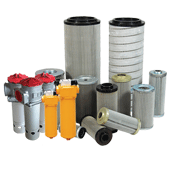
A big flow RO prefilter cartridge is a high-capacity filtration element placed directly upstream of a reverse osmosis (RO) membrane. Its core mission is simple but critical: to handle elevated flow rates while removing suspended solids, sediment, rust, silt, and larger colloidal particles before they reach the fragile membrane surface. Because it absorbs the heaviest contamination load of the raw water, it shields the membrane from rapid fouling, extends its service life, and keeps the system running with stable output and lower energy use. In the purification chain, the big flow RO prefilter cartridge is the first line of defense — and often the most cost-effective investment an operator can make in system reliability.
2. Application Scenarios
The big flow RO prefilter cartridge fits wherever water demand is high and feed quality varies: municipal drinking water treatment, industrial process water, food and beverage production, pharmaceutical pure water, electronics and semiconductor rinsing, boiler feed water, cooling tower makeup, and seawater desalination pre-treatment. It also supports agricultural irrigation, textile dyeing, chemical processing, and mining. In every scenario the role is the same — reduce the turbidity and particulate load of incoming water so the downstream RO membrane runs cleaner and more predictably, with fewer shutdowns and longer intervals between cleanings.
3. Technical Parameters
Typical big flow RO prefilter cartridge specifications combine generous dimensions with deep filtration depth. Filtration ratings usually fall between 1 and 10 microns (nominal), with a pleated or melt-blown polypropylene (PP) media core chosen for high dirt-holding capacity and a low, stable pressure drop. Thanks to the enlarged surface area, flow capacity can reach several times that of a standard cartridge of the same length — commonly from tens to several hundred liters per minute depending on the housing. Standard PP media operate from about 5°C to 45°C, with a maximum recommended differential pressure of roughly 2.0 bar and an initial pressure drop typically below 0.1 bar at rated flow. Exact values vary by model and should be confirmed against the manufacturer's spec sheet.
4. Product Advantages
The big flow RO prefilter cartridge delivers practical benefits that matter on the plant floor. High flow capacity means fewer cartridges and smaller housings for the same duty; low initial pressure drop cuts pumping energy and operating cost; deep media structure offers high dirt-holding capacity for longer service life and fewer change-outs; consistent filtration protects the RO membrane and reduces chemical cleaning; and the cartridge is simple to install and replace, minimizing downtime. Together these advantages add up to a lower total cost of ownership.
5. Application Notes and Use
Proper use of a big flow RO prefilter cartridge begins with correct sizing — matching the actual flow rate and filtration requirement of the system, not the housing alone. For best results, pair it with an upstream coarse screen to remove large debris and a downstream fine filter or the RO membrane itself. Regular differential-pressure monitoring is the simplest way to tell when a cartridge has reached the end of its useful life. Keep spare cartridges on hand and record change-out dates so maintenance becomes routine rather than reactive.
6. Quality Standards
Every big flow RO prefilter cartridge is manufactured under a certified quality management system, typically in line with ISO 9001. Where the product contacts drinking water or food, media materials meet food-grade and food-contact safety requirements, and certifications such as NSF/ANSI standards and RoHS compliance are applied as appropriate. Raw polypropylene is tested for purity, and each production batch undergoes visual, dimensional, and performance checks before release. Traceability from raw material to finished element gives buyers confidence in consistent quality across every order.
7. Working Principle
The big flow RO prefilter cartridge works on the principle of depth filtration. Water passes through the fibrous media matrix, and particles are captured throughout the depth of the material rather than only on the surface. This deep structure gives the cartridge high dirt-holding capacity and a long service life. The large surface area, achieved through pleating, lets the element handle high flow without sacrificing efficiency. As particles accumulate, pressure drop rises gradually; when it reaches the recommended limit, the cartridge is simply replaced — predictable, low-maintenance behavior operators value in a prefilter.
8. Future Prospects
Looking ahead, the big flow RO prefilter cartridge is evolving in several directions. Manufacturers pursue higher flow density in smaller footprints, finer and more consistent filtration ratings, and more sustainable, biodegradable media to reduce waste. Smart water systems bring pressure sensors and digital monitoring that let operators predict change-out timing and optimize performance remotely. As water scarcity and stricter discharge regulations push industries toward higher recovery and longer membrane life, demand for high-quality prefiltration will only grow — keeping the big flow RO prefilter cartridge a core component of reliable, efficient water treatment for years to come.
9. Conclusion
A big flow RO prefilter cartridge is more than a replaceable spare part — it is a strategic investment in the health of any RO system. Combining high flow, deep filtration, low pressure drop, and long service life, it protects membranes, reduces operating costs, and keeps water quality stable across demanding applications. Whether you run a municipal plant, a food production line, or an industrial process, choosing the right prefilter cartridge is one of the simplest, most effective ways to protect your entire purification system. In short, the big flow RO prefilter cartridge delivers performance, reliability, and economy — the three qualities every water treatment operator needs.
10. Frequently Asked Questions
Q1. How often should a big flow RO prefilter cartridge be replaced?The interval depends on feed water quality and operating flow. Replace the cartridge when pressure drop rises to the manufacturer's recommended limit, or on a fixed schedule such as every three to six months for typical applications. Differential-pressure monitoring is the most reliable indicator.
Q2. What is the difference between a big flow cartridge and a standard cartridge?The big flow design offers a larger filtration area, allowing higher flow rates at the same or lower pressure drop — meaning fewer cartridges, smaller housings, and lower energy use for the same throughput.
Q3. Can the big flow RO prefilter cartridge be used with any RO system?It is compatible with any RO system where the housing size and connection match the cartridge dimensions. Confirm the dimensions, connection type, and flow requirements against your system before ordering.
Q4. Does the prefilter remove dissolved salts or bacteria?No. A prefilter removes suspended particles, sediment, and larger colloids. Dissolved salts are handled by the RO membrane itself, and bacterial control may need additional disinfection steps downstream.
Q5. What happens if the cartridge is not changed in time?An overdue cartridge causes rising pressure drop, reduced flow, higher energy use, and can allow particles into the RO membrane, accelerating fouling and shortening its life.