RO membrane for electronics: Performance, Applications and Prospects
RO membrane for electronics is a core water purification component specially designed for the electronic industry, which plays an irreplaceable role in ensuring the quality and reliability of electronic products.

This article comprehensively combs through all aspects of RO membrane for electronics, from its basic structure and working principle to specific application scenarios and technical indicators, highlights its unique advantages in energy conservation, high efficiency and stability, explains the standard application procedures and quality control requirements, looks forward to its development trend under the background of the rapid development of the electronic industry, and answers common questions in practical use, providing a comprehensive and professional reference for relevant practitioners and researchers.

In the fast-paced development of the electronic industry, the demand for ultra-pure water is becoming increasingly strict, and RO membrane for electronics has become an indispensable core component in the production process. As a high-precision separation membrane, it is specially designed to meet the strict water quality requirements of electronic manufacturing, effectively removing impurities such as dissolved salts, colloids, organic matter and microorganisms in water, ensuring that the water used in each link of electronic production meets the standard.

When it comes to application scenarios, RO membrane for electronics is widely used in various fields of the electronic industry. In semiconductor manufacturing, it provides ultra-pure water for wafer cleaning, etching and packaging processes, and even a trace of impurities may lead to wafer scrapping, so the high purification performance of RO membrane is crucial. In the production of display panels, whether it is LCD or OLED, RO membrane ensures the cleanness of the panel surface and improves the display effect and service life. In addition, it is also applied in the production of electronic components, printed circuit boards and new energy electronic products, providing reliable water quality guarantee for the stability of product performance.
In terms of technical parameters, RO membrane for electronics has strict indicators to meet the needs of electronic production. The operating pressure is generally 10-15 bar, which can be dynamically adjusted according to the raw water quality; the desalination rate is not less than 98%, and the removal rate of divalent ions and macromolecular organics can reach more than 99%; the maximum feed water temperature is 45℃, and the pH range is 3-10, which has good adaptability to different water quality environments; the water flux is matched according to the model, and the common 4040 model can reach 9.8 m³/d, which can meet the water demand of different production scales. In addition, the maximum feed water turbidity is 1.0 NTU, and the total organic carbon (TOC) is not more than 3 ppm, ensuring the stability of the influent water quality.
Compared with traditional water purification equipment, RO membrane for electronics has obvious core advantages. First of all, it has extremely high purification efficiency, which can directly reduce the conductivity of raw water from hundreds of μS/cm to single digits, laying a solid foundation for the subsequent precision treatment. Secondly, it is energy-saving and environment-friendly. The RO process does not require phase change, and its energy consumption is only 1/10 to 1/20 of that of the traditional distillation method, which greatly reduces the production cost. Thirdly, it operates at room temperature, avoiding equipment damage caused by high temperature and preventing thermal pollution. In addition, it adopts a modular design, which is easy to install and maintain, and can realize automatic operation without special personnel on duty, improving production efficiency. Finally, it has strong anti-pollution performance. Through reasonable pretreatment and regular cleaning, it can effectively extend the service life, generally up to 1-3 years.
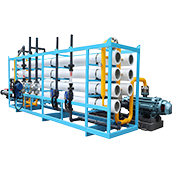
The application procedure of RO membrane for electronics is standardized to ensure the stable operation of the system. First, pretreatment is carried out, including sand filtration, activated carbon adsorption and precision filtration, to remove suspended solids, residual chlorine and large particles in raw water, preventing RO membrane from being oxidized and scratched. Then, the pretreated water is pumped into the RO membrane system through a high-pressure pump, and the pressure is adjusted to be higher than the osmotic pressure, so that water molecules pass through the membrane and impurities are intercepted. Next, the produced water is detected, and indicators such as conductivity and TOC are monitored in real time to ensure that it meets the production standards. Finally, regular maintenance is carried out, including regular flushing and chemical cleaning of the membrane, to remove pollutants attached to the membrane surface and maintain the flux and separation efficiency of the membrane.
Quality standards are the key to ensuring the performance of RO membrane for electronics. It must comply with international and industry-related standards, such as NSF/ANSI 58 and relevant national standards. In terms of material quality, the membrane is made of high-quality polyamide composite material, which has good chemical stability and mechanical strength, and does not release harmful substances. In terms of performance testing, strict detection is carried out on desalination rate, water flux, anti-pollution performance and other indicators before leaving the factory to ensure that each product meets the standard. In addition, the production process must comply with the ISO quality management system to ensure the stability and consistency of product quality.
The working principle of RO membrane for electronics is based on the pressure-driven membrane separation technology. The core of the membrane is a polyamide composite semi-permeable membrane with a selective separation function, whose surface is distributed with tiny pores of 0.0001 microns. In natural osmosis, water molecules move from a low-solute concentration area to a high-solute concentration area. The RO membrane reverses this process by applying pressure higher than the osmotic pressure to the raw water side, forcing water molecules to pass through the membrane pores, while most dissolved salts, colloids, organic matter and microorganisms are intercepted, thus obtaining high-purity produced water. Its separation mechanism is not only simple sieving, but also involves complex processes such as solution-diffusion and capillary flow, ensuring the high efficiency and stability of purification.
Looking forward to the future prospects, with the continuous upgrading of electronic technology, the demand for ultra-pure water in the electronic industry will be more strict, which will promote the continuous innovation and development of RO membrane for electronics. On the one hand, the research and development of new membrane materials, such as adding nano-modifiers to improve the flux and anti-pollution performance of the membrane, will become a key direction. On the other hand, with the popularization of intelligent technology, the RO membrane system will realize more accurate intelligent monitoring and automatic adjustment, improving the operation efficiency and stability. In addition, under the background of global carbon neutrality, energy-saving and environment-friendly RO membrane products will be more favored, and the market scale will continue to expand. At the same time, the independent research and development of high-end RO membrane will gradually break the technical monopoly, promoting the healthy development of the industry.
In conclusion, RO membrane for electronics is a core component in the electronic manufacturing industry, which provides a reliable guarantee for the quality of electronic products with its high purification efficiency, energy saving, environmental protection and stable performance. Its wide application in semiconductor, display panel and other fields has become an important support for the development of the electronic industry. With the continuous progress of technology and the increasing demand of the market, RO membrane for electronics will continue to upgrade and innovate, showing broader development prospects. It is believed that in the future, it will play a more important role in promoting the high-quality development of the electronic industry.
Frequently Asked Questions (FAQs)
1. Why is multi-stage filtration needed with RO membrane for electronics? Multi-stage filtration can effectively remove suspended solids, sediment and organic matter in water, protect the RO membrane, reduce the risk of pollution and scaling, and thus extend its service life. For example, activated carbon adsorption can remove residual chlorine, preventing the RO membrane from being oxidized and degraded.
2. What is the general replacement cycle of RO membrane for electronics? The replacement cycle depends on the raw water quality and use conditions, generally 1 to 3 years. Regular detection of produced water quality and membrane flux can help judge whether replacement is needed.
3. What factors will affect the performance of RO membrane for electronics? The main influencing factors include raw water quality (such as turbidity, TOC and hardness), operating pressure, water temperature and maintenance frequency. Unqualified raw water or improper operation will reduce the membrane's service life and purification effect.
4. Is the RO membrane for electronics easy to maintain? Yes, it adopts a modular design, which is easy to disassemble and assemble. Daily maintenance only needs regular flushing and regular chemical cleaning, and the operation is simple, without professional technical personnel.
5. Can RO membrane for electronics meet the water quality requirements of advanced electronic manufacturing? Yes, the RO membrane for electronics with high desalination rate and high purification efficiency can stably produce ultra-pure water with resistivity up to 18.2 MΩ·cm, which can fully meet the water quality requirements of advanced processes such as 3nm chip manufacturing.