1. Product Introduction & Pricing Overview
Industrial RO equipment price refers to the comprehensive market pricing system for industrial reverse osmosis water treatment equipment covering small, medium and large-scale industrial water stations. Unlike civilian water purification equipment, industrial RO systems are customized according to raw water quality, hourly water output, industry compliance standards and intelligent configuration, so there is no fixed unified market price. The overall price covers core host equipment, pretreatment supporting systems, intelligent control units, pipeline accessories, installation and commissioning services and long-term after-sales guarantee costs, serving pharmaceutical, food, chemical, new energy, power and other industrial manufacturing fields.
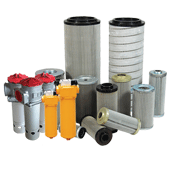
Most industrial purchasers easily fall into price misunderstanding: blindly pursuing ultra-low-priced equipment while ignoring the configuration integrity of pretreatment systems, especially the matching specification and quality of liquid filter. As the first barrier of the RO water treatment system, liquid filter directly determines the inlet water quality of the membrane system. Low-cost and substandard filter accessories will cause rapid membrane fouling, shorten equipment service life and generate a large number of unplanned maintenance costs, which is the key factor leading to higher overall operating costs of low-priced RO equipment.
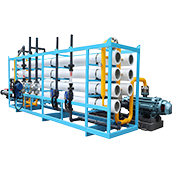
The market price gradient of industrial RO equipment is mainly divided into three tiers according to configuration and application scenarios. Small and medium-sized factory conventional water demand scenarios are suitable for the cost-effective 10 T/H Output Reverse Osmosis System for Medium Industrial Plants, with simplified standardized configuration and low overall procurement cost; industrial parks and large-scale production lines with 24-hour uninterrupted water demand adopt upgraded models equipped with PLC-controlled Reverse Osmosis System: Programmable Intelligent Unit, with intelligent monitoring, automatic flushing and remote operation functions, and the price is moderately increased due to functional upgrading. For high-standard industries such as biopharmaceuticals and semiconductors, high-end customized RO equipment with sanitary materials and two-stage filtration and purification is adopted, with the highest pricing grade and the most stable operating performance.
In addition to hardware configuration, brand qualification, factory processing technology, after-sales service cycle and customized design requirements will also affect the final quotation of industrial RO equipment. Standardized mass-produced equipment has transparent and stable prices, while special customized equipment for high-salinity raw water, low-temperature environments and ultra-pure water preparation needs additional customized design costs.
2. Working Principle & Pricing Correlation Logic
The core working principle of industrial RO equipment is pressure-driven membrane separation technology, which is the fundamental basis for equipment pricing differentiation. Under the action of high-pressure pump driving force exceeding the natural osmotic pressure of raw water, water molecules pass through high-precision semi-permeable RO membranes, while impurities such as dissolved salts, heavy metal ions, colloids and suspended particles in raw water are intercepted on the concentrated water side, realizing deep purification of industrial raw water.
All pricing differences of industrial RO equipment are derived from the differentiated design of each link of the working principle. The pretreatment link represented by liquid filter undertakes the task of intercepting large-particle impurities, and high-precision and high-dirt-holding filter configurations need higher production costs, which effectively reduce the pressure of subsequent membrane separation. The membrane separation link determines the water purification efficiency and water quality standard, and high-salt-rejection imported membrane elements are far more expensive than ordinary domestic membranes. The intelligent control link realizes automatic operation and fault early warning of the system, and the PLC intelligent control module is a key upgraded configuration that increases equipment pricing.
Standard conventional RO equipment adopts fixed working procedures and basic manual control, with low production and configuration costs, suitable for ordinary industrial water demand; high-priced high-end equipment optimizes the pressure regulation logic and flushing cycle of the system based on the working principle, matched with high-quality liquid filter and high-performance membrane elements, with more stable operation and lower long-term energy consumption and maintenance costs.

3. Core Technical Parameters Determining Industrial RO Equipment Price
Technical parameters are the core indicators that directly affect the price of industrial RO equipment. Different parameter configurations form obvious price gradients, covering capacity, purification performance, material specifications and control standards:
1. Water production capacity parameters: The mainstream market capacity ranges from 1m³/h to 200m³/h. The 10 T/H Output Reverse Osmosis System for Medium Industrial Plants is the most cost-effective conventional model with stable market pricing. Large-capacity modular equipment requires multiple sets of membrane racks and supporting power units, and the price increases exponentially with capacity expansion.
2. Membrane performance parameters: Ordinary domestic membranes have a salt rejection rate of ≥97%, with low matching price; high-end upgraded membranes have a salt rejection rate of ≥99.2%, suitable for high-salinity raw water and ultra-pure water projects, with a 25%-35% increase in core component cost.
3. Pretreatment configuration parameters: The specification grade of liquid filter is a mandatory pricing item. Standard single-stage filters are suitable for conventional working conditions, while double-stage high-precision filters with high dirt-holding capacity increase pretreatment costs but greatly reduce later maintenance losses.
4. Control system parameters: Basic manual control equipment has the lowest price; fully automatic PLC-controlled Reverse Osmosis System: Programmable Intelligent Unit adds functions such as real-time water quality monitoring, automatic flushing and remote fault alarm, with a moderate price increase.
5. Pipeline and skid material parameters: UPVC ordinary pipelines are the most cost-effective; 304 stainless steel pipelines are suitable for food and chemical industries; 316L sanitary stainless steel pipelines for pharmaceutical industries have the highest material cost.
6. Operating efficiency parameters: Frequency conversion energy-saving pumps and optimized water recovery rate (60%-78%) belong to high-end optimized parameters, which increase initial equipment price but save long-term operating power consumption costs.
4. Quality Standards & Price Matching Rules
The price of industrial RO equipment is positively correlated with manufacturing quality and quality control standards, and formal manufacturers implement strict quality-price matching rules to eliminate low-quality and low-priced shoddy products. First of all, core component quality inspection: all supporting liquid filter assemblies, RO membrane elements and high-pressure pumps of medium and high-priced equipment pass full factory testing, with complete qualification certificates and performance test reports; ultra-low-priced equipment often adopts spot-check unqualified accessories and low-precision filter materials to cut costs.
Secondly, finished product debugging standards: medium and high-quality priced equipment will undergo 72-hour full-load continuous operation debugging before delivery to ensure stable water yield and water quality indicators; low-priced simplified equipment only conducts short-term simple debugging, with hidden risks of unstable operation after installation. In addition, high-priced industrial RO equipment is equipped with complete after-sales guarantee services, including regular technical guidance, free replacement of faulty parts within the warranty period and long-term maintenance consultation, while ultra-low-priced equipment often lacks perfect after-sales support.
It is worth noting that high-priced equipment does not mean excessive premium. The price premium of high-quality RO equipment is mainly reflected in high-quality pretreatment liquid filter configuration, high-performance membrane elements and stable intelligent control system. The comprehensive operating cost within 3-5 years is far lower than that of low-priced and low-quality equipment, with higher overall cost performance.
5. Industrial Application Scenarios & Corresponding Price Selection
Different industrial scenarios have differentiated water quality requirements and operating conditions, corresponding to targeted industrial RO equipment price grades, realizing precise matching of budget and demand:
1. General chemical and mechanical processing factories: Conventional purified water demand, low requirements for water quality precision. It is recommended to select cost-effective medium-priced equipment, matched with standard single-stage liquid filter and 10 T/H Output Reverse Osmosis System for Medium Industrial Plants to control procurement budget.
2. Food and beverage processing enterprises: Hygiene-level water quality requirements. Select medium-high-priced equipment with 304 stainless steel pipelines and upgraded pretreatment filters to ensure water safety and stability.
3. Pharmaceutical and biopharmaceutical factories: GMP compliant ultra-pure water standards. Choose high-end customized high-priced equipment, equipped with PLC-controlled Reverse Osmosis System: Programmable Intelligent Unit and two-stage RO purification system, with complete hygiene certification documents.
4. New energy and semiconductor workshops: Ultra-low conductivity water demand. Adopt high-salt-rejection membrane high-priced customized equipment, with high-precision liquid filter pretreatment system to eliminate trace impurities.
5. Large industrial parks and power plants: 24-hour high-load continuous operation. Select multi-module parallel high-priced intelligent equipment to meet large-flow water demand and realize unattended operation.

6. Frequently Asked Questions (FAQ)
FAQ 1: Why is there a huge price gap for industrial RO equipment with the same water production capacity?
The price gap mainly comes from configuration differences, including liquid filter precision grade, RO membrane brand and performance, pipeline material, and intelligent control functions. The same 10-ton equipment of 10 T/H Output Reverse Osmosis System for Medium Industrial Plants has different prices due to whether it is equipped with PLC-controlled Reverse Osmosis System: Programmable Intelligent Unit and high-grade pretreatment accessories.
FAQ 2: Is ultra-low-priced industrial RO equipment worth purchasing?
Not recommended. Ultra-low-priced equipment usually cuts costs by reducing filter precision, using inferior membrane elements and simplifying control systems. It will cause frequent membrane fouling, unstable water quality and high maintenance costs in the later stage, resulting in higher comprehensive operating costs.
FAQ 3: How does liquid filter configuration affect the overall price and operation of RO equipment?
Liquid filter is the core pretreatment component that affects equipment stability and service life. High-precision and high-dirt-holding filter configurations increase the initial equipment price appropriately, but can effectively intercept raw water impurities, protect RO membranes, reduce cleaning and replacement frequency, and greatly save long-term operating costs.
FAQ 4: What core factors must be considered besides price when purchasing industrial RO equipment?
In addition to quotation price, purchasers need to focus on raw water adaptability, membrane salt rejection rate, after-sales service cycle, equipment energy consumption and pretreatment filter matching degree. Comprehensive cost performance, not single price, is the key to selection.
FAQ 5: Does PLC intelligent control function significantly increase the price of industrial RO equipment?
The price increase is reasonable and cost-effective. The upgraded PLC-controlled Reverse Osmosis System: Programmable Intelligent Unit realizes automatic operation, fault early warning and remote monitoring, reduces manual intervention and failure rate, and effectively reduces labor and maintenance costs for long-term factory operation.
FAQ 6: Can the price of industrial RO equipment be customized according to actual demand?
Yes. Formal manufacturers support personalized price customization. Purchasers can adjust configurations such as liquid filter grade, membrane quantity, control mode and pipeline material according to their own water demand and budget, and obtain targeted quotation schemes to avoid redundant configuration waste.
Other products you may want to know about:
Precision water filter
Self Cleaning Filters
Ultrafiltration equipment