BW30 Series: The Most Versatile and Economical Brackish Water Membrane with High Salt Rejection
In the modern field of water treatment, finding a solution that balances water quality with cost control is often the core desire of engineers and project decision-makers. The BW30 series reverse osmosis membrane element is exactly the benchmark product born to meet this balance. It is widely recognized as one of the most versatile and economical brackish water desalination membranes, building countless successful water treatment projects globally with its excellent high salt rejection rate and stable operational performance.
Product Introduction
The BW30 series is a polyamide composite reverse osmosis membrane designed specifically for brackish water desalination. It is not a "specialist" designed for a single specific scenario, but rather an "all-rounder" capable of adapting to various complex water qualities. Whether it is surface water, groundwater, or preliminarily treated industrial wastewater, the BW30 series demonstrates superior adaptability. Its core design philosophy lies in providing a high cost-performance solution, making high-quality desalinated water no longer expensive, thereby promoting the popularization of clean water technology.
Application Scenarios and Functions
The BW30 series membrane elements are found in all walks of life, with main application scenarios including:
Municipal Drinking Water Treatment: Converting high-salinity groundwater or polluted surface water into safe drinking water that meets national standards, solving drinking water difficulties in specific regions.
Industrial Ultrapure Water Production: In industries such as power, electronics, food & beverage, and pharmaceuticals, it serves as a core purification unit, providing high-purity water for boiler feed water, cleaning processes, or product formulations.
Wastewater Reclamation and Zero Liquid Discharge (ZLD): In the deep treatment stage of industrial wastewater, it effectively removes salts and organic matter, achieving wastewater recycling and helping companies achieve energy-saving and emission-reduction goals.
Community and Commercial Water Supply: Suitable for central water purification systems in large residential areas, office buildings, schools, and other locations, ensuring water health for end-users.
Its core function is to act as a precise "molecular sieve," efficiently intercepting dissolved salts, colloids, organic matter, bacteria, and pyrogens, allowing only pure water molecules to pass through, thereby producing high-quality permeate.
Technical Parameters
To adapt to different system configurations, the BW30 series offers various specifications, with the 8-inch (BW38-400/365) and 4-inch (BW30-430/2540) sizes being the most common.
Salt Rejection Rate: This is the foundation of the BW30 series. Its average salt rejection rate is as high as 99.5% or more, with some models even higher, meaning it can extremely thoroughly remove ionic impurities from water.
Effective Membrane Area: It possesses a large effective membrane area, which directly translates to higher water production and lower operating pressure drop, enhancing system efficiency.
Operating Pressure: Optimized for brackish water characteristics, the operating pressure is typically between 225-300 psi, significantly reducing energy consumption and equipment investment compared to seawater membranes.
pH and Temperature Tolerance: It features a broad range of chemical tolerance, a wide cleaning pH range, and can adapt to a wide range of inlet water temperatures, ensuring stability under different working conditions.
Inlet Water Requirements: It has certain requirements for inlet water quality, usually requiring strict pretreatment (such as multimedia filtration, ultrafiltration, cartridge filtration) to control the Silt Density Index (SDI) and ensure the long-term health of the membrane elements.
Product Advantages
The reason why the BW30 series has become an industry standard lies in its four irreplaceable core advantages:
High Salt Rejection: Consistently providing high salt rejection ensures the excellence and stability of permeate quality, reducing the burden of subsequent treatment.
Economy: Extremely high cost-performance is its most significant label. It finds the best balance between procurement cost, operating energy consumption, and maintenance costs, creating significant economic benefits for customers.
Versatility: Its powerful water quality adaptability makes it the "first choice answer" for various brackish water treatment projects, whether in areas with fluctuating source water quality or industrial applications with stringent water quality requirements.
Reliability: Verified by long-term operation in tens of thousands of projects globally, its durability and stability have been fully proven, making it a trustworthy partner for system designers and operators.
Working Principle
The working principle of the BW30 series is based on Reverse Osmosis (RO) technology. Driven by external pressure higher than the osmotic pressure of the solution, water molecules are forced to pass through a semi-permeable membrane, while dissolved salts, ions, macromolecular organic matter, and microorganisms are intercepted on the other side of the membrane and discharged with the concentrate. The BW30 membrane element adopts a spiral wound structure. This design provides a huge effective filtration area within a limited space and promotes water flow turbulence through special spacer design, reducing concentration polarization and improving filtration efficiency.
Quality Standards
The production and quality control of the BW30 series follow extremely strict standards. All products are manufactured in a controlled clean environment and undergo 100% performance testing. Its materials are safe and non-toxic, complying with relevant international standards for drinking water contact (such as NSF/ANSI 61), ensuring that every drop of water produced is safe and reliable, causing no secondary pollution to the environment or human health.
Application Programs and System Integration
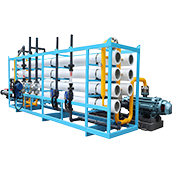
In practical applications, the BW30 series membrane element is the core of the entire reverse osmosis system. A complete system typically includes:
Pretreatment System: Crucial for removing suspended solids, colloids, residual chlorine, and other substances that may damage the membrane.
High-Pressure Pump: Provides the pressure required for the reverse osmosis process.
Membrane Housing and Elements: Multiple BW30 membrane elements are connected in series inside pressure vessels, forming the core position of desalination.
Control System: Realizes automatic start/stop, flushing, data monitoring, and fault alarms.
Cleaning System (CIP): Used for chemical cleaning when membrane performance declines to restore flux and salt rejection.
Future Prospects
As global requirements for water resource quality and sustainability increase, efficient and economical water treatment technologies like the BW30 series will play an even more critical role. Future developments will focus more on intelligence, achieving predictive maintenance of membrane systems through sensors and data analysis. Meanwhile, continuous exploration in materials science will further enhance its antifouling capabilities and service life. As a cornerstone of classic technology, the BW30 series will continue to evolve, providing solid and reliable support for addressing future water challenges.
Conclusion
In summary, the BW30 series reverse osmosis membrane has established its core position in the field of brackish water treatment with the distinctive characteristics of "most versatile, most economical, and high salt rejection." It is not just a water treatment element but a reliable solution tested by time. For any water treatment project seeking a perfect balance between cost and performance, choosing the BW30 series means choosing stability, efficiency, and economy.
Frequently Asked Questions (FAQ)
What level of salinity can the BW30 series handle?
The BW30 series is designed for brackish water and is typically suitable for water sources with Total Dissolved Solids (TDS) content below 10,000 ppm.
Why is it considered economical?
Its procurement cost is reasonable, operating energy consumption is low (compared to seawater membranes), and its long lifespan and stable performance make the comprehensive operating cost extremely competitive.
Where is its versatility reflected?
It can adapt to various different inlet water sources (such as groundwater, surface water, reclaimed water) and a wide range of industry applications, making it a standard configuration for many systems.
How is the stability of its high salt rejection guaranteed?
Through advanced polyamide composite membrane materials and precise manufacturing processes, ensuring the density and uniformity of the membrane surface separation layer.
Does the BW30 series come in different sizes?
Yes, the most common are the 8-inch (e.g., BW30-400) for large systems and the 4-inch (e.g., BW30-2540/430) for small to medium-sized systems.
Is pretreatment mandatory for using BW30 membranes?
Yes, strict pretreatment is mandatory to remove suspended solids, colloids, residual chlorine, etc., to prevent membrane fouling or chemical degradation.
What is its service life?
Under correct operation, maintenance, and cleaning conditions, its typical service life is usually 3 to 5 years, or even longer.
What impurities can the BW30 membrane remove?
It can efficiently remove dissolved salts, organic matter, bacteria, viruses, colloids, and pyrogens from water.
How to judge if the membrane needs cleaning?
When water production significantly decreases, salt rejection drops noticeably, or the system pressure drop (difference between inlet and concentrate pressure) increases, it usually means cleaning is required.
What safety standards does it comply with?
Its materials and production processes comply with international drinking water safety standards including NSF/ANSI 61, ensuring the produced water is safe and non-toxic.