2. Application Scenarios

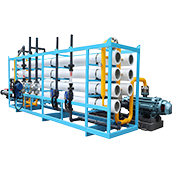
TML20-400, as the core product of TML ultra-low energy consumption series, has a wide range of application scenarios, and its energy-saving advantage can be fully exerted in various water treatment fields, bringing considerable economic benefits to users.
First, municipal water supply treatment. Municipal water supply projects have large water production demand and long operation time, and energy consumption is a key factor affecting operation cost. TML20-400 can stably operate under low pressure, reduce the energy consumption of water supply systems, and ensure that the produced water meets the national drinking water standard.
Second, industrial water treatment. In industries such as electronics, food, and pharmaceuticals that require high-quality water, TML20-400 can purify raw water efficiently with low energy consumption, reduce production costs, and meet the high-standard water quality requirements of industrial production.
Third, seawater desalination pretreatment. Seawater desalination projects have high energy consumption, and TML20-400, as a pretreatment membrane, can operate under low pressure to remove suspended solids and colloids in seawater, reducing the energy consumption of subsequent desalination links and improving the overall efficiency of the system.
Fourth, wastewater recycling. Industrial and municipal wastewater recycling projects need to balance treatment effect and energy consumption. TML20-400 can realize efficient purification of wastewater with low energy consumption, promote water resource recycling, and conform to environmental protection requirements.
3. Technical Parameters

The technical parameters of TML20-400 are optimized around ultra-low energy consumption and low operating pressure, ensuring stable performance and energy-saving effect. The core parameters are as follows:
1. Membrane material: Advanced composite RO membrane material, with good hydrophilicity and anti-pollution performance, service life up to 3-5 years.
2. Operating pressure: Recommended operating pressure 0.3-0.5MPa, which is 30%-50% lower than that of traditional RO membranes.
3. Operating conditions: Operating temperature 5-45℃, inlet water pH 2-11, inlet water SDI ≤5, adapt to different water quality environments.
4. Water production flux: 20-40 m³/(m²·d) under standard conditions (25℃, 0.4MPa), ensuring efficient water production.
5. Desalination rate: ≥99.3%, effectively removing salts and harmful substances in water.
6. Physical parameters: 20-inch membrane element, length 1000mm, diameter 200mm, effective membrane area 400㎡, suitable for large-scale projects.
4. Product Advantages
The core advantage of TML20-400 lies in its ultra-low energy consumption and low operating pressure, and it also has obvious advantages in performance, operation and cost, which are specifically reflected in:
First, ultra-low energy consumption. The recommended operating pressure is only 0.3-0.5MPa, which can reduce the energy consumption of water pumps by 30%-50% compared with traditional RO membranes, greatly reducing the long-term operating cost of the project.
Second, high efficiency and stability. While reducing energy consumption, it maintains high water production flux and desalination rate, and can operate stably for a long time, reducing the frequency of shutdown and maintenance.
Third, good anti-pollution performance. The modified membrane material and optimized flow channel design reduce the adhesion of impurities, extend the cleaning cycle, and reduce maintenance costs.
Fourth, strong compatibility. It can be directly matched with existing water treatment systems, no major modification is needed, and the retrofitting cost is low, which is suitable for various project scenarios.
Fifth, environmental protection and energy saving. Low energy consumption operation reduces carbon emissions, and the membrane material is non-toxic and recyclable, conforming to the global low-carbon development trend.
5. Application Procedures
The application procedures of TML20-400 are simple and standardized, and users can operate it independently without professional technical foundation. The specific steps are as follows:
1. Pre-installation preparation: Check the integrity of the membrane module, clean the pipeline to remove impurities, and prepare installation tools and seals.
2. Membrane installation: Install the membrane element into the pressure vessel, ensure tight connection and no water leakage, and connect the water inlet, outlet and cleaning pipelines.
3. System commissioning: Turn on the power and water source, adjust the operating pressure to 0.3-0.4MPa, run for 30 minutes, and check whether the water production and water quality are normal.
4. Normal operation: Regularly monitor operating parameters such as pressure, flux and water quality, and record data; clean the membrane when the flux decreases by more than 20%.
5. Membrane cleaning: Use weak acid/alkali cleaning solution to circulate and clean for 30-60 minutes, then rinse with clean water until neutral, and restart the system.
6. Daily maintenance: Flush the membrane with clean water after shutdown, regularly check seals and replace damaged parts in time.
6. Quality Standards
TML20-400 strictly complies with international and domestic RO membrane quality standards, and formulates stricter quality control standards according to its energy-saving characteristics.
Internationally, it follows ISO 9001 quality management system and ISO 20466:2024 performance classification guidelines for recycled RO membranes; domestically, it complies with GB/T 30307-2013 and GB/T 5749-2022 standards. The core quality requirements include: membrane material meets food-grade safety, desalination rate ≥99.3%, flux recovery rate after cleaning ≥95%, tensile strength ≥15MPa, and can withstand maximum pressure 1.0MPa without deformation. Each batch of products has a unique batch number and quality inspection report, with full production traceability.
7. Working Principle
The working principle of TML20-400 is based on the reverse osmosis principle, combined with the optimized design of ultra-low energy consumption. Under low operating pressure, water molecules pass through the RO membrane through the pressure difference, while salts, suspended solids and other harmful substances are intercepted by the membrane.
The advanced composite membrane material has a dense and uniform structure, which reduces the resistance of water molecules passing through, so that efficient water production can be achieved under low pressure. At the same time, the optimized flow channel design increases the water flow rate on the membrane surface, reduces the deposition of impurities, enhances anti-pollution performance, and ensures stable operation under low energy consumption conditions.
8. Future Prospects
With the global emphasis on energy conservation and environmental protection and the shortage of water resources, the demand for energy-saving water treatment products is increasing. TML20-400, with its ultra-low energy consumption advantage, has broad development prospects.
In the future, it will be further upgraded in intelligence, integrating IoT technology to realize real-time monitoring of operating status and automatic adjustment of parameters; the membrane material will be optimized to further reduce energy consumption and extend service life; it will also expand to more fields such as offshore water treatment and emergency water supply, providing more energy-saving solutions for the water treatment industry.
9. Conclusion
TML Series: (Ultra-Low Energy Consumption Series, Low Operating Pressure) TML20-400 is a high-performance RO membrane product with ultra-low energy consumption as the core. It solves the pain point of high energy consumption in traditional water treatment, and integrates high efficiency, stability, anti-pollution and easy maintenance.
Its quality is guaranteed by strict standards, and it can stably operate in various water treatment scenarios, helping users reduce operating costs and achieve energy conservation and environmental protection goals. With the development of water treatment technology, TML20-400 will play a more important role in the global water resource recycling and low-carbon development, providing reliable support for the sustainable development of the water treatment industry.
10. Frequently Asked Questions (FAQs)
Q1: What is the core advantage of TML20-400? A1: The core advantage is ultra-low energy consumption and low operating pressure. Its recommended operating pressure is only 0.3-0.5MPa, which can reduce water pump energy consumption by 30%-50% compared with traditional RO membranes.
Q2: What is the service life of TML20-400?
A2: Under normal operation and maintenance, the service life is 3-5 years. Regular cleaning and maintenance can effectively extend its service life.
Q3: Can TML20-400 be used for seawater desalination?
A3: Yes, it is suitable for seawater desalination pretreatment, which can remove impurities in seawater under low pressure and reduce the energy consumption of subsequent desalination links.
Q4: Is it complicated to install TML20-400?
A4: No, it adopts modular design, which is easy to install and disassemble. Users can complete the installation according to the operation guidelines without professional skills.
Q5: How to deal with the decrease of water production flux?
A5: First, check whether the operating pressure is normal; if the flux decreases significantly, it indicates membrane fouling, and the membrane should be cleaned in time according to the cleaning procedure.