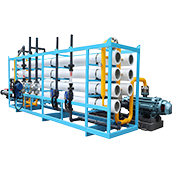
1. Product Introduction

Having been engaged in the seawater desalination industry for more than 10 years, I have witnessed the crucial role of RO membrane for seawater desalination in solving the fresh water crisis in coastal areas. Different from ordinary RO membranes used for tap water purification, RO membrane for seawater desalination is a high-performance separation membrane specially designed to handle high-salinity seawater . It uses a polyamide composite structure, with a dense selective separation layer on the surface, which can effectively intercept sodium chloride, magnesium chloride and other salts in seawater, while allowing water molecules to pass through smoothly. Many users mistakenly use ordinary RO membranes for seawater desalination, resulting in rapid membrane fouling, low desalination efficiency and even membrane damage. In fact, RO membrane for seawater desalination has undergone special anti-fouling and anti-corrosion treatment, which can adapt to the harsh environment of high salinity, high turbidity and high organic matter content in seawater. It is the core component of the seawater desalination system, and its performance directly determines the desalination effect, water production efficiency and operation cost of the entire system.
2. Application Scenarios

RO membrane for seawater desalination is widely used in various fields that need to convert seawater into fresh water, and its application forms vary according to the actual demand for fresh water and the use environment.
First, coastal cities and towns. In coastal areas with scarce fresh water resources, such as the Middle East, coastal areas of China and Southeast Asia, RO membrane for seawater desalination is used in large-scale seawater desalination plants to provide domestic water, industrial water and agricultural irrigation water for residents and enterprises.
Second, offshore platforms and ships. Offshore oil platforms, fishing boats and cruise ships need a stable supply of fresh water for personnel life and equipment operation, and small and medium-sized seawater desalination equipment equipped with RO membrane for seawater desalination can meet this demand efficiently.
Third, islands and remote coastal areas. Islands and remote coastal areas that are not connected to the land fresh water pipeline rely on RO membrane for seawater desalination technology to solve the problem of fresh water shortage for residents, which is convenient and efficient.
Fourth, emergency rescue. In the event of natural disasters such as tsunamis and droughts in coastal areas, RO membrane for seawater desalination can be used in mobile seawater desalination equipment to provide emergency fresh water supply, ensuring the basic living needs of the affected people.
3. Technical Parameters

The stable operation of RO membrane for seawater desalination must rely on strict technical parameters, which are the key to ensuring desalination effect and membrane service life. Based on my long-term on-site operation experience, the core technical parameters of RO membrane for seawater desalination are as follows:
Desalination rate: The desalination rate of the membrane should be ≥99.5%, which can effectively reduce the salinity of seawater (35,000 ppm) to below 175 ppm, meeting the drinking water standard.
Operating pressure: The recommended operating pressure is 5.5-6.5 MPa, which is higher than that of ordinary RO membranes (0.4-0.6 MPa), because higher pressure is needed to overcome the osmotic pressure of high-salinity seawater.
Membrane flux: The standard flux is 30-40 LMH (liters per square meter per hour) under the conditions of 25℃ and standard pressure, ensuring efficient water production.
Operating temperature: The applicable temperature range is 5-45℃; when the temperature is lower than 5℃, the membrane flux will decrease significantly, and when it is higher than 45℃, the membrane structure will be damaged.
Recovery rate: The single-stage recovery rate is 30-40%, and the two-stage recovery rate can reach 60-70%, which balances water production efficiency and membrane protection.
Seawater pretreatment parameters: After pretreatment, the turbidity of seawater should be ≤0.5 NTU, SDI (pollution index) ≤3, and free chlorine content ≤0.1 ppm to avoid membrane fouling and oxidation damage.
4. Product Advantages
After years of practice and summary, I have found that high-quality RO membrane for seawater desalination has obvious core advantages compared with ordinary RO membranes and other desalination technologies .
First, high desalination efficiency. The desalination rate of ≥99.5% can completely remove harmful salts and impurities in seawater, and the produced water meets the drinking water and industrial water standards.
Second, energy saving and environmental protection. Compared with the distillation desalination technology, the energy consumption of RO membrane for seawater desalination is reduced by 40-60%, and no harmful gas or waste residue is generated during the operation process, which is in line with the concept of green development.
Third, strong anti-fouling and anti-corrosion performance. The special surface treatment technology makes the membrane have good resistance to organic pollution, biological pollution and salt scaling, which can adapt to the complex water quality of seawater and extend the membrane service life.
Fourth, small footprint and flexible installation. The seawater desalination equipment equipped with RO membrane for seawater desalination has a compact structure, small footprint, and can be designed into large-scale, medium-scale and small-scale equipment according to demand, which is suitable for various application scenarios.
Fifth, low operation and maintenance cost. The membrane service life can reach 3-5 years under standardized operation, and the operation process is simple, requiring no complex manual operation, which greatly reduces the operation and maintenance cost.
5. Application Procedures
The correct application procedure is the key to giving full play to the performance of RO membrane for seawater desalination . Combining my on-site operation experience, I have sorted out the standardized application procedures.
First, seawater pretreatment. This is the most critical step: first, filter seawater through a coarse filter to remove large particles such as sand and gravel; then, use a ultrafiltration membrane to remove colloids, suspended solids and organic matter; finally, add a reducing agent to remove free chlorine in seawater to avoid oxidizing the membrane.
Second, membrane module installation. Install the RO membrane for seawater desalination into the pressure vessel according to the direction requirements, ensure that the connection is tight, and avoid water leakage and pressure loss.
Third, system start-up and debugging. Start the high-pressure pump, gradually adjust the operating pressure to the standard range , monitor the membrane flux and desalination rate, and adjust the parameters until they are stable.
Fourth, regular operation and monitoring. During operation, regularly detect the water quality of raw water (seawater) and produced water, monitor the membrane pressure difference , and record the operation parameters.
Fifth, regular cleaning and maintenance. Clean the membrane with a special cleaning agent every 3-6 months to remove pollutants attached to the membrane surface; replace the membrane in time when the desalination rate is lower than 98% or the membrane flux is reduced by more than 20%. Sixth, emergency shutdown. In case of abnormal conditions such as sudden increase of pressure difference or sharp decrease of water production, shut down the system immediately, check the cause, and restart the system after troubleshooting.
6. Quality Standards
RO membrane for seawater desalination must comply with strict international and domestic quality standards to ensure its performance and safety. Internationally, it follows the ISO 10304-2 standard (Water quality - Determination of dissolved solids by membrane filtration) and ASTM D4516 (Standard Test Method for Reverse Osmosis Membranes); domestically, it complies with GB/T 30307-2013 "Reverse Osmosis Membrane Elements for Water Treatment" and GB/T 5749-2022 "Standards for Drinking Water Quality". The key quality standards include:
First, the desalination rate must be ≥99.5%, and the membrane flux must meet the standard under the specified conditions. Second, the membrane must have good chemical stability, and can resist the corrosion of acid, alkali and oxidants in seawater. Third, the anti-fouling performance must meet the requirements, and the membrane flux attenuation rate should be ≤10% after 1000 hours of continuous operation.
Fourth, the physical performance is stable, the membrane thickness, tensile strength and other indicators meet the standard, and there is no leakage or damage.
Fifth, the produced water quality must meet the drinking water or industrial water standards, and the content of heavy metals, bacteria and other harmful substances must be within the specified range.
7. Working Principle
The working principle of RO membrane for seawater desalination is based on the reverse osmosis separation technology, which relies on the selective permeability of the membrane and external pressure to realize the separation of water molecules and salts. Seawater contains a large number of soluble salts , and the osmotic pressure of seawater is much higher than that of fresh water. Under normal conditions, water molecules will flow from fresh water to seawater. The RO membrane for seawater desalination has a dense selective separation layer, which only allows water molecules to pass through, but intercepts salts and other impurities. When external high pressure is applied, water molecules in seawater will flow in the reverse direction through the membrane, while salts and other harmful substances are intercepted on the surface of the membrane, and discharged with the concentrated water. In this way, the purpose of converting seawater into fresh water is achieved. The anti-fouling layer on the surface of the membrane can prevent pollutants from adhering to the membrane pores, ensuring the long-term stable operation of the membrane.
8. Future Prospects
With the global shortage of fresh water resources becoming more and more serious, the demand for seawater desalination technology is increasing, and RO membrane for seawater desalination will have broader development prospects. From the perspective of industry development, there are three main directions.
First, high-performance membrane material innovation. The research and development of new polyamide composite membranes will further improve the desalination rate and membrane flux of RO membrane for seawater desalination , reduce the operating pressure, and save energy consumption.
Second, intelligent operation and maintenance. The seawater desalination system will be integrated with Internet of Things, sensor technology and artificial intelligence, real-time monitor the operation status of the membrane, automatically adjust the operating parameters, and realize intelligent cleaning and maintenance, which is more efficient and accurate.
Third, low-cost and large-scale application. With the continuous maturity of membrane production technology, the cost of RO membrane for seawater desalination will be further reduced, promoting the large-scale application of seawater desalination technology in more coastal areas and islands.
In addition, the combination of RO membrane technology and other desalination technologies will further improve the environmental protection and sustainability of seawater desalination.
9. Conclusion
RO membrane for seawater desalination is the core component of seawater desalination technology, which plays an irreplaceable role in solving the fresh water shortage in coastal and marine areas. High-quality RO membrane for seawater desalination has the advantages of high desalination efficiency, energy saving and environmental protection, strong anti-fouling performance, and low operation and maintenance cost. Its stable operation is affected by technical parameters, seawater pretreatment, operating conditions and other factors, and it is necessary to strictly follow the quality standards and application procedures in the process of use. With the continuous progress of membrane material technology and intelligent technology, RO membrane for seawater desalination will become more efficient, energy-saving and low-cost, playing a more important role in global water resource utilization, and providing a reliable solution for alleviating the fresh water crisis.
10. Frequently Asked Questions (FAQs)
Q1: What is RO membrane for seawater desalination, and what is its role?
A1: RO membrane for seawater desalination (海水淡化反渗透膜) is a high-performance separation membrane specially designed for high-salinity seawater treatment. Its role is to intercept salts and impurities in seawater through selective permeability, convert seawater into usable fresh water, and solve the problem of fresh water shortage in coastal and marine areas.
Q2: What is the difference between RO membrane for seawater desalination and ordinary RO membrane?
A2: The main difference is the applicable water quality and operating parameters. RO membrane for seawater desalination is resistant to high salinity, high pressure and pollution, with a desalination rate of ≥99.5% and an operating pressure of 5.5-6.5 MPa; ordinary RO membranes are suitable for low-salinity water (such as tap water), with lower operating pressure and desalination rate.
Q3: What factors will affect the service life of RO membrane for seawater desalination?
A3: The main factors include insufficient seawater pretreatment , unstable operating pressure and temperature, irregular cleaning and maintenance, and the use of unqualified cleaning agents.
Q4: How often does the RO membrane for seawater desalination need to be replaced?
A4: Under standardized operation and regular maintenance, the service life is 3-5 years; if the desalination rate is lower than 98% or the membrane flux is reduced by more than 20%, the membrane needs to be replaced in time.
Q5: Can the produced water of RO membrane for seawater desalination be directly drunk?
A5: Yes. After the RO membrane for seawater desalination treatment, the salinity of seawater is reduced to below 175 ppm, and the produced water meets the GB/T 5749-2022 drinking water standard, which can be directly drunk after disinfection if necessary.
Q6: What is the energy consumption of RO membrane for seawater desalination?
A6: The energy consumption is about 3-5 kWh per cubic meter of fresh water produced, which is 40-60% lower than that of distillation desalination technology, and the energy consumption can be further reduced with the innovation of membrane technology.