1. Application Scenarios

The management of RO membrane lifespan is widely used in all fields where RO water treatment systems are applied, and its importance varies with different scenarios.
First, household RO water purifiers. For ordinary families, the RO membrane is a core component with high replacement costs. Extending RO membrane lifespan can not only save family expenses, but also avoid the trouble of frequent replacement and ensure the safety of drinking water for the whole family.
Second, industrial water treatment systems. Industries such as electronics, pharmaceuticals and food processing have large water consumption and high requirements for water quality. The premature failure of RO membrane will lead to production suspension, increased production costs and even unqualified products. Therefore, extending RO membrane lifespan is crucial for ensuring the stability of industrial production lines.
Third, municipal water supply and sewage treatment systems. Municipal RO systems bear the responsibility of providing safe drinking water for residents and treating sewage. The long lifespan of RO membrane can reduce the frequency of large-scale replacement, save municipal maintenance costs and ensure the continuity of water treatment.
Fourth, commercial places such as hotels, hospitals and schools. These places have large water consumption and high requirements for water quality. Scientific management of RO membrane lifespancan ensure the stable operation of water purification systems and avoid water quality problems caused by membrane failure.
2. Technical Parameters

The RO membrane lifespan has clear technical parameters, which are the basis for judging whether the membrane is in normal service and formulating maintenance plans. Based on my practical experience, the core technical parameters related to RO membrane lifespan are as follows:
Standard lifespan: Under normal operating conditions and regular maintenance, the household RO membrane has a lifespan of 3-7 years, and the industrial RO membrane has a lifespan of 5-10 years.
Influencing parameter indicators: Raw water SDI (15 minutes) ≤5.0, turbidity ≤0.5 NTU, free chlorine concentration <0.1 ppm; operating pressure stable at 15-60 bar (household 15-30 bar, industrial 30-60 bar); operating temperature 5-45℃; pH range 2-11 (continuous operation).
Lifespan evaluation indicators: When the salt rejection rate drops by more than 5% and cannot be recovered after cleaning, or the permeate flow rate drops by more than 20%, it indicates that the RO membrane lifespan is approaching the end and needs to be replaced.
Maintenance frequency parameters: Household RO membrane needs to be cleaned every 3-6 months, and industrial RO membrane needs to be cleaned every 6-12 months; pre-treatment filters need to be replaced every 1-3 months to ensure the quality of inlet water.
3.Product Advantages

Through years of practice, I have summarized the core advantages of scientific management of RO membrane lifespan compared with neglecting maintenance or replacing membranes at will.
First, significant cost saving. Extending RO membrane lifespan by 2-3 years can reduce the frequency of membrane replacement, saving a lot of replacement costs .
Second, stable water quality. During the normal RO membrane lifespan , the salt rejection rate and permeate flow rate can remain stable, ensuring that the produced water quality meets the use requirements and avoiding water quality deterioration caused by premature membrane failure.
Third, reduced maintenance workload. Scientific maintenance to extend RO membrane lifespan can reduce the frequency of system maintenance and replacement, save time and labor costs for users, and avoid the impact of maintenance on normal water use.
Fourth, prolonged system service life. The RO membrane is the core component of the RO system. Extending its lifespan can also reduce the wear of other components in the system, thereby prolonging the overall service life of the RO system.
Fifth, environmental protection and energy saving. Reducing the frequency of RO membrane replacement can reduce the generation of membrane waste, which is in line with the concept of green environmental protection; at the same time, stable operation can avoid energy waste caused by system failure.
4. Application Procedures
Many users do not know how to maintain the RO membrane correctly, resulting in the shortening of RO membrane lifespan . Combining my on-site operation experience, I have sorted out the standardized application procedures for extending RO membrane lifespan .
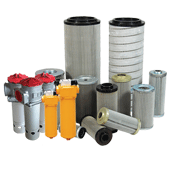
First, strict pre-treatment of inlet water. Install pre-treatment filters to remove large particles, colloids, residual chlorine and other impurities in raw water, ensuring that the inlet water meets the technical requirements of the RO membrane and avoiding membrane fouling.
Second, standardize operating parameters. Adjust the operating pressure, temperature and other parameters to the standard range, avoid excessive pressure or temperature, and prevent damage to the polyamide selective layer of the RO membrane . Third, regular flushing and cleaning. Flush the RO membrane with clean water for 10-15 minutes every week to remove surface impurities; use a special cleaning agent to clean the membrane every 3-12 months to remove internal fouling and restore membrane performance.
Fourth, regular inspection and maintenance. Check the operation status of the RO membrane every month, detect the salt rejection rate and permeate flow rate, and record the operation data; replace the pre-treatment filter in time when it is blocked. Fifth, correct shutdown and preservation. If the RO system is not used for more than 3 days, turn off the water source and power supply, flush the membrane with clean water, and use a preservative to preserve it to avoid membrane aging and pollution during idle periods.
5. Quality Standards
The quality of RO membrane itself and the standardization of maintenance operations directly affect RO membrane lifespan, so they must comply with strict quality standards. Internationally, it follows the ISO 9001 quality management system and ASTM D4516 ; domestically, it complies with GB/T 30307-2013 "Reverse Osmosis Membrane Elements for Water Treatment" and GB/T 5749-2022 "Standards for Drinking Water Quality". The key quality standards related to RO membrane lifespan include:
First, the RO membrane itself must meet the quality requirements, with a standard lifespan of 3-7 years and 5-10 years , and the salt rejection rate ≥99.5% at the initial stage of use.
Second, the pre-treatment of inlet water must meet the standards, and the indicators such as SDI, turbidity and free chlorine must be within the specified range to avoid membrane fouling.
Third, the maintenance operations must be standardized, including regular cleaning, flushing and filter replacement, to ensure that the RO membrane is in a good operating state.
Fourth, the operating parameters must be stable, and the pressure, temperature and other indicators must not exceed the standard range to prevent membrane damage.
Fifth, the RO membrane must be stored correctly during idle periods to avoid aging and pollution.
6.Working Principle
The principle of extending RO membrane lifespan is based on the working principle of the RO membrane and the mechanism of membrane failure. The core of the RO membrane is the polyamide selective layer , which realizes deep water purification by intercepting impurities such as salts and heavy metals. The main reasons for the shortening of RO membrane lifespan are membrane fouling , membrane aging and mechanical damage. Therefore, the core of extending RO membrane lifespan is to avoid these failure factors: strict pre-treatment removes impurities that cause fouling, standardized operating parameters avoid mechanical damage and oxidation, and regular cleaning and maintenance removes existing fouling and restores membrane performance. In addition, correct preservation during idle periods can slow down membrane aging, thereby extending the effective service time of the RO membrane .
7. Future Prospects
With the continuous popularization of RO water treatment systems and the increasing emphasis on energy conservation and environmental protection, the research and management of RO membrane lifespan will have broader development prospects. From the perspective of industry development, there are three main directions.
First, material innovation. The research and development of new anti-fouling and anti-aging RO membrane materials will further extend the standard lifespan of the membrane, making the household membrane lifespan reach 7-10 years and the industrial membrane lifespan reach 10-15 years.
Second, intelligent management. The RO system will be integrated with Internet of Things technology to real-time monitor the operation status of the RO membrane , automatically remind of maintenance time and potential faults, and intelligently adjust operating parameters to maximize RO membrane lifespan .
Third, standardized maintenance services. Professional maintenance teams will provide customized maintenance plans according to different use scenarios and raw water quality, helping users scientifically manage RO membrane lifespan and reduce maintenance costs.
In addition, the recycling and reuse technology of waste RO membranes will be further improved, which will not only save resources but also reduce environmental pollution.
8. Conclusion
RO membrane lifespan is a key indicator affecting the operation efficiency and cost of RO water treatment systems. Scientific management and maintenance of RO membrane lifespan can effectively extend the service time of the RO membrane , ensure stable water purification performance, save replacement and maintenance costs, and realize energy conservation and environmental protection. The RO membrane lifespan is affected by raw water quality, operating parameters, maintenance frequency and other factors, and its extension requires strict pre-treatment, standardized operation and regular maintenance. As the core component of the RO system, the RO membrane has a crucial impact on the overall operation of the system. With the continuous progress of material technology and intelligent technology, the RO membrane lifespan will be further extended, and the management method will be more scientific and convenient, which will play a more important role in the field of water resource utilization, bringing more economical and reliable water purification solutions to users in various fields.
9. Frequently Asked Questions (FAQs)
Q1: What are the main factors affecting RO membrane lifespan?
A1: The main factors include: raw water quality (high impurity content, high free chlorine concentration will shorten lifespan), operating parameters (excessive pressure, extreme temperature will damage the membrane), maintenance frequency (lack of regular cleaning and pre-treatment will cause fouling), and storage method (improper storage during idle periods will cause aging).
Q2: Can RO membrane lifespan be extended through maintenance?
A2: Yes. Scientific maintenance can extend RO membrane lifespan by 2-3 years. The key is to do a good job in pre-treatment of inlet water, regular cleaning and flushing, and standardize operating parameters.
Q3: How to judge whether the RO membrane has reached the end of its lifespan?
A3: The key judgment criteria are: the salt rejection rate drops by more than 5% and cannot be recovered after cleaning; the permeate flow rate drops by more than 20%; the membrane has been used for more than the standard lifespan (3-7 years for household, 5-10 years for industrial); the produced water has peculiar smell, turbidity or fails to meet the use standard.
Q4: How often should the RO membrane be cleaned to extend its lifespan?
A4: It depends on the use scenario. Household RO membranes need to be cleaned every 3-6 months, and industrial RO membranes need to be cleaned every 6-12 months; if the raw water quality is poor, the cleaning frequency can be appropriately increased.
Q5: Does the pre-treatment of inlet water affect RO membrane lifespan?
A5: Yes. Pre-treatment is the key to extending RO membrane lifespan . It can remove large particles, colloids, residual chlorine and other impurities that cause membrane fouling, avoiding premature membrane failure.
Q6: What is the difference between the lifespan of household and industrial RO membranes?
A6: The main difference is the standard lifespan: household RO membranes have a lifespan of 3-7 years, and industrial RO membranes have a lifespan of 5-10 years. This is because industrial RO membranes have larger effective area, higher anti-fouling performance and more standardized maintenance, so their lifespan is longer.