Ultrafiltration Membrane Device for Precision Industrial Water Separation
Ultrafiltration membrane device is the core membrane separation unit relying on polymer microporous membranes to intercept micro-contaminants and realize physical water purification in various water treatment processes. It can be installed inside the Ultrafiltration equipment system to constitute a complete filtration workflow, and matched with Ultrafiltration organic membrane equipment to satisfy diverse raw water purification requirements. Working under low cross-flow pressure, this device efficiently removes suspended solids, colloids, microorganisms and macromolecular organics without heavy chemical dosing. Widely applied as core components for industrial water reuse, municipal sewage advanced treatment and desalination pretreatment, ultrafiltration membrane devices are essential hardware selected by global water treatment engineering contractors.

Product Description
Ultrafiltration membrane device refers to the independent assembly consisting of ultrafiltration membrane elements, membrane housing, connecting pipelines and supporting fixtures, serving as the core filtration unit of membrane water treatment projects. As a single functional module rather than a full set of water treatment station, it can be flexibly combined with pretreatment facilities, pump sets and automatic control cabinets to form complete purification systems. The mainstream core materials include PVDF, PAN and PES organic hollow fiber membranes, with stable molecular weight cutoff to guarantee consistent filtration precision.
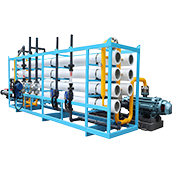
According to project flow requirements, multiple ultrafiltration membrane devices can be assembled in parallel to boost total water output and integrated into a complete Ultrafiltration equipment system. For customers with targeted water quality demands, different specifications of membrane elements can be selected to assemble customized Ultrafiltration organic membrane equipment. The ultrafiltration membrane device supports inside-out and outside-in operation modes, adaptable to surface water, groundwater, municipal secondary effluent and light industrial wastewater. It is extensively adopted in food production, pharmaceutical processing, chemical manufacturing, electronics factories and environmental protection projects, providing qualified influent for subsequent reverse osmosis water treatment units.
Working Principle
Ultrafiltration membrane device operates based on low-pressure cross-flow ultrafiltration separation mechanism. Driven by circulating pump pressure of 0.1–0.3 MPa, raw water flows through the hollow fiber membrane filaments inside the device. Water molecules and soluble small inorganic ions pass through uniform membrane micropores to form clear permeate water. Substances larger than the membrane pore size, such as suspended particles, colloids, bacteria and organic macromolecules, are trapped on the membrane surface and discharged along with concentrated water.
Continuous cross-flow liquid generates scouring force to reduce pollutant deposition and slow membrane fouling. Combined with regular backwashing and cyclic chemical cleaning, the membrane flux can be maintained for long-term stable operation. In large-scale engineering projects, dozens of ultrafiltration membrane devices are arranged in standardized racks and integrated into one whole Ultrafiltration equipment system. Users can choose different membrane materials to assemble Ultrafiltration organic membrane equipment according to raw water pH, temperature and pollutant characteristics, avoiding irreversible membrane pollution and extending the service cycle of membrane elements.
Technical Features
1. Independent modular unit design:
Easy to transport, install, replace and maintain without transforming the whole system.
2. Adjustable operation modes:
Support inside-out and outside-in flow patterns to cope with different raw water turbidity levels.
3. Diversified membrane material options:
PVDF, PAN and PES organic membranes available for different water quality environments.
4. Convenient system integration:
Can be freely combined to build a complete Ultrafiltration equipment system according to water yield demands.
5. Strong assembly compatibility:
Flexible connection with auxiliary pipelines to form customized Ultrafiltration organic membrane equipment.
Product Advantages
1. High filtration precision:
Steady removal of colloids and microorganisms that conventional filtration equipment cannot intercept.
2. Compact structural layout:
Large effective filtration area within limited space, saving overall equipment room occupation.
3. Low energy consumption:
Operate under low pressure to reduce long-term power operating costs.
4. Easy maintenance:
Single membrane element can be replaced separately, no need to shut down the entire system for large-scale overhaul.
5. Wide applicability:
Suitable for raw water purification, wastewater reuse and pretreatment of desalination projects across multiple industries.
Application Fields
Industrial pure water pretreatment for pharmaceutical, beverage and electronic production workshops.
Municipal sewage advanced treatment to produce reclaimed water for industrial circulation and landscape irrigation.
Brackish water and seawater desalination pretreatment to lower SDI value and protect reverse osmosis membranes.
Small factory water purification stations composed of multiple ultrafiltration membrane devices.
Large water treatment projects that integrate multiple devices into a complete Ultrafiltration equipment system.
Light pollution wastewater recycling projects equipped with customized Ultrafiltration organic membrane equipment.
FAQ
Q1: What is the core difference between ultrafiltration membrane device and complete ultrafiltration water treatment equipment?
A1: The ultrafiltration membrane device is only the core filtration module. It requires supporting pumps, pretreatment and control units. The complete equipment integrates all parts, and multiple devices can be combined to build a mature Ultrafiltration equipment system.
Q2: Can ultrafiltration membrane devices be combined into large-flow water treatment systems?
A2: Yes. Multiple membrane devices can be connected in parallel on racks. Users can also select different membrane materials to assemble matched Ultrafiltration organic membrane equipment to expand processing capacity.
Q3: What factors affect the service life of ultrafiltration membrane devices?
A3: Raw water pollution load, pretreatment effect, cleaning frequency and chemical agent concentration. Effective pretreatment can significantly reduce membrane fouling and extend service life.
Q4: Can the operation direction of the ultrafiltration membrane device be adjusted on site?
A4: Most models support switching between inside-out and outside-in operation modes. Adjust the pipeline connection according to actual water quality conditions.
Q5: What kinds of water sources are suitable for ultrafiltration membrane devices?
A5: It is applicable to surface water, groundwater, municipal reclaimed water and lightly polluted industrial wastewater. Heavily contaminated wastewater needs enhanced pretreatment before entering the membrane device.
You May Also Be Interested In