Integrated Ultrafiltration and Nanofiltration Equipment for Water Treatment
Ultrafiltration and nanofiltration equipment are two core membrane separation devices that form a graded water purification system, widely deployed in industrial water supply, wastewater recovery, food processing water and municipal water upgrading projects worldwide. As a comprehensive industrial liquid filter manufacturer with full-process independent production capacity, Xinxiang Lifeierte Filter Corp., Ltd develops matched UF & NF products including standard Professional Ultrafiltration Purification Equipment, combined Ultrafiltration and Reverse Osmosis System, roll membrane style Roll Type Ultrafiltration Membrane Equipment and customized overall Ultrafiltration Equipment System to build multi-stage filtration solutions for different water purification precision demands. This paper elaborates the structural composition, respective working mechanisms, unified technical indicators, strict factory quality standards and practical application values of ultrafiltration and nanofiltration equipment, helping global engineering purchasers configure matched membrane filtration combinations to improve water outlet quality, reduce chemical dosing costs and maximize wastewater resource recovery benefits.

1. Product Introduction of Ultrafiltration and Nanofiltration Equipment
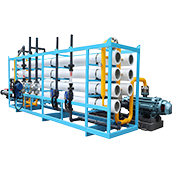
Ultrafiltration (UF) serves as the pretreatment front-end of the membrane system, while nanofiltration (NF) acts as the fine purification unit after UF treatment; the two devices are often used in series to complete coarse filtration, impurity interception and partial desalination step by step. The whole set of ultrafiltration and nanofiltration equipment is composed of membrane modules, stainless steel support frame, booster pump group, backwash & chemical cleaning unit, pressure sensing assembly and PLC intelligent control cabinet, realizing fully automatic unattended operation for long-term industrial operation.
For basic industrial suspended matter removal and sewage turbidity reduction, customers can select independent Professional Ultrafiltration Purification Equipment. This ultrafiltration device intercepts colloids, bacteria, suspended solids and macromolecular organics, stabilizing water quality to provide qualified inlet water for subsequent fine filtration. When enterprises need simultaneous turbidity removal and partial hardness removal, desalination treatment, the integrated Ultrafiltration and Reverse Osmosis System matched with nanofiltration components is the optimal choice, realizing one-stop water purification on a single skid. For high-flow water treatment projects such as factory circulating water and large-scale sewage stations, our Roll Type Ultrafiltration Membrane Equipment adopts roll-type membrane elements with high flux and strong pollution resistance, suitable for continuous high-load working conditions. For special water quality, site layout and processing standards, we provide tailor-made Ultrafiltration Equipment System, adjusting membrane quantity, pipeline layout and control logic according to customer actual working conditions.
Ultrafiltration mostly adopts modified PVDF hollow fiber membrane material, featuring strong anti-fouling performance; nanofiltration uses composite polyamide roll membrane with selective separation characteristics, which can remove divalent ions, organic pigments and residual organic pollutants while retaining part of beneficial mineral substances. Standard frames and pipelines adopt 304 stainless steel, and 316L anti-corrosion materials are configured for chemical, electroplating and other corrosive wastewater environments. The unified intelligent control platform can synchronously monitor the operating pressure, flow rate and membrane pollution degree of UF and NF sections, automatically starting backwashing and chemical cleaning procedures to extend membrane service life.
2. Working Principle of Ultrafiltration and Nanofiltration Equipment
2.1 Working Principle of Ultrafiltration Equipment
Ultrafiltration belongs to physical sieving filtration under pressure drive, with the membrane aperture range of 0.01~0.1 μm. Raw water is pressurized to 1.0–3.6 bar and flows along the surface of hollow fiber membrane. Water molecules and small molecular soluble substances pass through the membrane to form permeate water; suspended solids, colloids, microorganisms and macromolecular impurities are trapped on the membrane surface to form concentrated liquid discharged outwards. The system sets regular cross-flow scouring + backwashing procedures to flush away surface pollutants and slow down membrane fouling.
2.2 Working Principle of Nanofiltration Equipment
Nanofiltration membrane aperture is between ultrafiltration and reverse osmosis (1–10 nm), belonging to pressure-driven selective permeation separation. After ultrafiltration pretreatment removes most particulate pollutants, the water enters the nanofiltration system under 6–16 bar operating pressure. Nanofiltration effectively intercepts calcium and magnesium ions (water hardness), chroma, humus and trace organic pollutants, while allowing monovalent salts and partial mineral ingredients to pass through. It achieves softening, decolorization and advanced purification without complete desalination, which is more energy-saving than pure reverse osmosis equipment.
2.3 Combined Operation Logic of UF + NF System
Ultrafiltration removes large-particle pollutants to protect nanofiltration membranes from physical scratch and rapid pollution; nanofiltration further optimizes water quality on the basis of UF effluent. The linkage control program synchronizes the operation rhythm of the two devices to ensure stable effluent indicators of the whole system.

3. Universal Technical Parameters
Ultrafiltration Core Parameters
Membrane material: Modified anti-fouling PVDF hollow fiber membrane
Aperture: 0.01 ~ 0.1 μm; MWCO: 50kDa ~ 100kDa
Operating pressure: 1.0 ~ 3.6 bar; working temperature: 5 ~ 45 ℃
Applicable pH: Continuous operation 2–11, cleaning tolerance 1–13
Water recovery rate: 80% ~ 90%
Nanofiltration Core Parameters
Membrane material: Polyamide composite roll nanofiltration membrane
Aperture: 1 ~ 10 nm; operating pressure: 6 ~ 16 bar
Rejection rate for divalent ions ≥95%; organic matter removal rate ≥90%
Working temperature: 5 ~ 40 ℃; applicable pH range 3 ~ 10
System water recovery rate: 75% ~ 85%
Public System Configuration
Control mode: Touch screen + PLC automatic linkage control
Automatic cleaning: Timed backwashing + regular CIP chemical cleaning
Single set processing capacity: Customized range 0.5t/h ~ 500t/h
4. Product Quality Assurance System
Our ultrafiltration and nanofiltration equipment strictly implement ISO9001 quality management system and CE certification standards in the whole production process.
Raw material incoming inspection: Membrane elements, stainless steel pipes, pumps, valves and electrical components are sampled and tested to eliminate defective materials at the source.
Process monitoring: Welding, membrane assembly, pipeline connection and electrical wiring are tracked by dedicated inspectors with complete quality records.
Factory overall test: Each complete set of equipment passes hydraulic tightness test, simulated dynamic operation test and linkage debugging of UF & NF two sections before delivery.
Export-grade packaging: Moisture-proof, shock-proof and rust-proof packaging is adopted for overseas shipments to adapt to long-distance sea transportation.
With standardized operation and maintenance, the service life of ultrafiltration membrane is 5–8 years, and nanofiltration membrane can be stably used for 3–5 years. We provide global spare parts supply and free remote technical after-sales service for all customers.

5. Main Application Fields of Ultrafiltration and Nanofiltration Equipment
Food & beverage industry: Purification of mineral water, beverage production water, removing pigment and macromolecular impurities by NF after UF pretreatment
Industrial circulating water & wastewater reuse: UF removes turbidity and suspended matter, NF softens water quality to reduce pipeline scaling and circulating water dosing quantity
Pharmaceutical intermediate water preparation: Graded filtration ensures microbial index and water cleanliness meet pharmaceutical production standards
Municipal reclaimed water advanced treatment: Realize wastewater reuse for greening, road washing and industrial miscellaneous water
Electroplating and printing wastewater treatment: Intercept heavy metal colloids and organic pollutants to reach discharge and reuse standards
Brackish water partial softening treatment: Nanofiltration achieves low-cost water softening compared with reverse osmosis equipment
FAQ
Q1: What is the core difference between ultrafiltration equipment and nanofiltration equipment?
A: Ultrafiltration mainly removes suspended solids, colloids and bacteria for turbidity reduction; nanofiltration can remove water hardness, pigment and organic pollutants with certain ion interception ability. UF is used for pretreatment, NF for advanced fine purification.
Q2: Must ultrafiltration be matched with nanofiltration for use? Can they be used alone?
A: The two can be used independently according to demands. Ultrafiltration can be used alone for sewage turbidity reduction; nanofiltration must be equipped with ultrafiltration as pretreatment to avoid membrane element blockage and damage.
Q3: How to configure the processing capacity of UF and NF devices when customizing equipment?
A: The design flow of ultrafiltration is generally 10%~20% higher than nanofiltration processing flow. We formulate matching parameters according to customers’ inlet water quality, target effluent standard and actual water consumption.
Q4: Will you provide complete English documents for exported UF & NF integrated equipment?
A: Complete English operation manuals, P&ID drawings, certification reports and video operation tutorials are provided with each equipment, supporting customers to complete customs clearance and on-site commissioning.
Q5: What is the warranty scope of ultrafiltration and nanofiltration equipment?
A: The whole equipment frame, pump valves, control system enjoy a 1-year free warranty; UF and NF membrane elements belong to consumables not covered by the warranty, we supply replacement membranes at factory cost price permanently.
Q6: How often do ultrafiltration and nanofiltration systems need chemical cleaning?
A: Ultrafiltration conventional chemical cleaning cycle is 1~3 months; nanofiltration cleaning cycle is 3~6 months. The cycle will be shortened appropriately when the raw water pollution degree is high.
Other products you may want to know about:
High Flow Filter Element
Precision water filter
Self Cleaning Filters