Diagnose & Fix Common Faults In Industrial RO Equipment
Common faults in industrial RO equipment refer to abnormal operating phenomena including reduced water output, increased product water conductivity, membrane pressure difference surge and control system errors during long-term running of industrial reverse osmosis water treatment devices. It is necessary to regularly inspect and maintain supporting liquid filter devices in daily operation, as filter clogging and aging are the primary inducements triggering most subsequent membrane fouling and equipment abnormal failures. Factory maintenance teams can adopt matched maintenance solutions supported by Stainless Steel Frame RO Equipment for Durable Industrial Water System and fault troubleshooting standards from the document Troubleshooting Common Faults In Industrial RO Water Equipment to realize rapid fault elimination and system recovery. This paper systematically sorts out fault classification, RO working mechanism, abnormal technical parameter thresholds, quality-induced fault causes, industry-oriented fault disposal schemes and standardized maintenance suggestions. Our fault diagnosis & maintenance guide adapts small integrated RO skids and large industrial centralized water treatment stations, widely serving chemical, power, food, pharmaceutical and new energy manufacturing industries. This full analysis helps enterprises cut unplanned downtime and lower long-term RO system operation and maintenance costs.

1. Product & Common Fault Overall Introduction
Common faults in industrial RO equipment cover all abnormal working conditions of integrated reverse osmosis water making units. Even high-standard finished products such as Stainless Steel Frame RO Equipment for Durable Industrial Water System will gradually produce various faults under long-time 24-hour continuous operation, improper manual operation and neglected daily maintenance. Most factory staff only carry out passive emergency repair after equipment alarms, ignoring early subtle abnormal signals, which eventually evolves into irreversible membrane damage, long-time production shutdown and extra high maintenance expenses. Mastering the whole logic of RO equipment faults is the core premise to guarantee stable pure water supply for factory production lines.
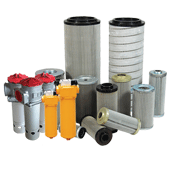
The failure of the front-end liquid filter is the source of over 60% of industrial RO equipment common faults. Blocked filter cartridges, damaged filter shells and mismatched filter precision will directly raise the SDI value of inlet raw water, let particulate impurities and colloids flow into the membrane stack, cause organic fouling & inorganic scaling on RO membranes, and further derive a series of secondary faults such as water yield attenuation and deteriorated water quality. Timely periodic replacement and pressure difference monitoring of liquid filters are the most cost-effective preventive means for RO fault control.
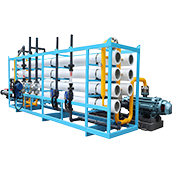
We divide mainstream industrial RO equipment faults into four modules by system composition: pretreatment system faults, membrane separation main rack faults, power & pipeline assembly faults, automatic control system faults. For integrated compact skids represented by Stainless Steel Frame RO Equipment for Durable Industrial Water System, faults mostly focus on pretreatment filters and high-pressure pumps; for large multi-module water stations, membrane pressure difference abnormality and control linkage failure become high-frequency faults. Meanwhile, users can refer to the complete judging process recorded in Troubleshooting Common Faults In Industrial RO Water Equipment to distinguish normal parameter fluctuation from real equipment failure, avoiding blind disassembly and unnecessary maintenance costs.
Many manufacturers only pay attention to equipment procurement cost without establishing standardized daily maintenance mechanisms. Our complete fault research system includes seven core modules: fault phenomenon description, abnormal parameter real-time data, root cause hierarchical analysis, step-by-step troubleshooting process, field repair operation specifications, optimized daily maintenance plan and fault recurrence prevention strategies. After troubleshooting according to standardized processes, the restored RO unit can stably supply qualified pure water for component cleaning, raw material mixing, boiler feed water and circulating cooling replenishment. Timely handling of common faults is the basic guarantee for the long-cycle stable operation of factory pure water stations.
2. Reverse Osmosis Working Principle & Fault Generation Logic
Reverse osmosis adopts pressure-driven physical membrane separation technology, which is the theoretical basis for analyzing the generation law of all common RO equipment faults. When the external driving pressure is higher than the natural osmotic pressure of raw water, pure water molecules pass through polyamide semi-permeable membranes, while dissolved salts, colloids and suspended pollutants are trapped on the concentrated water side to realize raw water purification. Any fluctuation of system pressure, flow rate, inlet water quality and control program will break the original stable separation balance and form visible equipment faults.
The four-stage standard operation flow of industrial RO systems and corresponding high-fault-risk areas are sorted as follows:
Stage1: Multi-stage precision pretreatment filtration fault module
Liquid filter and multi-media filter are the highest failure probability components. Cartridge blockage, shell leakage and pipeline clogging will increase the pressure loss of the whole system inlet end, becoming the initial inducement of a large number of subsequent RO faults. This pretreatment assembly acts as the first safety barrier for the whole set of Stainless Steel Frame RO Equipment for Durable Industrial Water System.
Stage2: Dosing regulation and high-pressure pump fault module
Abnormal pump current, vibration noise, dosing pump shutdown and dosing pipeline scaling will cause unstable operating pressure and membrane surface scaling, shortening the service life of expensive RO membrane elements.
Stage3: RO main membrane separation rack fault module
Membrane organic fouling, inorganic scaling, membrane element rupture and sharp rise of inter-membrane pressure difference belong to serious high-risk faults, which are mostly caused by long-term failure of front-end liquid filter.
Stage4: Intelligent control & automatic flushing fault module
Sensor drift, PLC signal loss and invalid automatic flushing programs lead the system to run under wrong parameters, accelerating the overall performance attenuation of RO equipment.
For two-stage ultra-pure water RO devices used in pharmaceutical and electronic industries, primary and secondary membrane racks have independent fault manifestations, which need to be checked separately combined with the troubleshooting steps in Troubleshooting Common Faults In Industrial RO Water Equipment.

3. Core Abnormal Technical Parameters Corresponding To RO Common Faults
We formulate unified abnormal parameter warning thresholds for each common fault, providing objective judgment standards for field maintenance personnel:
Permeate water yield drop: Actual water production is reduced by more than 15% of the rated value, generally caused by liquid filter blockage or membrane fouling, applicable to all models including Stainless Steel Frame RO Equipment for Durable Industrial Water System.
Product water conductivity surge: Desalination rate drops obviously, triggered by membrane damage or concentrated water backflow inside the pressure vessel.
Membrane inlet & outlet pressure difference rise: When the pressure difference increases by more than 0.2MPa, it is a typical sign of severe membrane fouling and scaling.
High-pressure pump abnormal indexes: Abnormal working current, strong vibration and loud noise, mostly caused by pump impeller wear or air accumulation inside pipelines.
Pipeline failure: Pipeline joint leakage and overall system pressure drop, appearing at filter shells, flanges and membrane pipeline connections.
Automatic flushing failure: The flushing program cannot be triggered on schedule, resulting in continuous pollutant accumulation on the membrane surface.
Standard calibration reference: All normal operating indexes shall be checked against the data standard in Troubleshooting Common Faults In Industrial RO Water Equipment.
4. Product Quality Defects That Trigger Recurring RO Equipment Faults
Part of repeated RO faults root in inherent product quality problems rather than improper operation and maintenance:
First, liquid filter component quality defect: Low-precision filter material, thin filter shell and poor sealing structure lead to frequent blockage and liquid leakage in short service life.
Second, RO membrane element quality difference: Inferior membranes are more prone to pollution and damage under the same working environment, resulting in frequent water quality unqualified problems.
Third, frame and pipeline material quality: Thin stainless steel frames and inferior UPVC pipelines are easy to deform and crack under long-term pressure load, causing medium leakage faults.
Fourth, control electrical component quality: Low-cost sensors and PLC modules are prone to signal drift and program crash, leading to out-of-control system operation.
Fifth, factory delivery inspection: If the factory does not complete 72h full-load operation test before delivery, hidden assembly defects will quickly break down after customers put the equipment into formal production.

5. Targeted Fault Handling & Maintenance Suggestions For Different Industrial Scenarios
Fault frequency and fault types are different in various industrial production environments, and we provide targeted disposal strategies:
Chemical factory RO system: High-salinity and high-hardness raw water easily cause membrane scaling; strengthen the replacement cycle of liquid filters and real-time monitoring of anti-scaling agent concentration.
Food processing workshop: Organic pollutants easily lead to biological fouling of membranes; increase the frequency of regular online disinfection of the whole RO pipeline system.
Pharmaceutical purified water station: Strictly control water quality abnormal faults; calibrate conductivity sensors regularly with reference to the specifications in Troubleshooting Common Faults In Industrial RO Water Equipment.
New energy ultra-pure water workshop: Deploy high-precision liquid filters for Stainless Steel Frame RO Equipment for Durable Industrial Water System to reduce particulate pollution of membrane components.
Thermal power plant boiler feed water RO unit: Focus on anti-corrosion maintenance of high-pressure pumps and pipelines to prevent leakage faults during long-term continuous operation.
General machinery processing factory: Implement monthly routine inspection of pretreatment liquid filters to realize early warning of potential faults.
FAQ
FAQ1
Q: What are the most frequent common faults of industrial RO equipment?
A: The main faults include reduced water output, elevated product water conductivity, excessive membrane pressure difference, abnormal pump vibration noise, pipeline leakage and automatic control system failure. Troubleshooting can refer to the operation data of Stainless Steel Frame RO Equipment for Durable Industrial Water System and the standardized process in Troubleshooting Common Faults In Industrial RO Water Equipment.
FAQ2
Q: Why do most membrane fouling faults originate from liquid filter failure?
A: Liquid filter acts as the only physical barrier to intercept suspended impurities in raw water. Once the filter fails or is blocked, impurities directly flow into the membrane stack, forming irreversible fouling and scaling on the RO membrane surface, which will continuously deteriorate the overall operating performance of the system.
FAQ3
Q: How to distinguish whether the RO membrane is only fouled or physically damaged?
A: Observe the changing trend of product water conductivity and membrane pressure difference. Steadily rising pressure difference with stable conductivity belongs to membrane fouling; sharp jump of conductivity with unchanged pressure difference is mostly caused by membrane rupture or sealing ring failure.
FAQ4
Q: Can regular replacement of liquid filters effectively reduce most RO equipment faults?
A: Absolutely. Replacing filter cartridges in time according to pressure difference data can cut off the main pollution source of membrane elements, greatly reduce the probability of serious faults such as membrane scaling and membrane damage, and lower the overall equipment maintenance cost.
FAQ5
Q: What is the essential difference between breakdown repair and preventive maintenance for RO faults?
A: Breakdown repair only deals with equipment after faults occur, which often brings unexpected production shutdown losses. Preventive maintenance regularly inspects liquid filters, pumps and sensors to eliminate hidden dangers in advance, which conforms to the inspection requirements in Troubleshooting Common Faults In Industrial RO Water Equipment.
FAQ6
Q: What daily maintenance records should be kept for long-term fault management of RO equipment?
A: Record the replacement time of liquid filter cartridges, monthly membrane pressure difference data, pump operating current, real-time product water conductivity and chemical cleaning records. These data can track equipment aging rules and predict possible subsequent faults in advance.
Other products you want to know about:
Automatic Back-flushing Filter
PP melt-blown filter
Ultrafiltration equipment