Troubleshooting Common Faults In Industrial RO Water Equipment
Common faults in industrial RO equipment cover abnormal water yield, rising conductivity, pipeline leakage, pump failure and automatic control errors that frequently occur during long-term continuous operation of industrial reverse osmosis water treatment systems. It is widely acknowledged that blocked, damaged or mismatched liquid filter assemblies account for most initial RO system failures, worsening membrane contamination and triggering cascading equipment malfunctions across the whole water production line. Facility managers can refer to maintenance schemes matched with Stainless Steel Frame RO Equipment for Durable Industrial Water and professional judging standards from Industrial RO Equipment Acceptance Criteria for High-standard Water Stations to quickly locate root causes and implement targeted repairs. Our full fault analysis service includes fault phenomenon classification, root cause diagnosis, targeted solving methods, regular preventive maintenance plans and on-site overhaul guidance. The analysis applies to small low-flow RO devices and large high-flow centralized industrial pure water systems. Widely referenced by maintenance teams of chemical, food, pharmaceutical, new energy and power enterprises, this article sorts out mainstream RO equipment faults, reviews reverse osmosis working mechanism, lists abnormal technical parameter thresholds, analyzes product quality-related fault inducements, summarizes fault handling rules for different industrial scenarios and shares effective preventive measures to lower your factory RO system downtime and maintenance expenditure.
1. Product & Common Fault Overview
Common faults in industrial RO equipment refer to abnormal operating states of reverse osmosis water treatment units after long-term running, improper operation or irregular maintenance. Even high-quality standardized RO units such as Stainless Steel Frame RO Equipment for Durable Industrial Water will generate various malfunctions if operators ignore daily inspection work. Most factory maintenance staff only handle visible equipment alarms but ignore hidden early faults, gradually leading to severe membrane damage, unplanned production shutdown and increased overall operating costs. Mastering common fault characteristics, root causes and elimination methods is essential for stable long-term operation of industrial pure water stations.
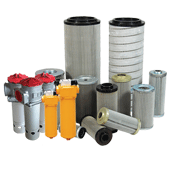
Pretreatment failure represented by liquid filter defects ranks first among all common industrial RO equipment faults. Clogged filter cartridges, cracked filter housings and mismatched filter precision will directly raise raw water SDI value, bring particulate pollutants into RO membrane stacks, cause membrane fouling and scaling, and sequentially induce multiple secondary faults including decreased water production and deteriorated water quality. Regular inspection and timely replacement of liquid filter consumables is the most economical way to prevent most RO system failures.
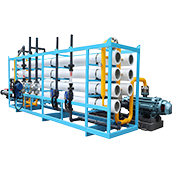
We classify common industrial RO equipment faults into four major categories according to failure locations: pretreatment system faults, main membrane separation rack faults, power & pipeline component faults, intelligent control system faults. For standard integrated skids like Stainless Steel Frame RO Equipment for Durable Industrial Water, most faults concentrate on pretreatment filters and pressure pumps; for large-scale multi-module centralized water stations, system linkage faults and membrane stack differential pressure abnormalities become prominent failure modes. Meanwhile, we combine the acceptance standard of Industrial RO Equipment Acceptance Criteria for High-standard Water Stations to distinguish normal parameter fluctuation from real equipment faults, avoiding unnecessary disassembly and maintenance caused by misjudgment.
Many enterprises only carry out passive breakdown maintenance after equipment stops working, lacking regular preventive inspection mechanisms. Our systematic fault analysis & maintenance guide sorts out solutions for all frequent RO failures, covering 7 core contents: fault phenomenon description, real-time abnormal parameter display, hierarchical root cause analysis, step-by-step troubleshooting procedure, on-site repair operation method, optimized daily maintenance scheme and fault recurrence prevention measures. After eliminating common RO equipment faults in a standardized way, the renovated water system can restore stable qualified pure water supply for component cleaning, raw material preparation, boiler makeup water and circulating cooling water supply in industrial workshops. Timely troubleshooting of common industrial RO faults is a basic guarantee for the continuous and stable operation of factory water production facilities.

2. Reverse Osmosis Working Principle & Fault Occurrence Mechanism
Industrial reverse osmosis equipment runs on pressure-driven physical membrane separation theory, which can explain the internal formation logic of nearly all RO equipment common faults. When external driving pressure exceeds the natural osmotic pressure of raw water, pure water molecules pass through polyamide semipermeable RO membranes, while salts, colloids, suspended solids and organic pollutants are trapped on the concentrated water side to realize raw water purification. Any abnormal changes in pressure, flow, raw water quality and control logic will break the stable separation balance and form observable equipment faults.
The four-stage workflow of standard industrial RO systems and corresponding fault-prone positions are listed below:
Stage1: Multi-stage pretreatment filtration fault-prone section
Liquid filter and multimedia filter are the highest failure incidence components. Cartridge blockage, housing leakage and pipeline blockage here will raise system inlet pressure loss, which is the initial trigger of a series of subsequent RO failures. This pretreatment module is the front protection structure of Stainless Steel Frame RO Equipment for Durable Industrial Water.
Stage2: Dosing & high-pressure pump fault-prone section
Abnormal pump current, pressure swing, metering pump interruption and dosing pipeline blockage will cause membrane scaling and unstable operating pressure, damaging the long service life of RO membrane elements.
Stage3: RO main membrane separation rack fault-prone section
Membrane organic fouling, inorganic scaling, element damage and inter-membrane pressure difference surge belong to high-risk serious faults, mostly derived from long-term poor operation of the front liquid filter.
Stage4: Intelligent control & automatic flushing fault-prone section
Sensor drift, PLC signal loss and failed automatic flushing programs will cause the system to run under wrong parameters, accelerating overall equipment performance degradation.
For two-stage ultra-pure water RO systems used in electronics and pharmaceutical industries, primary and secondary membrane racks have independent fault manifestations, which need separate targeted troubleshooting according to operating data recorded by the acceptance standard in Industrial RO Equipment Acceptance Criteria for High-standard Water Stations.

3. Core Abnormal Technical Parameters Corresponding To Common RO Faults
We summarize unified abnormal parameter thresholds corresponding to mainstream industrial RO faults, serving as objective judgment basis for maintenance personnel:
Permeate water output decline: Actual water yield drops more than 15% of rated value, mostly caused by liquid filter blockage or membrane fouling (applicable to Stainless Steel Frame RO Equipment for Durable Industrial Water).
Product water conductivity rise: Desalination rate decreases obviously, induced by membrane element damage or concentrated water backflow.
Membrane inlet-outlet differential pressure increase: Differential pressure rises by more than 0.2MPa, typical feature of severe membrane fouling and scaling.
High-pressure pump abnormal parameters: Abnormal current, vibration and noise, resulting from pump impeller wear or pipeline air accumulation.
Pipeline pressure drop & water leakage: Visible seepage or obvious pressure loss at pipeline joints, flange and filter housing positions.
Automatic flushing failure: Flushing action cannot be triggered on schedule, leading to continuous pollutant accumulation on membrane surfaces.
Standard acceptance reference data: All normal operating indexes refer to the benchmark data inside Industrial RO Equipment Acceptance Criteria for High-standard Water Stations.
4. Quality Factors Inducing Recurring Industrial RO Equipment Faults
Partial recurring RO faults are rooted in inherent product quality defects instead of improper manual operation:
First, pretreatment liquid filter quality defect: Low-precision filter media, thin filter housing wall and poor sealing structure lead to frequent blockage and liquid leakage in a short service cycle.
Second, RO membrane element quality gap: Inferior membranes are more vulnerable to pollution and damage under the same operating environment, bringing frequent water quality failure problems.
Third, frame & pipeline material quality: Thin stainless steel frame and inferior UPVC pipeline are prone to deformation and cracking under long-term pressure, triggering medium leakage faults.
Fourth, control component quality difference: Low-cost sensors and PLC modules are prone to signal drift and program crash, causing out-of-control system operation.
Fifth, factory delivery inspection: Unfinished full-load testing before delivery will hide potential assembly faults, which break out quickly after users put the equipment into production.

5. Industrial Scenario-targeted Fault Handling & Prevention Rules
Fault characteristics and occurrence frequency differ in various industrial production environments, we put forward targeted disposal strategies:
Chemical factory RO systems: High-salinity & high-hardness raw water easily causes membrane scaling; strengthen liquid filter regular replacement and anti-scaling agent concentration monitoring.
Food & beverage workshops: Organic pollutants easily cause membrane biological fouling; increase regular online disinfection frequency of the whole RO pipeline.
Pharmaceutical purified water stations: Strictly control water quality fluctuation faults; regularly calibrate conductivity sensors with reference to Industrial RO Equipment Acceptance Criteria for High-standard Water Stations.
New energy ultra-pure water workshops: Adopt high-precision liquid filters to reduce particulate membrane pollution for Stainless Steel Frame RO Equipment for Durable Industrial Water.
Thermal power boiler feed water RO units: Focus on high-pressure pump vibration and pipeline anti-corrosion maintenance to prevent leakage faults.
General mechanical processing factories: Carry out monthly routine inspection on pretreatment liquid filters to realize early fault warning.
Frequently Asked Questions (6 Groups)
FAQ1
Q: What are the most frequent common faults of industrial RO equipment?
A: Reduced water production, elevated product water conductivity, excessive membrane differential pressure, pump abnormal vibration, pipeline leakage and automatic control failure. Relevant troubleshooting can refer to the operation data of Stainless Steel Frame RO Equipment for Durable Industrial Water and acceptance norms of Industrial RO Equipment Acceptance Criteria for High-standard Water Stations.
FAQ2
Q: Why do most RO membrane fouling faults originate from liquid filter failure?
A: Liquid filter is the only physical barrier intercepting raw water suspended solids. Once the filter is blocked or invalid, impurities directly enter membrane racks, forming irreversible fouling and scaling on RO membrane surfaces, triggering continuous system performance deterioration.
FAQ3
Q: How to judge whether the RO membrane element is damaged or just fouled?
A: Check the variation trend of product water conductivity and membrane differential pressure. Stable rising differential pressure plus stable conductivity belongs to fouling; sharp conductivity surge with unchanged differential pressure mostly means membrane element rupture or seal failure.
FAQ4
Q: Can regular liquid filter replacement effectively reduce most RO equipment common faults?
A: Yes. Timely replacement of filter cartridges according to pressure difference changes can cut off the main pollution source of membrane elements, greatly lowering the occurrence probability of more serious faults such as membrane scaling and damage.
FAQ5
Q: What is the difference between passive breakdown maintenance and preventive maintenance for RO faults?
A: Breakdown maintenance only repairs equipment after faults occur, which may bring production shutdown losses; preventive maintenance regularly inspects liquid filters, pumps and sensors to eliminate hidden troubles in advance, matching the inspection requirements in Industrial RO Equipment Acceptance Criteria for High-standard Water Stations.
FAQ6
Q: What maintenance records need to be kept for daily RO fault management?
A: Record liquid filter replacement time, membrane differential pressure monthly data, pump operating current, product water conductivity value and chemical cleaning records to track equipment aging rules and predict possible future faults.
Other products you may want to know about:
High Flow Filter Element
Automatic Back-flushing Filter
Self Cleaning Filters