Frequency Conversion Control RO Equipment: Dynamically Regulated Industrial Water Purification System
Frequency conversion control RO equipment adopts variable frequency drive to realize dynamic pressure adjustment adapting to fluctuating water demand and raw water quality. It can carry out function upgrade via RO equipment retrofit/upgrade, and users can predict long-term expenditure through analyzing Operating cost of industrial RO equipment. Different from constant-speed fixed-pressure reverse osmosis, this system avoids invalid power consumption under low-load working conditions and achieves stable energy-saving operation for continuously operated industrial water treatment stations.

Product Description
Frequency conversion control RO equipment is an upgraded reverse osmosis water treatment unit built around variable frequency control technology. Traditional fixed-frequency RO equipment keeps pumps running at constant speed and constant pressure all the time. When water demand drops or raw water salinity decreases, excessive pressure leads to unnecessary energy waste and accelerates membrane surface pollution. This frequency conversion type adjusts pump speed in real time to match required operating pressure.
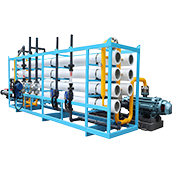
Old fixed-frequency water treatment lines can realize performance improvement without complete equipment replacement through targeted RO equipment retrofit/upgrade. Factory managers can build long-term operation benefit models by comparing power consumption data and analyzing Operating cost of industrial RO equipment before and after transformation. The whole equipment consists of multi-stage pretreatment assembly, frequency conversion high-pressure pump set, reverse osmosis membrane rack, automatic dosing unit and intelligent PLC control cabinet. The control system collects real-time signals of flow, conductivity and pressure difference to adjust operating parameters automatically. Widely applied in light industry manufacturing, circulating water reuse, boiler feed water preparation and municipal water purification projects, it balances stable effluent quality and low power consumption.
Working Principle
Frequency conversion control RO equipment combines pressure-driven membrane separation with variable frequency drive automatic regulation. Raw water first enters graded pretreatment sections to filter suspended sediment, organic impurities and absorb residual chlorine to protect RO membrane elements. After security filtration, qualified feed water enters membrane housings.
Variable frequency high-pressure pumps provide driving pressure. The PLC control platform continuously monitors water yield, raw water TDS and membrane pressure difference. When water demand reduces or raw water salinity declines, the system lowers pump operating frequency to cut pressure; when water consumption rises or raw water pollution increases, frequency and pressure will be raised automatically to guarantee stable effluent quality. The built-in program executes periodic automatic membrane flushing. Under matched inflow conditions, the system can steadily satisfy the standard specification of Industrial RO equipment with recovery rate ≥75%.
Technical Features
1. Real-time variable frequency dynamic pressure regulation:
Automatically match pressure according to working load, eliminate energy waste caused by constant pressure operation under variable conditions.
2. Smooth soft start function:
Avoid instantaneous impact current and pressure shock to pumps and membrane elements, extending service life of key components.
3. Retrofitting compatibility design:
Existing fixed-frequency RO units can adopt RO equipment retrofit/upgrade scheme to add frequency conversion control modules.
4. Visualized operation data recording:
Track power consumption, flow rate and water quality continuously, supporting quantitative analysis of Operating cost of industrial RO equipment.
5. Multi-layer safety interlock protection:
Equipped with water shortage, overpressure, overload and phase loss protection to prevent equipment damage under abnormal working conditions.
Product Advantages
1. Significantly reduce power consumption under variable load:
Especially suitable for factories with fluctuating water demand, realizing continuous energy saving throughout the operation cycle.
2. Lower mechanical wear of pump units:
Soft start and pressure adjustment reduce frequent hard start and pressure fluctuation damage to pump bodies.
3. Flexible upgrading solution for old workshops:
No need to replace the whole system; realize energy-saving operation via RO equipment retrofit/upgrade.
4. Transparent long-term cost accounting:
Historical operation data can be exported to carry out regular evaluation of Operating cost of industrial RO equipment.
5. Stable effluent indicators during adjustment:
Intelligent control logic ensures purified water quality will not fluctuate violently with pressure regulation.
Application Fields
1. Food and beverage processing plants:
Adapt to peak and valley water consumption changes in shift production.
2. Fine chemical manufacturing workshops:
Supply process purified water for batch intermittent production lines.
3. Medium and small heating boiler stations:
Prepare boiler makeup water with variable daily water demand.
4. Industrial park reclaimed water reuse stations:
Match fluctuating circulating water treatment volume.
5. Electroplating and surface treatment factories:
Meet unstable pure water demand brought by variable production schedules.
6. Old factory energy-saving reconstruction projects:
Implement RO equipment retrofit/upgrade to transform original fixed-frequency water treatment equipment.
FAQs
Q1: What is the core difference between Frequency conversion control RO equipment and traditional fixed-frequency reverse osmosis?
A1: Fixed-frequency equipment runs at constant pressure regardless of actual load. Frequency conversion models adjust pump speed and pressure dynamically according to water demand and raw water salinity to avoid unnecessary power loss.
Q2: Can original fixed-frequency RO equipment be upgraded to frequency conversion control?
A2: Yes. We provide targeted RO equipment retrofit/upgrade service, adding frequency converter and optimizing control logic on the basis of existing rack and membrane elements.
Q3: How to quantify the energy-saving benefit after putting frequency conversion RO equipment into use?
A3: The control system automatically records power consumption and water yield. Operators can compare historical data to complete quantitative calculation of Operating cost of industrial RO equipment.
Q4: Will frequent pressure adjustment accelerate membrane fouling?
A4: Reasonable control logic will set pressure change gradient limits. Matching automatic flushing procedures can effectively avoid rapid pollutant accumulation on membrane surface.
Q5: What recovery rate can frequency conversion control RO equipment maintain under continuous operation?
A5: When inflow water quality meets design requirements, the system can steadily achieve the technical standard of Industrial RO equipment with recovery rate ≥75%.
You May Also Be Interested In
Explosion-proof industrial RO equipment
Industrial RO equipment energy-saving retrofit
Industrial RO equipment rental/leasing
Used industrial RO equipment for sale
Outdoor industrial reverse osmosis equipment