Disc Tube Reverse Osmosis (DTRO) Equipment: High Fouling-resistant Wastewater Treatment System
Disc Tube Reverse Osmosis (DTRO) equipment adopts unique disc tube membrane structure, specially developed for high-concentration complex wastewater treatment. It can be matched with complete RO equipment construction/installation plan, and operators can carry out cost analysis through calculating Operating cost of industrial RO equipment. With outstanding anti-pollution performance, this system effectively solves membrane blocking troubles faced by traditional roll-type reverse osmosis under high-salinity wastewater conditions.

Product Description
Disc Tube Reverse Osmosis (DTRO) equipment is a special high fouling-resistant reverse osmosis water treatment device different from conventional spiral wound RO equipment. The open channel disc tube structure greatly reduces the risk of membrane surface blockage, so it can directly treat high-salinity, high-turbidity and high organic wastewater which cannot be handled by ordinary reverse osmosis systems.
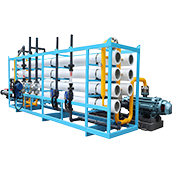
For new environmental protection projects, we can provide standardized RO equipment construction/installation plan, including layout design, pipeline matching and commissioning specifications. Investors can simulate long-term expenditure by calculating Operating cost of industrial RO equipment to judge project economic benefits. The whole DTRO system consists of raw water tank, pretreatment module, high-pressure feed pump, disc tube membrane stack, concentrated water circulation unit, dosing system and automatic control cabinet. Widely used in landfill leachate, industrial concentrated wastewater, hazardous waste wastewater and desalination projects, it realizes wastewater volume reduction and salt separation, making it a core facility for zero-liquid-discharge water treatment projects.
Working Principle
Disc Tube Reverse Osmosis (DTRO) equipment operates based on pressure-driven membrane separation principle. Different from spiral wound RO with narrow flow channels, DTRO forms wide open flow channels between disc-shaped membrane sheets and support plates. Wastewater flows tangentially along the membrane surface under strong circulating flow, greatly slowing pollutant deposition.
After simple pretreatment, wastewater is sent into DTRO membrane stacks by high-pressure pumps. Under external pressure higher than osmotic pressure, water molecules penetrate the disc-type RO membrane to form clean produced water. Most organic pollutants, heavy metal ions and soluble salts are intercepted and remain in the circulating concentrated water. Part of concentrated water is discharged outward to realize wastewater volume reduction. The circulating high cross-flow continuously scours membrane surface to reduce fouling accumulation. The automatic control system sets regular online flushing cycles to extend membrane service life. Optimized process configuration enables the system to keep stable operating efficiency under long-term high-load wastewater treatment.
Technical Features
1. Wide open channel anti-fouling structure:
Large gap flow channel avoids easy blockage, suitable for wastewater containing suspended solids and high organic matter.
2. Low requirement for front-end pretreatment:
No complicated multi-stage filtration is needed, simplifying overall process and lowering early-stage construction investment.
3. High cross-flow circulating design:
Strong tangential scouring reduces pollutant accumulation on membrane surface, extending cleaning cycle intervals.
4. Modular membrane stack combination:
Single membrane unit can be maintained separately without shutting down the whole system, improving operation continuity.
5. Complete supporting engineering service:
We can provide matched RO equipment construction/installation plan to guide on-site layout, pipeline connection and systematic commissioning.
Product Advantages
1. Strong adaptability to complex wastewater:
Effectively treat landfill leachate, industrial concentrated brine and other wastewater which easily foul spiral wound RO.
2. Flexible project budget evaluation:
Operators can calculate Operating cost of industrial RO equipment to predict power consumption, chemical agent and membrane replacement expenditure.
3. Long service cycle of membrane components:
Slow fouling speed reduces chemical cleaning frequency, cutting long-term consumable maintenance expense.
4. Stable volume reduction effect:
High concentration ratio realizes obvious wastewater reduction, lowering subsequent evaporation or crystallization processing load.
5. Easy expansion of treatment capacity:
New DTRO membrane stacks can be added according to rising wastewater yield without reconstructing the whole workshop.
Application Fields
1. Municipal solid waste landfill sites:
Treat fresh and aged landfill leachate to meet local discharge standards.
2. Chemical park concentrated wastewater treatment:
Separate salts from industrial wastewater and reduce wastewater volume before subsequent treatment.
3. Hazardous waste disposal center:
Treat high-salinity wastewater produced during hazardous waste stabilization and leaching processes.
4. Mine wastewater and brackish water desalination:
Remove soluble salts to realize water resource recycling.
5. Zero liquid discharge projects for printing, electroplating and textile factories:
Serve as core concentration equipment for wastewater reuse systems.
6. New environmental EPC projects:
Cooperate with our professional RO equipment construction/installation plan to accelerate project construction progress.
FAQs
Q1: What kind of wastewater is Disc Tube Reverse Osmosis (DTRO) equipment most suitable for?
A1: It is especially applicable for high-fouling wastewater such as landfill leachate, industrial concentrated brine and hazardous waste leachate that ordinary spiral wound RO cannot handle stably.
Q2: Does DTRO equipment need complicated multi-stage pretreatment?
A2: Compared with spiral wound reverse osmosis, DTRO adopts wide flow channel design, and only simple pretreatment is generally required, greatly simplifying front-end process configuration.
Q3: Can I get standardized layout guidance during project construction?
A3: Yes. We can provide complete RO equipment construction/installation plan, including equipment arrangement, pipeline layout and system commissioning operation specifications.
Q4: What factors should be considered when calculating long-term running expenditure?
A4: When evaluating Operating cost of industrial RO equipment, main indicators include power consumption, chemical dosing quantity, cleaning frequency and service life of DTRO membrane stacks.
Q5: Can a single DTRO membrane stack be repaired without stopping the whole system?
A5: Yes. The modular design enables independent switching of each membrane stack. Other units can keep working normally to guarantee continuous wastewater treatment.
You May Also Be Interested In