Industrial Seawater Desalination Reverse Osmosis Equipment for Freshwater Production
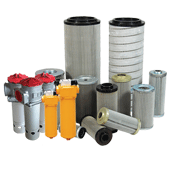
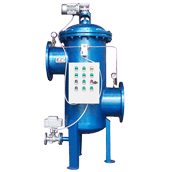
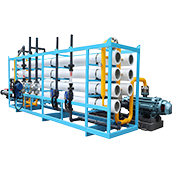
Industrial seawater desalination reverse osmosis equipment is a dedicated membrane system converting seawater into usable freshwater for coastal industrial zones and islands. It is equipped with high-precision liquid filter as vital pretreatment barrier, and you can refer to mature models such as 20 tons/hour reverse osmosis equipment and 50 tons/hour reverse osmosis equipment for modular scheme layout. Compared with brackish water RO systems, this seawater RO unit adopts high-pressure resistant structure to handle high-salinity seawater. We provide scalable solutions ranging from small 5 tons/hour reverse osmosis equipment up to large-scale 100 tons/hour reverse osmosis system. Widely applied in coastal factories, offshore platforms and island water supply projects, this article elaborates product composition, working principle, core technical indicators, quality standards, application scenarios and typical operation challenges to support your seawater desalination project design.

1. Product Introduction
Industrial seawater desalination reverse osmosis equipment is customized high-pressure reverse osmosis water treatment equipment developed to solve freshwater shortage in coastal and offshore areas. Seawater features extremely high total dissolved solids, abundant chloride ions, microorganisms and suspended sediments. Conventional brackish water reverse osmosis equipment cannot withstand such harsh water quality environment, while seawater desalination RO equipment adopts special high-pressure resistant pressure vessels, anti-corrosion pipelines and dedicated seawater RO membrane elements.
The whole system adopts heavy-duty skid-mounted integrated design, suitable for coastal humid and salt-spray environment. The front pretreatment unit is equipped with high-performance liquid filter to intercept marine suspended sediment, algae and particulate impurities, avoiding irreversible pollution and scaling of seawater membrane components. During scheme design, project engineers can select mature standard modules for reference. Small and medium-sized projects can adopt 5 tons/hour reverse osmosis equipment and 10 tons/hour reverse osmosis system; medium-scale coastal industrial parks can choose 20 tons/hour reverse osmosis equipment or 50 tons/hour reverse osmosis equipment. For large island water supply and coastal chemical park projects, the system can be expanded to 100 tons/hour reverse osmosis system by multiple units parallel connection.
Many project contractors compare seawater desalination RO equipment with thermal distillation process. Thermal distillation consumes massive energy, while reverse osmosis seawater desalination achieves lower energy consumption and smaller land occupation. After treatment, freshwater can be used for factory circulating cooling, domestic water, process production water and green irrigation. The concentrated brine generated after membrane separation will be discharged back to the ocean following local marine environmental protection regulations. Different from general industrial pure water equipment, seawater RO equipment focuses on anti-corrosion, anti-biological pollution and high-pressure resistance. It has become the mainstream technical solution for seawater resource utilization worldwide.
2. Working Principle of Industrial Seawater Desalination Reverse Osmosis Equipment
Reverse osmosis is pressure-driven physical separation technology. Seawater has high osmotic pressure. Industrial seawater desalination reverse osmosis equipment applies driving pressure far higher than natural osmotic pressure of seawater. Under high pressure, water molecules penetrate semi-permeable seawater RO membranes, while salt ions, microorganisms, colloids and organic pollutants are intercepted on the concentrated brine side, realizing separation of freshwater and seawater.
The complete seawater desalination workflow is divided into five core stages:
Stage1: Multi-stage pretreatment filtration
Raw seawater sequentially flows through sedimentation tank, media filter, activated carbon filter and liquid filter. This process removes suspended sediment, algae and particulate pollutants, lowers inlet SDI value, and effectively prevents biological fouling of membrane elements.
Stage2: Dosing regulation and sterilization
Automatic dosing system adds biocide, scale inhibitor and pH regulator. It inhibits algae breeding and calcium carbonate scaling on membrane surface under high salinity environment.
Stage3: High-pressure reverse osmosis separation
Qualified pretreated seawater is boosted by high-pressure anti-corrosion pump and transported into membrane pressure vessels loaded with seawater dedicated RO membrane elements. After separation, two streams are formed: desalinated freshwater and high-salinity concentrated brine.
Stage4: Energy recovery and water collection
High-pressure concentrated brine can pass through energy recovery device to recycle pressure energy and reduce overall power consumption. Freshwater is collected and enters the intermediate water tank for subsequent disinfection before use.
Stage5: Intelligent monitoring and automatic flushing
PLC control system continuously monitors conductivity, operating pressure, flow and liquid level. Timed cross-flow flushing automatically cleans pollutants attached on membrane surface. Operators can set regular chemical cleaning cycles according to seawater seasonal quality fluctuation.
If higher water quality is required, secondary treatment can be arranged to further remove residual boron and trace salts in freshwater.

3. Core Technical Parameters
We carry out targeted customized design based on local seawater quality, daily freshwater demand and utilization standards. Standard technical indicators of industrial seawater desalination reverse osmosis equipment are as follows:
Freshwater production capacity: 5m³/h ~ 100m³/h, customizable; classic models include 5 tons/hour reverse osmosis equipment, 20 tons/hour reverse osmosis equipment, 50 tons/hour reverse osmosis equipment and 100 tons/hour reverse osmosis system
Raw seawater TDS scope: 32000 ~ 38000 mg/L
Single-pass salt rejection rate: ≥99.2%
System water recovery rate: 40% ~ 55%
Inlet water requirements after pretreatment: Turbidity ≤1 NTU, SDI ≤5
Working temperature: 10℃ ~ 35℃
Control mode: Full-automatic PLC intelligent control, online multi-parameter monitoring, automatic flushing and chemical cleaning function
Material selection: High-pressure anti-corrosion membrane housing; pipeline optional FRP, 316L stainless steel; dedicated seawater anti-fouling RO membrane elements; optional energy recovery device
4. Product Quality Standard
All industrial seawater desalination reverse osmosis equipment follows strict marine water treatment equipment specifications.
Firstly, core components adopt high-pressure anti-fouling seawater dedicated RO membrane elements. Supporting liquid filter uses high dirt-holding filter material to guarantee stable pretreatment effect. High-pressure pumps, valves and sensors adopt anti-corrosion marine industrial brands adapted to continuous heavy-load operation.
Secondly, every complete set of equipment passes hydraulic pressure resistance test, continuous running test and simulated seawater test before delivery. The skid base adopts heavy-duty salt spray anti-corrosion coating to adapt coastal high-humidity and salt fog environment. We supply complete P&ID flow diagrams, installation guidance and operation manual for seawater desalination projects.
Thirdly, our water treatment technical team provides remote operation guidance and optional on-site commissioning service. Standardized maintenance plans can effectively slow down membrane biological pollution, extend membrane service life and ensure stable year-round operation of coastal desalination projects.

5. Application Fields of Industrial Seawater Desalination Reverse Osmosis Equipment
This high-pressure seawater desalination RO system is widely adopted in the following scenarios:
Coastal industrial park factory circulating cooling water preparation
Offshore oil & gas platform domestic and production freshwater supply
Ocean island resident domestic water and tourism supporting water
Coastal chemical, power plant raw water pretreatment
Marine aquaculture freshwater mixing and breeding water preparation
Coastal city emergency backup water supply project
Seawater water quality changes significantly with seasons, tide and weather. Our engineers optimize pretreatment process, membrane grade and system recovery rate after analyzing on-site seawater sample reports, to match local marine environmental protection and freshwater usage standards.
Frequently Asked Questions
FAQ1
Q: What is the biggest difference between seawater desalination RO equipment and brackish water RO equipment?
A: Seawater RO requires much higher operating pressure, equipped with dedicated seawater membrane and anti-corrosion structure, designed for raw water TDS around 35000mg/L. Brackish water RO works under low pressure, only suitable for water TDS below 10000mg/L and cannot replace seawater desalination units.
FAQ2
Q: Which model is suitable for medium-sized coastal factory projects?
A: Medium projects can select 20 tons/hour reverse osmosis equipment or 50 tons/hour reverse osmosis equipment. Large industrial parks and islands can choose modular parallel 100 tons/hour reverse osmosis system. Small pilot projects can adopt 5 tons/hour reverse osmosis equipment.
FAQ3
Q: Why is liquid filter essential in seawater desalination pretreatment?
A: Raw seawater contains a large amount of sediment, algae and suspended particles. High-precision liquid filter intercepts particulate pollutants, prevents rapid biological fouling of expensive seawater RO membranes and reduces cleaning frequency.
FAQ4
Q: How to slow down membrane biological pollution during seawater desalination operation?
A: Equip qualified liquid filter for pretreatment; reasonably add biocide; activate regular automatic flushing and periodic chemical cleaning; stabilize raw seawater inflow volume.
FAQ5
Q: Can concentrated brine generated by seawater RO be directly discharged into the sea?
A: It cannot be discharged arbitrarily. Discharge must comply with local marine environmental protection laws. We can provide brine dilution and diffusion scheme to reduce environmental impact.
FAQ6
Q: Is energy recovery device necessary for industrial seawater desalination reverse osmosis equipment?
A: Recommended for large-scale systems such as 50 tons/hour reverse osmosis equipment and 100 tons/hour reverse osmosis system. The device recycles pressure energy of concentrated brine and can cut 30% of overall power consumption. Small units can choose according to budget.
Other products you may want to know about:
Ultrafiltration equipment
High-Flow Filter Cartridges
Aquatic Alchemy: Unveiling the Marvels of RO