Brackish Water Desalination RO Equipment For Industrial Raw Water Treatment
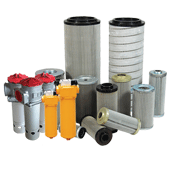
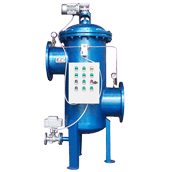
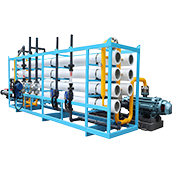
Brackish water desalination RO equipment is dedicated membrane separation system to purify high-salinity brackish groundwater and surface water. It is equipped with high-precision liquid filter as core pretreatment barrier, and you can refer to mature 5 T/H RO equipment configuration list for standard layout design. Compared with RO vision exchange equipment, this brackish water RO unit effectively controls the operating cost of industrial RO equipment in long-term running. We provide standardized RO equipment construction/installation plan and follow strict industrial RO equipment acceptance criteria before delivery. Widely adopted in mining areas, industrial parks and water-deficient regions, this article elaborates product composition, working principle, technical specifications, quality standards, application scenarios and common operational issues to support your raw water treatment project planning.

1. Product Introduction
Brackish water desalination RO equipment is a customized industrial reverse osmosis device specially designed for brackish water raw water. Brackish water generally refers to groundwater or surface water with total dissolved solids between 1000mg/L ~ 10000mg/L. High salt content makes it unfit for direct industrial production, farm irrigation or domestic usage. Conventional filtration technology cannot remove dissolved salts, so brackish water desalination RO equipment becomes the preferred solution for water-deficient areas.
The whole system adopts compact skid-mounted integrated structure. Front pretreatment unit is matched with high-performance liquid filter to intercept sediment, suspended solids, colloids and iron-manganese precipitates, preventing scaling and fouling of brackish water RO membrane components. When designing schemes, engineers can take the mature 5 T/H RO equipment configuration list as basic reference template. Many purchasers compare this system with RO vision exchange equipment; traditional ion exchange technology requires frequent acid and alkali regeneration, while brackish water RO equipment runs continuously with fewer chemical inputs, greatly stabilizing the operating cost of industrial RO equipment.
Before shipment, every complete unit undergoes strict testing according to industrial RO equipment acceptance criteria. After equipment arrives on site, our engineering team can complete layout and commissioning following standardized RO equipment construction/installation plan. For old water station renovation projects, we also support RO equipment retrofit/upgrade and Existing RO system capacity expansion services. If you need further industry targeted reference, you can check Application of RO equipment in power plants and RO equipment selection guide for chemical industry to learn similar high-salinity raw water treatment experience.
After treatment by brackish water desalination RO equipment, the produced freshwater can be used for factory circulating cooling water, agricultural irrigation, municipal water supply and production process water. Concentrated brine generated during separation can be discharged safely or further processed in accordance with local environmental regulations. For enterprises with temporary water demand, Industrial RO equipment rental/leasing service is also available. Different from seawater desalination RO equipment, brackish water RO works under relatively low operating pressure, which brings lower investment and energy consumption. It has become the mainstream raw water desalination solution for inland water shortage regions.

2. Working Principle of Brackish Water Desalination RO Equipment
To understand how industrial reverse osmosis equipment works, we further explain the operation logic for brackish water desalination. Reverse osmosis is pressure-driven physical separation technology. When external pressure exceeds natural osmotic pressure of brackish water, pure water molecules pass through semi-permeable RO membranes, while dissolved salts, heavy metal ions, organic pollutants and suspended particles are trapped on the concentrated water side.
The complete brackish water purification workflow is divided into four core stages:
Stage1: Multi-stage pretreatment filtration
Raw brackish water sequentially flows through multi-media filter, activated carbon filter and liquid filter. This step removes sediment, colloids and oxidizable substances, reduces inlet water turbidity and SDI value, and is the key measure to reduce membrane pollution risk.
Stage2: Automatic dosing and pressure boosting
Dosing system adds scale inhibitor, pH regulator and bactericide as required to suppress calcium and magnesium scaling on membrane surfaces. Qualified pretreated brackish water is pressurized by high-pressure pump to reach the rated working pressure of brackish water RO membranes.
Stage3: Reverse osmosis desalination separation
Pressurized raw water enters membrane pressure vessels filled with brackish water RO membrane elements. After membrane separation, the water is split into two streams: qualified desalinated product water and high-salinity concentrated brine.
Stage4: Intelligent monitoring and automatic flushing
PLC control cabinet continuously monitors conductivity, operating pressure and tank liquid level. The system automatically triggers cross-flow flushing during shutdown to wash pollutants attached to membrane surfaces. Operators can set automatic operation schedules according to daily water consumption.
If higher freshwater purity is required, two-stage reverse osmosis configuration can be adopted to further improve overall salt rejection rate.
3. Core Technical Parameters
We carry out personalized customized design based on on-site brackish water TDS value, daily water demand and target freshwater standards. Standard technical indexes of brackish water desalination RO equipment are as follows:
Water production capacity: 0.5m³/h ~ 100m³/h, customizable; the 5T/H model is widely used small and medium unit, details refer to the 5 T/H RO equipment configuration list
Raw water applicable TDS range: 1,000 ~ 10,000 mg/L
Single-pass salt rejection rate: ≥97%
System water recovery rate: 65% ~ 80%
Inlet water requirements after pretreatment: Turbidity ≤1 NTU, SDI ≤5, residual chlorine <0.1mg/L
Working temperature: 5℃ ~ 40℃, optimal working temperature: 18 ~ 28℃
Control mode: Full-automatic PLC intelligent control, equipped with online conductivity monitor, high-low pressure protection and automatic membrane flushing
Optional materials: FRP or stainless steel membrane housing; pipeline optional UPVC, 304 or 316L stainless steel to adapt corrosive brackish water

4. Product Quality Standard
All brackish water desalination RO equipment follows unified industrial water treatment equipment quality specifications.
Firstly, core components adopt dedicated anti-scaling brackish water RO membrane elements. Supporting liquid filter uses high dirt-holding filter material to guarantee stable pretreatment performance. High-pressure pumps, sensors and valves select reliable industrial brands suitable for long-term continuous operation.
Secondly, every complete set of equipment must pass hydraulic pressure test and continuous running test before delivery, fully complying with industrial RO equipment acceptance criteria. The skid base adopts anti-rust and anti-corrosion coating to adapt outdoor and semi-outdoor installation environments. We provide complete process drawings, operation manuals and RO equipment construction/installation plan for on-site construction guidance.
Thirdly, our technical team provides remote online guidance and optional on-site after-sales service. Standardized maintenance guidance can effectively lower the operating cost of industrial RO equipment and avoid unexpected shutdown caused by membrane blockage and faults.
5. Application Fields of Brackish Water Desalination RO Equipment
This brackish water desalination reverse osmosis system serves multiple industries and regions with high-salinity raw water:
Inland mining area: Mine brackish groundwater desalination for production and domestic water
Industrial parks in arid and semi-arid regions: Factory circulating cooling water preparation
Rural water supply projects: Brackish groundwater purification for resident domestic water
Agricultural irrigation project: Desalinated water for crop irrigation
New material and fine chemical factories: Raw water pretreatment
Municipal water supply backup facilities in water-shortage inland areas
The water quality of brackish water varies greatly in different regions. Our engineers optimize pretreatment scheme, membrane type and system recovery rate after analyzing raw water sample reports, to match local water usage standards.
Frequently Asked Questions
FAQ1
Q: What is the difference between brackish water desalination RO equipment and seawater RO equipment?
A: Brackish water RO runs under lower pressure, suitable for raw water TDS below 10,000mg/L, with lower energy consumption and investment. Seawater reverse osmosis requires high-pressure resistant structure for TDS around 35,000mg/L.
FAQ2
Q: Can I use the 5 T/H RO equipment configuration list as reference for brackish water project design?
A: Yes. The 5T/H scheme is mature standard framework. We will adjust the pretreatment liquid filter and select anti-scaling membrane elements to adapt brackish water raw water characteristics.
FAQ3
Q: Is brackish water desalination RO equipment a good alternative to RO vision exchange equipment?
A: In most scenarios yes. Ion exchange needs frequent acid-alkali regeneration and waste liquid disposal. Brackish water RO realizes continuous desalination and can stabilize the operating cost of industrial RO equipment over long cycles.
FAQ4
Q: How to reduce membrane scaling and faults during equipment operation?
A: Equip qualified liquid filter for pretreatment; add scale inhibitor reasonably; activate regular automatic flushing; strictly control inlet water SDI and residual chlorine value.
FAQ5
Q: Can existing old brackish water RO units be upgraded and expanded?
A: Yes. We provide professional RO equipment retrofit/upgrade and Existing RO system capacity expansion solutions to improve water yield and effluent quality without full equipment replacement.
FAQ6
Q: Do you provide construction guidance documents after order confirmation?
A: Yes. We supply standardized RO equipment construction/installation plan, P&ID flow diagram and operation manual. On-site technical service can be arranged according to project demands.
Other products you may want to know about:
Application of RO equipment in power plants
Ultrafiltration equipment
High-Flow Filter Cartridges