Industrial Reverse Osmosis Pure Water Systems by Lefilter: The Integrated Solution for Process Purity
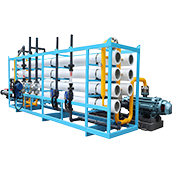
An Industrial Reverse Osmosis Pure Water System from Lefilter is a complete, skid-mounted water treatment plant designed to convert raw feedwater into consistent, high-purity process water. It goes beyond just RO membranes, integrating all necessary pretreatment, polishing, and controls to deliver a reliable "water utility" for your manufacturing floor. This ensures your process receives water of a specified purity, day in and day out.
A System, Not Just a Component
Reliable pure water requires more than an RO membrane. It requires a balanced system where each component protects the next. Our systems are pre-engineered and integrated for performance.
The Integrated System Workflow
Protection (Pretreatment): Raw water passes through multimedia filtration (removing silt), activated carbon (removing chlorine/organics), and softeners or antiscalant dosing (preventing scale). This is critical for RO membrane life.
Core Purification (RO Unit): The heart of the system. Pre-treated water is pressurized and desalinated by the RO membrane array, removing 97-99% of dissolved ions and organics.
Polishing (Post-Treatment - if required): For higher purity needs (e.g., for boilers or rinsing), the RO permeate can be polished by Electrodeionization (EDI) or a Mixed-Bed Deionizer to produce ultra-pure water with resistivity up to 18.2 MΩ·cm.
Distribution & Storage: Includes clean storage tanks and recirculation pumps to deliver water on-demand while maintaining purity.
Why Choose a Lefilter Integrated System?
Guaranteed Water Quality: Delivers water to a specified conductivity/resistivity, silica, and TOC level, tailored to your industry standard (e.g., USP Purified Water, ASTM boilermakeup).
Single-Source Responsibility: From intake to point-of-use, one supplier handles design, component compatibility, commissioning, and warranty, eliminating interface risks.
Reduced Footprint & Installation Time: Pre-assembled, skid-mounted units arrive factory-tested, requiring only utility connections, drastically reducing field installation cost and time.
Optimized for Your Feedwater: System design is based on a comprehensive analysis of your source water, ensuring it is neither over-designed (wasting capital) nor under-designed (risking failure).
Smart Control & Documentation: PLC control with data logging provides operational transparency and supports validation processes for regulated industries (pharma, food).
Technical Specifications (System Level)
Parameter | Industrial RO Pure Water System Output |
|---|
Final Water Quality | RO Only: Conductivity <10 µS/cm. RO+EDI: Resistivity up to 15-18 MΩ·cm. |
Typical System Capacity | 10,000 GPD to 500,000 GPD (38 to 1,900 m³/day) |
Common Configurations | RO Only, RO + DI, RO + EDI, RO + Softening Pretreatment |
Compliance Frameworks | Systems can be designed to support cGMP, FDA, CE standards as required. |
Key Industries Served | Pharmaceuticals, Biotechnology, Food & Beverage, Power, Microelectronics, Chemicals. |
Applications by Industry
Pharma/Biotech: Production of USP Purified Water and WFI feedwater.
Food & Beverage: Final rinse water, ingredient water, process water meeting FDA standards.
Power Plants: High-purity boiler feedwater to prevent scaling and turbine corrosion.
Laboratories & Research: Central pure water supply for instruments and glassware washing.
FAQ
Q: What is EDI, and when is it needed instead of a mixed bed?
A: Electrodeionization (EDI) is a chemical-free polishing technology that uses electricity to continuously remove ions. It is used after RO when you need continuous, consistent ultra-pure water (UPW) without the operational cost and handling of regeneration chemicals required by a mixed bed deionizer.
Q: How do you ensure the system is "sanitary" for food or pharmaceutical use?
A: We design with sanitary components: 316L stainless steel piping, sanitary pumps, orbital welds, electropolished surfaces, and sloping for drainability. Systems can be validated with IQ/OQ/DQ protocols.
Q: Can the system handle variable feedwater quality (e.g., seasonal changes)?
A: Yes. The system PLC can be programmed with multiple operating modes, and the pretreatment stage is designed to handle a defined range of variability. Real-time sensor feedback (SDI, conductivity) can trigger adjustment protocols.