Industrial Reverse Osmosis Equipment: High-Purity Water for Critical Processes
Industrial Reverse Osmosis (RO) Equipment is the cornerstone technology for producing purified water by removing dissolved salts, ions, organics, and other contaminants. Leveraging semi-permeable membrane technology, it is the most efficient and reliable method for generating high-purity process water, boiler feedwater, and potable water at scale. Lefilter designs and manufactures robust, high-recovery Industrial RO Systems that deliver consistent water quality, reduce chemical usage, and lower operational costs for facilities worldwide.
Core Technology: How Industrial Reverse Osmosis Works
Industrial RO systems utilize a pressure-driven separation process that is fundamentally different from conventional filtration:
Pressurization & Feed: Pre-treated feedwater (e.g., city water, well water, or process water) is pressurized by high-pressure pumps, typically between 100-1000 psi, depending on feed salinity.
Selective Separation: The pressurized water is forced across the surface of spiral-wound RO membrane elements. These membranes have extremely fine pores that allow water molecules to pass through while rejecting up to 99.5% of dissolved salts, ions, bacteria, viruses, and organic molecules above ~100 Daltons molecular weight.
Stream Separation: The system produces two distinct streams:
Permeate (Product Water): The purified water that has passed through the membrane.
Concentrate (Reject/Brine): The stream containing the concentrated rejected contaminants, which is discharged or sent to further treatment.
Staging for Efficiency: Industrial systems often use multiple stages, where the concentrate from one bank of membranes becomes the feed for the next, maximizing water recovery and system efficiency.
Key Advantages of Lefilter Industrial RO Systems
Our systems are engineered for performance, durability, and total cost-effectiveness in demanding environments.
High Purity Output: Consistently produces water with <10 µS/cm conductivity, removing up to 99.5%+ of total dissolved solids (TDS), meeting specifications for a vast range of industrial applications.
Superior Energy Efficiency: Features high-efficiency pumps, energy recovery devices (for seawater applications), and optimized process design to minimize operational power consumption.
High System Recovery: Advanced design and controls maximize the ratio of product water to feedwater (typically 50-85% recovery for brackish water, 35-50% for seawater), reducing wastewater volumes and source water demand.
Scalable & Modular Design: Configurable from skid-mounted units (5 GPM) to large, custom-built systems (hundreds of GPM), allowing for capacity expansion as needed.
Automated & Intelligent Operation: Integrated Programmable Logic Controller (PLC) with Human-Machine Interface (HMI) enables automatic operation, monitoring, cleaning-in-place (CIP) cycles, and data logging for predictive maintenance.
Technical Specifications & Configurations
Industrial RO systems are custom-engineered. Below are standard parameters for our brackish water systems.
Parameter | Lefilter Specification / Range |
|---|
Primary Function | Removal of Dissolved Salts, Ions, Organics, and Microorganisms |
Standard Capacity | 1,000 GPD to 500,000+ GPD (3.8 to 1,900+ m³/day) |
Feed Water Type | Brackish Water, Surface Water, Tap Water, Process Water |
Salt Rejection Rate | >99.5% (Standard Polyamide Composite Membranes) |
Standard Recovery Rate | 50% - 85% (Brackish); 35% - 50% (Seawater) |
Operating Pressure | 150 - 400 psi (Brackish); 800 - 1,200 psi (Seawater) |
Membrane Type | Spiral-Wound Polyamide Thin-Film Composite (BW/ SW series) |
Pretreatment | Customized (Multimedia Filter, Carbon Filter, Antiscalant Dosing, Softener) |
Post-Treatment | Optional Mixed Bed DI or EDI for ultra-pure water. |
Control & Monitoring | Full PLC/HMI with conductivity, flow, pressure sensors. SDI monitoring. |
Critical Industrial Applications
Industrial Reverse Osmosis Equipment is vital for industries that require consistent, high-quality water.
Pharmaceutical & Biotechnology: Production of Water for Injection (WFI) precursor water, purified water for formulations, and clean utilities.
Power Generation: Production of ultra-pure boiler feedwater for high-pressure boilers (combined cycle, coal-fired) to prevent scaling and corrosion.
Electronics & Semiconductor: Manufacturing of ultra-pure water (UPW) for wafer cleaning and chip fabrication where even ppb-level impurities are detrimental.
Food & Beverage: Water purification for ingredient mixing, final rinsing, and bottle washing to ensure product safety and consistent taste.
Chemical Processing: Production of high-purity process water for reactions, rinsing, and as a solvent base.
Municipal & Drinking Water: Desalination of brackish water or seawater, and advanced treatment for potable water supplies.
System Components & Lefilter Value
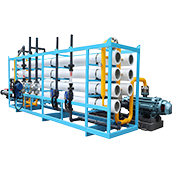
A complete Lefilter Industrial RO System integrates more than just membranes:
Pretreatment Skid: Critical for membrane protection, including multimedia filters, carbon filters, softeners, and antiscalant dosing.
High-Pressure Pump & Energy Recovery: Durable multistage centrifugal pumps; optional energy recovery devices (e.g., Pressure Exchanger®) for seawater RO to reduce energy use by up to 60%.
Membrane Pressure Vessels (Racks): Robust housings arranged in an array for efficient staging.
Cleaning-in-Place (CIP) System: Integrated tank and pump for periodic membrane cleaning to restore flux and extend membrane life.
PLC Control Panel: For full automation, monitoring, alarm management, and data historization.
Frequently Asked Questions (FAQ)
Q: What is the required pretreatment for an RO system?
A: Essential pretreatment protects the expensive RO membranes. It typically includes: 1) Particulate filtration (5µ cartridge filter), 2) Chlorine removal (activated carbon or sodium bisulfite injection), and 3) Scale inhibition (antiscalant dosing or water softening). A Silt Density Index (SDI) test determines feedwater suitability.
Q: How long do RO membranes last, and how are they maintained?
A: With proper pretreatment and operation, membranes last 3-7 years. Key maintenance includes: regular monitoring of normalized performance (flow, pressure, salt rejection), periodic cleaning-in-place (CIP) when performance declines by 10-15%, and sanitization to control biofouling.
Q: What do you do with the concentrate (reject) stream?
A: Disposal options depend on local regulations. Common methods include: direct sewer discharge (if permitted), evaporation ponds, deep-well injection, or sending to a Zero Liquid Discharge (ZLD) system for complete recovery. Our designs aim to minimize brine volume through high recovery rates.
Q: Can RO remove bacteria and viruses?
A: Yes. The RO membrane's pore size is far smaller than bacteria and viruses, providing an absolute physical barrier. An RO system is a critical component in producing sterile water, though final sterilization (e.g., UV) is often added for pharmaceutical applications.
Q: How do I size an industrial RO system?
A: Sizing requires analysis of: 1) Feedwater source and analysis, 2) Required permeate quality and flow rate (GPM), 3) Desired system recovery rate, and 4) Site conditions. Our engineers will perform a free water analysis and system design to meet your specific needs.