1. Product Introduction

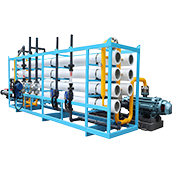
Nanofiltration for sugar decolorization is a food-grade spiral-wound nanofiltration membrane system customized for sugar industrial refining. Adopting modified food-safe polyamide composite material, it has a precise nanopore structure with a molecular weight cutoff of 200–1000 Da, which perfectly matches the molecular weight range of sugar liquid pigments such as melanoidins, caramel pigments and phenolic derivatives. Different from ordinary water treatment NF membranes, this sugar-specific membrane features an ultra-smooth anti-fouling surface, which effectively resists adhesion of sugar colloids and viscous impurities. It has unique selective separation performance: it efficiently intercepts macromolecular colored impurities, proteins and colloids, while allowing small-molecule sucrose, glucose and functional sugars to pass through stably. Supporting continuous room-temperature operation and food-grade sanitary cleaning, it avoids secondary pollution and sugar loss, and meets the high-purity production requirements of edible sugar and high-end functional sugar.
2. Application Scenarios

This sugar decolorization nanofiltration technology has strong industrial pertinence, covering mainstream refining links of various sugar products.
First, cane sugar and beet sugar refining: removing natural pigments and colloidal impurities in raw sugar liquid, improving sugar liquid clarity and whiteness, and upgrading finished sugar grade.
Second, molasses decolorization and recovery: refining waste molasses sugar liquid, removing accumulated pigments and impurities, realizing secondary utilization of molasses and improving economic benefits.
Third, functional sugar purification: applied to the refining of fructose, glucose and oligosaccharide, removing trace impurities and chroma to produce high-purity food-grade and pharmaceutical-grade functional sugar.
Fourth, syrup clarification and decolorization: used for pre-treatment and fine refining of liquid syrup for beverage and baking industries, improving product stability and shelf life.
Fifth, low-temperature sugar concentration: completing synchronous decolorization and concentration of sugar liquid at room temperature, avoiding quality deterioration caused by high-temperature concentration.
3. Technical Parameters

All technical parameters are optimized and formulated for the viscosity and impurity characteristics of sugar liquid. The membrane molecular weight cutoff is 200–1000 Da with a pore size of 1–2 nm. The pigment and macromolecular impurity rejection rate reaches 98%–99.5%, and the sucrose retention rate is as high as 99%, minimizing sugar loss. The standard operating pressure is 0.5–1.2 MPa, realizing low-pressure energy-saving operation. The applicable working temperature is 5–45℃, and room-temperature operation effectively prevents sugar liquid browning. The safe operating pH range is 2–11, adapting to acidic and neutral sugar liquid systems of different raw materials. The system water recovery rate is 80%–88%, and the sugar liquid transmittance after treatment can reach more than 97%. The stable service life of the membrane element is 3–5 years, and the flux recovery rate can reach 98% after professional sanitary cleaning.
4. Product Advantages

Compared with traditional activated carbon and thermal decolorization processes, nanofiltration for sugar decolorization has irreplaceable core advantages. Firstly, zero sugar loss and high yield: precise selective separation ensures almost no loss of effective sugar components, greatly improving finished sugar yield compared with traditional processes. Secondly, green and zero-consumption: no activated carbon or chemical additives are required throughout the process, eliminating waste carbon residue pollution and reducing raw material costs. Thirdly, low-temperature anti-browning: room-temperature operation avoids Maillard reaction and thermal oxidation, maintaining stable color and pure taste of sugar liquid. Fourthly, stable and efficient decolorization: continuous membrane filtration achieves uniform decolorization effect, avoiding unstable quality caused by intermittent carbon adsorption. Fifthly, low comprehensive cost: long membrane service life, simple daily maintenance, no frequent material replacement, effectively reducing long-term operation and environmental treatment costs for sugar enterprises.
5. Application Procedures
The application process follows food sugar production specifications to ensure stable decolorization quality and sanitary safety. Pre-production preparation: Pre-filter the original sugar liquid to remove large suspended solids and fibrous impurities; inspect membrane element integrity and pipeline sanitation, and complete equipment pre-cleaning and disinfection. System commissioning: Start the system at low pressure, gradually adjust the operating pressure to 0.5–1.2 MPa, run stably for 20–30 minutes, and detect sugar liquid transmittance and purity indicators. Formal operation: Continuously monitor system flux, pressure difference and sugar liquid chroma, maintain stable selective separation effect, and record production data in real time. Regular maintenance: Conduct daily sterile water rinsing after shutdown; regularly perform targeted acid-base circulating cleaning to remove viscous sugar fouling and colloidal deposition. Long-term shutdown protection: Rinse the membrane thoroughly and store it with food-grade protective solution to prevent microbial breeding and membrane performance attenuation.
6. Quality Standards
Nanofiltration for sugar decolorization strictly complies with international food safety and domestic sugar industry production standards. Internationally, it passes ISO 9001 quality management system certification and NSF food-grade material safety certification. Domestically, it meets GB 4806 food contact material safety standards and GB/T 30307-2013 water treatment membrane element specifications, and conforms to national edible sugar product quality inspection standards. Core quality requirements: All membrane materials and sealing accessories are food-grade with no harmful substance migration; the membrane maintains stable decolorization performance after long-term continuous operation; each batch of products undergoes strict factory inspection on rejection rate, sugar retention rate and flux stability, realizing full quality traceability to meet standardized large-scale sugar production.
7. Working Principle
This technology relies on the dual synergistic mechanism of nanopore physical sieving and Donnan electrostatic repulsion to realize efficient sugar decolorization and purification. The 1–2 nm uniform nanopore structure acts as a precise molecular sieve, intercepting macromolecular pigment molecules, colloids, proteins and impurity particles larger than the pore size. The membrane surface carries stable negative charges, producing strong electrostatic repulsion on negatively charged organic pigment impurities, further improving decolorization accuracy. Meanwhile, small-molecule sucrose and functional sugar molecules can freely pass through the membrane pores without loss. Driven by low pressure, the system continuously separates impurities from sugar liquid, completing integrated processes of decolorization, clarification and fine purification, and obtaining high-purity and high-transmittance refined sugar liquid.
8. Future Prospects
With the continuous upgrading of sugar industry green production standards and the elimination of high-pollution traditional processes, nanofiltration for sugar decolorization has broad market prospects. In the future, membrane materials will be further optimized to enhance anti-viscous-fouling performance, adapting to high-viscosity molasses and high-concentration sugar liquid refining. The system will realize intelligent upgrading, with automatic monitoring of sugar liquid chroma and membrane fouling degree, realizing precise intelligent decolorization control. As a mature replacement for traditional activated carbon decolorization technology, it will be widely popularized in high-purity edible sugar, functional sugar and beverage syrup production fields, leading the green and low-carbon transformation of the global sugar refining industry.
9. Conclusion
Nanofiltration for sugar decolorization is a professional green and efficient membrane separation technology customized for sugar industrial refining. It abandons the defects of high pollution, high energy consumption and serious sugar loss of traditional decolorization processes, and realizes efficient impurity removal and zero-loss sugar retention through dual physical separation mechanisms. With the core advantages of zero chemical addition, low-temperature anti-browning, stable decolorization and low operating cost, it covers various sugar refining scenarios. It not only effectively improves finished sugar purity and grade, but also reduces enterprise production costs and environmental pollution pressure. With continuous technological iteration and intelligent upgrading, this nanofiltration technology will become the mainstream standard process for modern sugar industrial refining and decolorization.
10. Frequently Asked Questions (FAQs)
Q1: What is the core advantage of NF for sugar decolorization?
A1: Its biggest advantage is zero sugar loss and green decolorization. It efficiently removes pigment impurities at room temperature without activated carbon, ensuring high sugar yield while avoiding secondary pollution and sugar browning.
Q2: Can NF completely replace traditional activated carbon decolorization?
A2: Yes. It achieves higher decolorization efficiency and more stable quality than carbon adsorption, eliminates carbon residue waste, and solves the problems of unstable decolorization and large sugar loss in traditional processes.
Q3: Will low-temperature operation affect sugar refining efficiency?
A3: No. Room-temperature operation does not reduce production efficiency, and instead avoids sugar decomposition and browning caused by high temperature, significantly improving finished sugar quality and market competitiveness.
Q4: What sugar products is this technology suitable for?
A4: It is widely applicable to cane sugar, beet sugar, molasses refining, functional sugar purification and beverage syrup decolorization, covering most refined sugar production scenarios.
Q5: How to maintain the sugar decolorization NF membrane?
A5: Regular sterile water rinsing and acid-base cleaning are required to remove viscous sugar fouling and colloidal deposits, maintaining long-term stable decolorization performance and flux stability.