1. Product Introduction

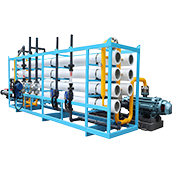
Nanofiltration for wastewater reuse is a professional spiral-wound nanofiltration membrane system specially optimized for complex wastewater reuse scenarios. Adopting modified high-purity aromatic polyamide material, it has a uniform nanopore structure with a pore size of 0.5–2 nm and a molecular weight cutoff of 200–1000 Da. Different from water softening NF membranes, this wastewater-specific NF membrane is upgraded with enhanced anti-fouling and anti-oxidation performance, effectively resisting pollution caused by refractory organics, colloids and microbial metabolites in wastewater. Relying on unique selective separation performance, it efficiently intercepts divalent ions, heavy metals and macromolecular organic pollutants, while allowing partial monovalent ions to pass through reasonably. The whole system supports low-pressure operation, matches various pretreatment processes, and stably upgrades secondary treated wastewater to reusable high-purity water, suitable for long-term continuous operation in high-pollution and complex water quality environments.
2. Application Scenarios

This nanofiltration reuse technology has strong adaptability to complex wastewater quality and covers multiple industrial and municipal recycling fields. First, industrial production wastewater reuse: applicable to printing and dyeing, chemical, electroplating and electronic industries, removing residual dyes, chemical salts and heavy metals in wastewater to realize circulating reuse of production water and reduce industrial water intake. Second, municipal sewage reclamation and upgrading: further purify biochemically treated municipal sewage, reduce total dissolved solids and organic residues, and produce standard reclaimed water for urban greening, road flushing and industrial supplementary water. Third, mining and brackish wastewater treatment: remove sulfate and hardness ions in mining wastewater, avoid pipeline scaling, and realize resource recycling of mine wastewater. Fourth, food and beverage wastewater reuse: filter residual organic substances and sugar components in food processing wastewater to meet factory cleaning and production auxiliary water standards. Fifth, zero-discharge pretreatment of industrial wastewater: reduce pollutant concentration in advance, lower the operating pressure of subsequent advanced treatment equipment, and support enterprise water-saving and emission-reduction transformation.
3. Technical Parameters

Optimized for complex wastewater characteristics, the core technical parameters of nanofiltration for wastewater reuse are standardized and engineering-oriented. The membrane pore size ranges from 0.5 to 2 nm with a molecular weight cutoff of 200–1000 Da. The divalent ion rejection rate reaches 92%–99%, organic pollutant rejection rate ≥95%, and heavy metal ion rejection rate ≥98%, while the monovalent ion rejection rate is moderately controlled at 15%–35% to reduce membrane fouling. The recommended operating pressure is 0.6–1.4 MPa, 30% lower than conventional RO reuse systems. The applicable water temperature is 5℃–45℃, with a safe operating pH range of 2–11. The system water recovery rate is 80%–88%, significantly improving wastewater resource utilization rate. The allowable inlet water SDI ≤3 and turbidity ≤0.5 NTU, adapting to most secondary effluent water quality. The stable service life of the membrane element is 3–5 years, and the flux recovery rate can reach 97% after standardized acid-base cleaning.
Compared with traditional wastewater reuse and RO reuse processes, nanofiltration for wastewater reuse has prominent core advantages. Firstly, selective high-precision purification: it targets typical harmful pollutants in wastewater, efficiently removes refractory organics, heavy metals and scaling ions, and retains low-risk trace ions to avoid excessive water treatment and reduce resource waste. Secondly, low energy consumption and high recovery: low-pressure operation greatly reduces equipment power consumption, and the ultra-high water recovery rate minimizes wastewater discharge, realizing energy-saving and water-saving dual benefits. Thirdly, enhanced anti-fouling performance: the modified smooth membrane surface reduces the adhesion of organic colloids and microbial slime, slows flux attenuation, and extends the cleaning cycle by 40% compared with ordinary membranes. Fourthly, low comprehensive operating cost: no chemical regeneration is required, with simple daily maintenance and low failure rate, effectively reducing long-term industrial water treatment investment. Fifthly, strong compatibility: it can be perfectly matched with biochemical, ultrafiltration and other pretreatment processes, suitable for upgrading various existing wastewater treatment systems.
5. Application Procedures
The application process of nanofiltration for wastewater reuse is standardized and modular, suitable for large-scale industrial and municipal reuse projects. Pre-operation preparation: Complete wastewater pretreatment to remove suspended solids and large particulate impurities, detect inlet water SDI, turbidity and pH values to meet membrane inlet standards; inspect pipeline tightness and membrane element integrity, and debug pressure and flow control systems. System commissioning: Start the pretreatment linkage system, run the NF main unit at low pressure, gradually adjust the operating pressure to 0.6–1.4 MPa, and operate stably for 40 minutes to stabilize effluent water quality. Formal stable operation: Continuously monitor membrane flux, pressure difference and effluent water quality indicators, record operational data in real time, and ensure stable water recovery rate. Regular maintenance and cleaning: When the system pressure difference rises by 0.1 MPa or flux drops by 15%, perform targeted acidic scale removal and alkaline organic cleaning to eliminate wastewater-derived fouling. Shutdown protection: Rinse the membrane surface with reclaimed water for 10–15 minutes after shutdown to prevent pollutant deposition and membrane dry damage.
6. Quality Standards
Nanofiltration for wastewater reuse systems strictly comply with international and domestic water resource recycling industry standards. Internationally, it adheres to ISO 9001 quality management system, ASTM membrane performance testing standards and EPA wastewater reuse safety specifications. Domestically, it implements GB/T 30307-2013 water treatment membrane element specifications and GB/T 19923-2021 industrial wastewater reuse water quality standards. Core quality requirements: The membrane material is corrosion-resistant and anti-oxidative, adapting to long-term complex wastewater operation; all performance indicators such as pollutant rejection rate and water recovery rate meet industrial reuse design standards; each membrane element undergoes strict factory performance testing and pressure resistance detection, with complete quality traceability records to ensure long-term stable operation of the reuse system.
7. Working Principle
Nanofiltration for wastewater reuse relies on the synergistic effect of physical sieving and Donnan charge repulsion dual mechanisms to realize efficient wastewater purification and reuse. The nanopore structure of the membrane forms a precise physical sieve, intercepting macromolecular organics, colloids and particulate pollutants larger than the membrane pore size in wastewater. Meanwhile, the membrane surface carries stable negative charges, producing strong electrostatic repulsion on high-charge divalent scaling ions, sulfate and heavy metal ions, greatly improving the removal efficiency of harmful ionic pollutants. Small-volume water molecules and low-risk monovalent ions can pass through the membrane smoothly. Driven by low pressure, the system continuously separates harmful pollutants from wastewater, realizing selective purification that removes pollutants and retains reusable components, finally producing high-standard reusable reclaimed water.
8. Future Prospects
Driven by national water-saving emission reduction and wastewater zero-discharge policies, nanofiltration for wastewater reuse has broad market development prospects. In the future, membrane materials will be further optimized to enhance anti-organic and anti-microbial fouling performance, adapting to more complex high-concentration industrial wastewater. The system will realize intelligent upgrading, integrating real-time water quality monitoring, automatic fouling early warning and intelligent cleaning functions to reduce manual operation costs. Meanwhile, customized NF reuse solutions will be developed for different industries such as printing and dyeing, chemical and mining. As a low-cost and high-efficiency wastewater recycling technology, nanofiltration will gradually replace traditional inefficient reuse processes and become the core technology for industrial wastewater resource utilization.
9. Conclusion
Nanofiltration for wastewater reuse is an advanced green membrane separation technology tailored for industrial and municipal wastewater resource recycling. It overcomes the defects of incomplete purification of traditional processes and high energy consumption of RO technology, and realizes efficient wastewater purification and reuse through dual mechanisms of physical sieving and charge repulsion. With the core advantages of selective separation, low energy consumption, high water recovery, strong anti-fouling and low maintenance cost, it solves the key pain points of low reuse rate and unstable water quality in wastewater treatment. Widely applicable to industrial production, municipal reclamation and mining wastewater reuse scenarios, it can effectively save industrial water resources and reduce environmental discharge pressure. With continuous material iteration and intelligent upgrading, nanofiltration wastewater reuse technology will play a more important role in the field of water resource recycling and promote the sustainable development of the environmental protection water treatment industry.
10. Frequently Asked Questions (FAQs)
Q1: What is the core advantage of nanofiltration for wastewater reuse?
A1: Its core advantage is selective and efficient wastewater purification. It removes harmful organics, heavy metals and scaling ions with low energy consumption and high water recovery rate, realizing low-cost and high-quality wastewater resource recycling.
Q2: What kind of wastewater is this NF technology suitable for?
A2: It is mainly applicable to secondary treated municipal sewage, printing and dyeing, chemical, mining and food processing industrial wastewater, suitable for scenarios requiring medium and high standard reclaimed water reuse.
Q3: What is the difference between NF and RO for wastewater reuse?
A3: NF operates at lower pressure with lower energy consumption and higher water recovery, retaining partial beneficial trace ions; RO achieves full desalination with high energy consumption and low recovery rate, making NF more cost-effective for conventional wastewater reuse.
Q4: How long is the service life of wastewater reuse NF membrane?
A4: Under standardized pretreatment and regular professional cleaning, the stable service life can reach 3–5 years, with slow performance attenuation and long-term stable reuse effect.
Q5: How to control membrane fouling in wastewater reuse?
A5: Complete strict pretreatment to reduce inlet water turbidity and SDI; operate within standard pressure and pH range; conduct regular acid-base circulating cleaning to remove organic and inorganic composite fouling, ensuring stable membrane performance.