1. Product Introduction

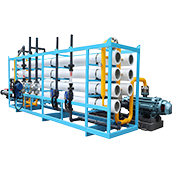
Nanofiltration for water softening refers to a professional water softening system based on nanofiltration (NF) membrane elements, including standard spiral-wound NF membranes and supporting operating equipment. The NF membrane features a unique nanopore structure with a molecular weight cutoff of 200–1000 Daltons and a typical pore size of 1–10 nanometers. Different from other membrane products, it has inherent selective separation performance: it efficiently intercepts divalent hardness ions such as calcium and magnesium that cause water scale, while allowing most beneficial monovalent ions such as sodium and chloride to pass through. The whole system adopts low-pressure operation design, requires no salt addition or chemical regeneration, and avoids secondary pollution. It can stably soften raw water with medium and high hardness, improve water quality taste, and inhibit pipeline and equipment scaling, suitable for long-term continuous operation in various civil and industrial scenarios.
2. Application Scenarios

Nanofiltration water softening technology has wide scene adaptability, covering civil, commercial and industrial fields with water hardness treatment demands. First, municipal tap water softening: applied in urban water supply plants to reduce raw water hardness, improve drinking water taste, and meet residents’ high-quality water demand. Second, residential and commercial water treatment: suitable for high-end communities, hotels, shopping malls and office buildings, solving household scale and water quality hardening problems. Third, industrial circulating water softening: used in cooling circulating water systems of power plants, chemical plants and mechanical factories, reducing equipment scaling and improving heat exchange efficiency. Fourth, food and beverage water preparation: applied in beverage brewing and food processing, retaining trace minerals while softening water to ensure product taste stability. Fifth, groundwater and brackish water pretreatment: targeted at hard groundwater in inland areas, reducing water hardness for subsequent advanced water treatment.
3. Technical Parameters

The core technical parameters of nanofiltration water softening systems are standardized and optimized for softening demands, with stable and reliable performance. The membrane pore size ranges from 1 to 10 nanometers, molecular weight cutoff is 200–1000 Daltons; divalent ion rejection rate (Ca²⁺, Mg²⁺) reaches 90%–98%, and monovalent ion rejection rate is controlled at 10%–30%, realizing selective softening. The recommended operating pressure is 0.4–1.2 MPa, far lower than conventional RO systems, significantly reducing energy consumption. The applicable raw water temperature is 5–45℃, and the safe operating pH range is 2–11. The system water recovery rate can reach 75%–85%, with low wastewater discharge. The stable service life of NF membrane elements is 3–5 years, and the flux recovery rate after standard cleaning is above 97%. The maximum inlet water SDI is ≤3, and turbidity is ≤0.5 NTU, adapting to most conventional raw water quality conditions.
4. Product Advantages

Compared with traditional softening processes, nanofiltration for water softening has irreplaceable core advantages. Firstly, selective softening with mineral retention: it removes scale-causing hardness ions while retaining beneficial trace minerals, avoiding the bland taste of fully desalinated water and conforming to healthy water standards. Secondly, low energy consumption and high efficiency: low-pressure operation reduces system energy consumption by 30%–40% compared with RO softening, with high water production efficiency. Thirdly, zero chemical pollution: no salt or chemical regenerants are needed, eliminating concentrated wastewater discharge and realizing green and environmentally friendly operation. Fourthly, stable long-term performance: resistant to mild organic and colloidal fouling, with slow flux attenuation and low later maintenance frequency. Fifthly, high comprehensive benefit: it reduces equipment scaling failure rate, extends the service life of pipelines and water equipment, and cuts long-term operation and maintenance costs.
5. Application Procedures
The operation process of nanofiltration water softening is standardized and simple, suitable for automatic and manual operation. Pre-operation preparation: Detect raw water hardness, SDI and turbidity to ensure water quality meets inlet requirements; check the tightness of pipelines and NF membrane elements, and debug the pressure and flow control system. System startup and commissioning: Start the pretreatment device first to filter suspended impurities; turn on the nanofiltration host, adjust the operating pressure to 0.4–1.2 MPa, and run for 30 minutes to stabilize water production. Formal operation: Keep the system running continuously, regularly monitor produced water hardness, flux and pressure difference, and record operating data. Regular maintenance and cleaning: When the pressure difference rises by 0.1 MPa or the flux drops by 15%, perform circulating cleaning with special acidic and alkaline cleaning agents to remove scale and organic fouling. Shutdown protection: Rinse the membrane surface with clean water for 10 minutes after shutdown to prevent dry membrane and pollutant adhesion.
6. Quality Standards
Nanofiltration water softening systems and membrane elements strictly comply with international and domestic industry quality standards. Internationally, it conforms to ISO 9001 quality management system and ASTM membrane performance testing standards, and meets NSF drinking water safety certification requirements. Domestically, it implements GB/T 30307-2013 water treatment membrane element standards and GB/T 5749-2022 drinking water sanitary standards. Core quality indicators: the hardness removal rate meets design standards, no harmful substances are leached from the membrane material, and the effluent water quality is stable and up to standard. All membrane elements undergo strict factory testing for ion rejection rate, flux stability and pressure resistance, with complete quality traceability records, ensuring compliance with long-term safe operation specifications for civil and industrial water softening.
7. Working Principle
Nanofiltration water softening relies on the dual mechanism of physical screening and charge repulsion. The NF membrane has uniform nanopore structures to physically intercept large-volume divalent hardness ions and macromolecular organic pollutants. Meanwhile, the membrane surface carries fixed charges, producing charge repulsion effect on divalent ions with high charge density, further improving hardness removal efficiency. Small-volume monovalent ions and water molecules can freely pass through the membrane pores. Under low-pressure driving force, the system continuously separates hardness substances from raw water, effectively reduces water hardness, retains beneficial minerals, and finally achieves high-quality selective water softening effect.
8. Future Prospects
With the continuous upgrading of national water quality standards and the popularization of green water treatment concepts, nanofiltration water softening has broad market prospects. In the future, NF membrane materials will be further optimized to enhance anti-fouling performance and low-pressure flux, reducing operating energy consumption. Intelligent monitoring systems will be integrated to realize automatic early warning of membrane fouling, intelligent cleaning and data remote monitoring. Meanwhile, customized softening solutions will be developed for special scenarios such as high-hardness groundwater and industrial high-salinity raw water. As an environmentally friendly alternative to traditional chemical softening processes, nanofiltration will gradually replace outdated processes and become the mainstream technology in the global water softening field.
9. Conclusion
Nanofiltration for water softening is an advanced green water treatment technology integrating selective separation, low energy consumption and zero chemical pollution. Different from traditional ion exchange and reverse osmosis softening, it perfectly balances softening effect and water quality activity, effectively removes water hardness and scale substances while retaining beneficial trace minerals, solving the common pain points of secondary pollution and poor water taste in traditional processes. With standardized operation, stable performance and wide scene adaptability, it is widely used in municipal, civil, commercial and industrial water softening scenarios. In the future, with technological iteration and intelligent upgrading, nanofiltration softening will further improve operational efficiency and application scope, leading the green and sustainable development of the water softening industry.
10. Frequently Asked Questions (FAQs)
Q1: What is the biggest advantage of nanofiltration water softening?
A1: Its core advantage is selective softening. It removes hardness ions to prevent scaling while retaining beneficial minerals, with low energy consumption and no chemical pollution, achieving healthy and environmentally friendly softening.
Q2: Is nanofiltration softening better than ion exchange?
A2: Yes. It requires no salt addition and no chemical regeneration, avoids concentrated wastewater discharge, has lower later maintenance costs, and retains water activity and taste, which is more suitable for long-term use.
Q3: What raw water quality is suitable for NF softening?
A3: It is suitable for medium and high hardness raw water such as tap water, groundwater and brackish water, with inlet SDI ≤3 and turbidity ≤0.5 NTU after simple pretreatment.
Q4: How long is the service life of NF membrane for softening?
A4: Under standardized operation and regular cleaning, the service life can reach 3–5 years, with stable softening performance and low performance attenuation.
Q5: Will nanofiltration affect water drinking taste?
A5: No. It removes hardness substances that cause poor taste and retains trace minerals, making the water taste sweeter and fresher than fully desalinated RO water.