1. Product Introduction

Nanofiltration membrane for water treatment is a high-efficiency composite separation membrane between ultrafiltration membrane and reverse osmosis membrane, with a membrane pore size of 0.5-2 nanometers and a molecular weight cut-off of 200-1000 Da. It is mainly made of modified polyamide thin film composite (TFC) materials through advanced interface polymerization technology, with a negatively charged membrane surface that enhances the interception effect on charged pollutants. The most common configuration is spiral wound, which is composed of flat membrane sheets, feed spacers, permeate carriers, central permeate tubes and sealing materials, assembled by spiral winding. It integrates high separation performance and compact structure, and is the core equipment for modern water treatment, suitable for various complex water quality conditions.
2. Application Scenarios

Thanks to its unique selective separation performance, nanofiltration membrane for water treatment has a wide range of applications. In municipal water treatment, it is used for deep treatment of surface water and groundwater, removing natural organic matter, disinfection by-product precursors and hardness ions, improving water quality and taste. In industrial wastewater treatment, it is applied to printing and dyeing, papermaking, chemical industry and other fields, intercepting organic dyes, phenols and heavy metal ions, realizing wastewater recycling and reducing waste disposal costs. In food and beverage processing, it is used for whey concentration, juice purification and alcohol reduction, retaining nutritional components while removing impurities. In addition, it is also used in pharmaceutical purification, brackish water desalination and seawater desalination pretreatment, protecting subsequent equipment and improving system efficiency.
3. Technical Parameters

The core technical parameters of nanofiltration membrane for water treatment determine its operation effect: membrane material is modified polyamide thin film composite; standard diameters are 2.5", 4" and 8" to fit standard pressure vessels; operating pressure ranges from 0.5MPa to 2.0MPa; operating temperature is 5℃ to 45℃ (maximum 50℃ for short-term operation); pH adaptation range is 3.0 to 10.5 at ambient temperature, and 2.0 to 11.0 during cleaning; salt rejection rate is 20%-99%, among which MgSO₄ rejection rate is ≥97%; membrane flux is 30-60 L/(m²·h) under standard conditions (25℃, 1.0MPa); service life is 2-4 years under normal maintenance; maximum inlet SDI15 is 5.0, maximum inlet turbidity is 1.0NTU; chlorine tolerance is 500ppm·hours, with dechlorination recommended.
4. Product Advantages
Compared with other water treatment technologies, nanofiltration membrane for water treatment has obvious core advantages. First, high separation efficiency: it can accurately intercept harmful substances while retaining beneficial components, realizing deep water purification without secondary pollution. Second, energy saving and environmental protection: the operating pressure is lower than reverse osmosis, saving energy consumption by 30%-50%, and no chemical additives are needed during operation. Third, strong anti-fouling ability: the modified membrane surface has good hydrophilicity, which reduces the adsorption of colloids and microorganisms, reduces cleaning frequency and extends service life. Fourth, wide adaptability: it can adapt to different water quality and treatment requirements, and can be combined in series or parallel for flexible configuration. Fifth, easy maintenance: modular design, convenient installation and replacement, reducing operation and maintenance costs.
5. Application Procedures
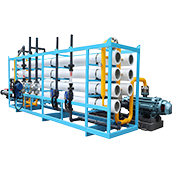
The application procedure of nanofiltration membrane for water treatment is standardized and easy to operate. First, raw water pretreatment: through coagulation, flocculation, sedimentation and filtration, remove large particles, colloids and microorganisms to avoid membrane fouling and damage. Second, membrane element installation: install membrane elements in pressure vessels according to design requirements, ensure tight connection and no leakage, and pay attention to the installation direction. Third, trial operation: start the system, adjust parameters to the standard range, flush the new membrane at low pressure for more than 2 hours, and discharge the produced water. Fourth, formal operation: regularly monitor flux, salt rejection rate and pressure drop, and record operation data. Fifth, chemical cleaning: when flux decreases by more than 15%, clean with acid-base cleaning agents to restore membrane performance. Sixth, regular maintenance: shut down regularly to check membrane elements and replace aging or damaged ones in time.
6. Quality Standards
The production and detection of nanofiltration membrane for water treatment strictly follow international standards and national relevant standards (such as HJ 579-2010), as well as food-grade and pharmaceutical-grade standards for specific applications. High-quality raw materials are selected to ensure chemical stability and safety. Production is carried out in a 100-level clean workshop, and each link is strictly controlled. All membrane elements are tested before leaving the factory, including salt rejection rate, flux and anti-fouling performance tests, and only qualified products can leave the factory, stored with special protective fluid and vacuum packaged.
7. Working Principle
The working principle of nanofiltration membrane for water treatment is based on pressure-driven membrane separation, combined with electrostatic repulsion, steric hindrance and adsorption effects. Under operating pressure, raw water flows along the feed spacer, and water molecules and monovalent ions pass through nanoscale membrane pores into the permeate carrier, then flow to the central tube and are collected as product water. Multivalent ions, macromolecular organics and colloids are intercepted due to steric hindrance and electrostatic repulsion, remaining in raw water and discharged as concentrated water. The whole process is physical separation, energy-saving and environmentally friendly, and can realize synchronous concentration and purification.
8. Future Prospects
With the increasing global demand for water resource recycling and the continuous improvement of environmental protection requirements, the market demand for nanofiltration membrane for water treatment is growing. In the future, it will develop in the direction of higher efficiency, lower energy consumption, longer service life and intelligence. Membrane material modification technology will be optimized to improve anti-fouling ability and adapt to more complex water quality. Intelligent monitoring systems will be integrated to realize real-time monitoring of operation status and automatic fault early warning. In addition, green and environmentally friendly production processes will be promoted to promote the sustainable development of the industry.
9. Conclusion
Nanofiltration membrane for water treatment, as a high-efficiency water purification equipment, has the core advantages of high separation efficiency, energy saving, strong anti-fouling ability and wide adaptability. It plays an irreplaceable role in municipal water treatment, industrial wastewater recycling and other fields, effectively solving the pain points of traditional water treatment technologies. Its standardized application procedures and strict quality control ensure stable operation, and its energy-saving and environmental protection characteristics are in line with global sustainable development trends. With the continuous progress of technology, it will have broader development prospects and make greater contributions to global water resource utilization and environmental protection.
10. Frequently Asked Questions (FAQs)
Q1: What is the core function of nanofiltration membrane for water treatment?
A1: Selectively intercept harmful substances such as multivalent ions and macromolecular organics, retain beneficial monovalent ions and water molecules, and realize deep water purification and separation.
Q2: What is the operating pressure range of this membrane?
A2: The standard operating pressure is 0.5MPa to 2.0MPa, which is lower than reverse osmosis and more energy-saving.
Q3: How often does it need chemical cleaning?
A3: Under normal maintenance, it is once every 3-6 months, depending on raw water quality and operation status.
Q4: What is the service life of the membrane?
A4: 2-4 years under normal operation and strict pretreatment and maintenance.
Q5: Can it be used for drinking water treatment?
A5: Yes, it can remove harmful substances in drinking water, improve water quality and taste, and meet drinking water safety standards.