High Flow Filter for Chemical Processing and UF Pretreatment
This article introduces high flow filter for chemical processing, specially engineered to filter corrosive, high-capacity chemical fluids and protect downstream ultrafiltration membrane systems. A liquid filterbuilt with chemically resistant media and structural components effectively removes suspended particles, precipitates and fine impurities in chemical streams, and the HFU660UY100J cartridge is a reliable option for this demanding working condition. It is compatible with 4.5 Inch Diameter Filter Cartridge for Ultrafiltration Pre-treatment, supporting large throughput while maintaining stable chemical compatibility for continuous chemical production lines.
1. Product Introduction
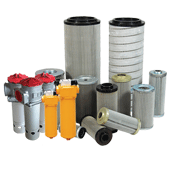
High flow filter for chemical processing is a high-throughput filtration assembly composed of high flow filter cartridges and matched pressure housing, customized for chemical manufacturing, fine chemical production, chemical wastewater recycling and ultrafiltration pretreatment of chemical feed liquid. Unlike conventional water treatment filters, this series prioritizes chemical compatibility, resistance to solvent, weak acid and weak alkali, low media shedding and stable precision under variable chemical environments. The HFU660UY100J is a mature 60-inch high flow filter cartridge widely selected for chemical processing lines, delivering excellent throughput and pollutant holding capacity for chemical liquid pretreatment.
Chemical processing covers diverse fluid types, including raw material feed liquid, intermediate reaction liquid, circulating cleaning fluid, and wastewater before membrane recovery. The impurities inside these fluids are complex: crystal precipitates, catalyst fines, resin fragments, suspended solid particles and colloidal substances. If these contaminants directly enter the ultrafiltration membrane module, they will cause irreversible fouling, scratch membrane surfaces and raise the overall operation cost of the membrane system. Therefore, high flow filters are set as the key protective barrier before UF units in most chemical recycling projects.
Our chemical processing high flow filters support flexible media selection to match different chemical media. When the chemical liquid is neutral or weakly corrosive, users can select High Flow Rate Filter Cartridge for Ultrafiltration Pre-treatment with polypropylene pleated media. For projects requiring strict particle interception efficiency for chemical feed, Absolute Micron Rating High Flow Filter for UF Pre-treatment can be configured to guarantee consistent removal efficiency.
For chemical streams with high solid loading, a two-stage graded filtration scheme is strongly recommended. The primary stage adopts coarse grade elements such as 100 Micron High Flow Filter Cartridge for Ultrafiltration Pre-treatment to trap large crystal particles and debris, reducing the pollutant load of the secondary filter. The secondary polishing stage uses fine precision filter elements including 5 Micron High Flow Filter Cartridge for Ultrafiltration Pre-treatment to remove fine particles, forming a complete filtration system to shield the ultrafiltration membrane.
The structural design of the filter fully considers the safety requirements of chemical workshops. The filter housing can be selected from 304 or 316L stainless steel to resist chloride ion and mild chemical corrosion. The end caps, inner support core and sealing rings are optional with EPDM, Viton and other chemical resistant elastomers, avoiding swelling, dissolution and failure when contacting organic solvents and chemical reagents. Each cartridge adopts an outer-to-inner radial flow design, and the large pleated filtration area greatly reduces the flow velocity inside the filter, lowering the risk of media erosion caused by high-speed chemical fluid.

2. Working Principle
The high flow filter for chemical processing adopts radial outer-in and inner-out flow mode, which is the same as the general high flow filter structure, but optimized for chemical fluid characteristics. Unfiltered chemical liquid flows into the filter housing through the inlet, fills the outer cavity of the vessel, and then passes through the pleated filter medium from the outer surface of the cartridge. Solid impurities, crystal particles, fine catalyst powder and colloidal pollutants are trapped on the surface and inside the depth structure of the filter medium. The clean liquid converges into the inner support core of the filter cartridge and flows out from the outlet to the subsequent ultrafiltration pretreatment unit.
Depth filtration is the core interception mechanism for chemical processing. The multi-layer staggered pore structure of the pleated medium can capture particles of different sizes step by step. For chemical liquid containing crystal precipitates, the slow flow rate brought by the large filtration area can prevent crystal particles from piercing the filter medium under high scouring speed. Meanwhile, the differential pressure monitoring system installed on the inlet and outlet tracks the pollution degree of the filter cartridge in real time. As intercepted pollutants accumulate, the pressure difference gradually rises. When reaching the preset alarm value, the system needs to stop feeding, empty the chemical liquid inside the housing, and replace the filter cartridges.
Chemical compatibility is the core difference between this filter and ordinary water filters. The filter medium and sealing material must be chemically inert to the processed fluid. If the material is not matched, the medium will swell, dissolve or decompose, which not only causes filtration failure, but also introduces secondary pollutants into the chemical liquid and damages the ultrafiltration membrane. In addition, the vent and drain valves on the housing are used to exhaust air and drain residual chemical liquid during maintenance, which effectively prevents the residual chemical liquid from splashing and ensures the operation safety of chemical workers.
It is worth noting that this filter is mainly used for pretreatment protection of ultrafiltration equipment, it cannot separate dissolved ions in chemical liquid. Dissolved salt and small molecular substances still need to be intercepted by the ultrafiltration or reverse osmosis membrane in the subsequent process. The filter’s job is to remove solid suspended pollutants and extend the stable service life of expensive membrane elements.
3. Technical Parameters
Compatible cartridge model: HFU660UY100J, 4.5 inch OD high flow pleated filter cartridge
Available lengths: 20 inch, 40 inch, 60 inch
Micron precision options: 1μm, 5μm, 10μm, 25μm, 50μm, 100μm
Filter media options: Polypropylene, fiberglass, cellulose
Housing material: SS304, SS316L stainless steel, epoxy coated carbon steel
Seal options: EPDM, Silicone, Viton, Buna-N
Design pressure: 1.0 MPa (optional 1.6 MPa)
Operating temperature range: -10℃ ~ 80℃, limited by seal and media material
Applicable pH range: 2 ~ 12 (varies according to selected filter medium)
Flow characteristic: Single HFU660UY100J cartridge supports large flow rate, low initial pressure drop
Accessories: Vent valve, drain valve, pressure gauge interface, lifting lugs, cartridge mounting manifold
All parameters are obtained under clean water calibration test. The actual pressure drop, service life and chemical resistance must be verified according to the on-site chemical composition, concentration and temperature of the liquid. For special strong oxidants, strong solvents and high-concentration corrosive media, we recommend sample testing before bulk ordering.
4. Quality Assurance
All high flow filters for chemical processing are manufactured under ISO 9001 quality control system. We strictly verify the chemical compatibility of raw materials, and test filter media, support core and sealing rings with the customer’s actual chemical fluid samples when necessary. The pleating process is precisely controlled to ensure uniform pleat density, avoid local thinning of the medium and prevent liquid bypass.
Each filter cartridge undergoes air bubble point test and integrity inspection after production to eliminate leakage. Stainless steel housings are welded by certified welders, with weld seam penetration inspection and hydrostatic pressure test at 1.5 times design pressure. The internal manifold plate is CNC machined to ensure flatness, so every filter cartridge can be tightly sealed after installation, preventing unfiltered chemical liquid from bypassing and entering the ultrafiltration system.
Finished products are cleaned and packaged in a dust-free workshop to remove processing debris and oil pollution. Material test certificates, pressure test reports and chemical compatibility data sheets can be provided with shipments. We mark the applicable chemical range and temperature limit clearly on the product specification sheet, to guide customers to avoid improper material selection that leads to premature filter damage. Every batch of products retains complete production records for traceability.

5. Application Fields
5.1 Fine Chemical Liquid Pretreatment
Filter reaction intermediate liquid, catalyst feed liquid, remove solid catalyst powder and crystal impurities, protect ultrafiltration membrane for concentration and purification.
5.2 Chemical Wastewater Reuse
Treat chemical wastewater before ultrafiltration recovery, intercept suspended solids, organic precipitates and sludge debris, reduce membrane fouling frequency.
5.3 Pharmaceutical Chemical Raw Material Filtration
Purify neutral and weakly corrosive pharmaceutical chemical feed liquid, control particle content, meet the requirements of membrane separation and concentration.
5.4 Fertilizer & Pesticide Chemical Production
Filter mother liquor and circulating liquid in fertilizer and pesticide workshops, remove undissolved solid particles, stabilize the follow-up membrane separation process.
5.5 Industrial Chemical Circulating Liquid Filtration
Side-stream filtration for chemical circulating fluid systems, reduce solid accumulation, protect heat exchangers and membrane filtration units.
6. FAQ
Q1: Can HFU660UY100J be used for chemical liquid filtration?
A: Yes, HFU660UY100J is a 60-inch high flow filter cartridge suitable for most weakly corrosive chemical liquid. You need to confirm the chemical composition, temperature and pH value to match the correct media and seal material.
Q2: Can this high flow filter resist strong acid and strong alkali?
A: It depends on the filter medium and seal material. Polypropylene media with Viton seals can withstand a wider pH range, but long-term continuous exposure to high-concentration strong acid or strong alkali is not recommended. We suggest a compatibility test.
Q3: Can the filter cartridge be cleaned and reused in chemical processing?
A: It is generally disposable. Chemical pollutants will penetrate into the depth of the filter medium. Backwashing and chemical cleaning cannot fully restore the filtration performance, and residual chemicals may bring safety risks.
Q4: What is the difference between chemical processing high flow filter and ordinary water filter?
A: The chemical version focuses on chemical compatibility of media, support core and seals. Ordinary water filters only adapt to clean water, and their materials will swell or dissolve when exposed to chemical reagents.
Q5: Can this filter fully replace ultrafiltration membranes to remove dissolved substances?
A: No. It only removes solid suspended particles, crystals and powder. Dissolved ions and small molecular organics can only be intercepted by downstream ultrafiltration or reverse osmosis membranes.
Q6: What should I do if the pressure difference rises rapidly in chemical filtration?
A: Rapid differential pressure rise usually means high solid content or easy crystallization of the chemical liquid. You can upgrade to a higher dirt holding capacity filter cartridge or add a pre-filter with larger micron rating.
Other products you may want to know about:
RO membrane element
bag filter housing
ultrafiltration equipment