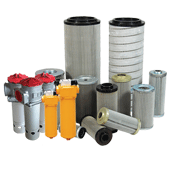
Seawater Desalination Filter Element for Ultrafiltration Pretreatment Process
Seawater desalination filter element is critical consumable to stabilize water quality for whole desalination and ultrafiltration treatment lines. This high‑performance liquid filter intercepts suspended solids, marine sediments and colloidal pollutants from raw seawater before membrane separation. Suitable pre‑filtration protects ultrafiltration and reverse osmosis components, lowers fouling risk and extends membrane service life for large‑scale seawater desalination projects.
Product Introduction
Seawater desalination turns high‑salinity raw seawater into usable fresh water, and ultrafiltration has become the mainstream pretreatment unit for modern desalination plants. Raw seawater contains abundant sediment, plankton, suspended particles, organic matter and marine colloids. If these impurities directly enter ultrafiltration modules and subsequent reverse osmosis membrane elements, they will cause rapid membrane fouling, frequent chemical cleaning, flux decline and shortened service cycle. As the core security consumable, Seawater desalination filter element undertakes physical filtration tasks in front of or after ultrafiltration equipment, greatly reducing pollutant load for downstream membrane systems.
In complete seawater desalination workflow, raw seawater first goes through coarse screening, then enters ultrafiltration system to remove most colloids and microorganisms. The seawater after ultrafiltration treatment will pass through seawater desalination filter element as safety protection before feeding into high‑pressure reverse osmosis membrane. For large‑capacity desalination projects, system designers often adopt Pall High Flow Filter Element and Parker High Flow Filter to match high‑flow working conditions. Pleated large‑diameter structure realizes high dirt‑holding capacity, fewer installation quantity and less maintenance work compared with conventional small‑size filter cartridges.
Coastal desalination plants often face complicated water‑quality fluctuation caused by tide, storm and seasonal plankton reproduction. Under such variable conditions, Pentair High Flow Filter can be selected as alternative solution to cope with impact of sudden pollutant surge. For working conditions requiring finer particle interception, Membrane Filter Cartridge can be deployed to further reduce SDI value of influent water for reverse osmosis.
Seawater desalination filter element must resist salt erosion, seawater corrosion and biological adhesion. Ordinary industrial filter cartridges are easy to age and fail under long‑term seawater immersion. Specially optimized seawater‑resistant filter elements maintain stable filtration performance in high‑salinity environment. Cooperated with well‑run ultrafiltration equipment, seawater desalination filter element keeps RO feed‑water SDI below 3, which is the core precondition for stable operation of seawater reverse osmosis membranes. Many desalination project owners ignore pre‑filtration configuration, resulting in ultrafiltration and RO membrane premature replacement and huge extra operating cost.

Working Principle
Seawater desalination filter element adopts pleated structure, cooperating with ultrafiltration equipment to complete multi‑stage purification for raw seawater. Raw seawater after preliminary sedimentation enters ultrafiltration modules firstly. Ultrafiltration intercepts plankton, large‑molecule organics and most colloids in seawater. The seawater flowing out of ultrafiltration housing enters filter vessels loaded with seawater desalination filter element. Water flows from outside to inside through pleated filter media. Sediment, residual fine particles and fragment pollutants are trapped on filter surface and inside filter layers, and the filtered seawater flows through central core pipe and transports to seawater reverse osmosis system.
The large pleated design expands effective filtration area, improves pollutant holding capacity and controls low initial pressure drop. With continuous accumulation of seawater sediments and impurities, the differential pressure between filter inlet and outlet rises gradually. When pressure difference reaches preset replacement threshold, operators should replace filter elements timely. If the element continues running beyond alarm pressure, particle bypass will happen, unfiltered impurities will enter ultrafiltration or reverse osmosis membrane channel and cause irreversible damage.
It is worth noting that seawater desalination filter element cannot replace ultrafiltration equipment. Filter element mainly intercepts granular impurities, while ultrafiltration removes colloids, bacteria and marine biological pollutants. Only the combination of ultrafiltration plus seawater desalination filter element can form reliable pretreatment chain for seawater desalination. Without ultrafiltration protection, filter elements will be blocked in a very short cycle. Without seawater desalination filter element, residual fine particles will wear membrane sheets. Missing any link will increase system maintenance burden greatly.
Technical Parameters
| Item | Specification |
|---|
| Filter Media Material | Modified Polypropylene (seawater resistant) |
| End Cap & Core Material | Reinforced anti‑corrosion polypropylene |
| Common Length | 20”, 40”, 60” |
| Outer Diameter | 152 mm |
| Available Micron Rating | 1 μm,5 μm,10 μm,20 μm |
| Single Element Flow Rate | 18‑110 m³/h |
| Applicable Water Salinity | 0‑45000 mg/L TDS |
| Max Operating Temperature | 60℃ |
| Max Working Pressure | 2.45 MPa |
| Recommended Initial ΔP | ≤0.02 MPa |
| Replacement Differential Pressure | 0.10‑0.14 MPa |
| Target RO feed‑water SDI | ≤3 |
| Matching Process | Raw seawater‑Ultrafiltration‑Pre‑filtration‑Seawater RO |
Parameters can be adjusted according to site seawater quality, plant scale and tide‑influenced water fluctuation. Our technical team supports model selection calculation for coastal large‑scale desalination plants, island small desalination devices and offshore platform seawater treatment projects.
Quality Assurance
For seawater desalination projects, the quality of seawater desalination filter element directly affects service life of expensive ultrafiltration and seawater reverse osmosis membrane. Common failures of inferior products under seawater environment include material corrosion, fiber shedding, media crack and liquid bypass. Once fiber shedding occurs, fine fibers will scratch ultrafiltration and RO membrane surface and cause permanent performance loss.
All seawater desalination filter elements are manufactured under ISO9001 quality management system. Raw materials adopt modified anti‑salt polypropylene, which passes corrosion resistance test under high‑salinity seawater. Automatic pleating equipment controls fold spacing precisely to guarantee uniform pleats and maximize effective filtration area. Hot‑melt thermal‑welding connection is adopted between filter media and end caps without adhesive, avoiding dissolution and secondary pollution in seawater. Every finished product completes hydraulic pressure resistance test, bubble‑point pore‑size detection and high‑flow pressure‑drop test before delivery.
For large EPC seawater desalination projects, batch inspection reports can be provided. We provide technical services including installation guidance, differential pressure monitoring standard and replacement‑cycle reference. High‑quality seawater desalination filter element reduces unexpected shutdown risk and protects customers’ large investment on ultrafiltration and reverse osmosis membrane modules.

Application Fields
Seawater desalination filter element is widely used in desalination projects equipped with ultrafiltration pretreatment.
Large Coastal Seawater Desalination Plant: Security pre‑filtration after ultrafiltration for municipal fresh‑water supply.
Island Desalination System: On‑site seawater treatment for remote island resident water demand.
Offshore Platform Water‑making Unit: Seawater pretreatment for offshore oil and gas production platforms.
Industrial Desalination Project: Produce process fresh‑water for coastal chemical, power and manufacturing factories.
Brackish‑water Treatment Plant: Pretreatment for high‑salinity brackish‑water recycling.
Marine Aquaculture Water Preparation: Seawater purification combined with ultrafiltration for aquaculture system.
In above application scenarios, ultrafiltration bears main removal work of colloids and organisms, and seawater desalination filter element serves as last safety barrier. Scientific combination of two‑stage pretreatment improves system stability and reduces long‑term operation and maintenance cost of desalination plant.
FAQ
Q1: What role does seawater desalination filter element play in ultrafiltration desalination process?
A1: Seawater desalination filter element is the security barrier of desalination system. It intercepts residual fine sediment and particles after ultrafiltration effluent, preventing particle abrasion and bypass pollution for downstream reverse osmosis membrane.
Q2: Can seawater desalination filter element completely replace ultrafiltration equipment?
A2: No. Filter element mainly removes granular impurities. It cannot effectively remove large‑quantity colloids, plankton and microorganisms in seawater. Ultrafiltration is necessary to control SDI value for reverse osmosis feed‑water.
Q3: What is the suitable micron grade for seawater desalination filter element?
A3: 5 μm and 10 μm are the most widely‑used specifications for seawater desalination pre‑filtration. Final selection should combine raw seawater quality, tide variation and membrane manufacturer requirements.
Q4: Why ordinary filter cartridges cannot adapt to seawater desalination working conditions?
A4: Ordinary filter materials lack anti‑corrosion performance. Under long‑term immersion of high‑salinity seawater, they are prone to aging, degradation, fiber shedding, bringing hidden danger to ultrafiltration and RO membranes.
Q5: When should users replace seawater desalination filter element on‑site?
A5: Normally replace elements when inlet‑outlet differential pressure reaches 0.10‑0.14 MPa. In storm or algae bloom season, water quality deteriorates, replacement cycle will be shortened accordingly.
Q6: What common water‑quality indicators need to be monitored for seawater desalination pre‑filtration system?
A6: Focus on inlet‑outlet differential pressure of filter vessel, RO feed‑water SDI value, turbidity of ultrafiltration effluent. Sharp pressure rise or SDI over 3 means pre‑filtration needs inspection or element replacement.
Other products you may want to know about:
cartridge filter housing
self-cleaning filter
PP melt-blown filter