2. Application Scenarios

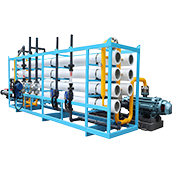
The SW30ULE Series: Ultra-Low Energy Seawater Membrane is widely used in various seawater desalination scenarios, and its application form is adjusted according to the scale of desalination and water demand.
First, large-scale seawater desalination plants. For municipal or industrial large-scale seawater desalination projects, the SW30ULE Series can be used in batches to form a high-efficiency desalination system, which reduces the overall energy consumption of the plant by 20-30% compared with traditional membranes, and meets the large-scale fresh water demand of cities and industries. Second, offshore platforms. Offshore oil and gas platforms have limited energy supply, and the ultra-low energy consumption advantage of the SW30ULE Series can effectively reduce the energy load of the platform, providing stable fresh water for staff life and equipment cooling.
Third, island water supply. Remote islands rely heavily on seawater desalination, and the SW30ULE Series, with its low energy consumption and stable performance, can be matched with small and medium-sized desalination equipment to meet the daily water needs of island residents and tourism development.
Fourth, coastal industrial water treatment. Coastal power, chemical and other industries need a lot of fresh water. The SW30ULE Series can provide qualified industrial water with low energy consumption, reducing the enterprise's water cost and energy consumption pressure.
Fifth, emergency seawater desalination. In coastal areas affected by drought or water shortage disasters, the SW30ULE Series, which is easy to install and low in energy consumption, can be quickly put into use with mobile desalination equipment to provide emergency fresh water support.
3. Technical Parameters

The technical parameters of the SW30ULE Series: Ultra-Low Energy Seawater Membrane directly determine its energy-saving effect and desalination performance, and the core technical parameters are as follows:
First, operating pressure: the standard operating pressure is 4.5-6.0 MPa, which is 15-25% lower than that of ordinary seawater membranes, which is the key to realizing ultra-low energy consumption.
Second, desalination rate: the standard desalination rate is ≥99.3%, which can reduce the TDS of seawater (25000-45000mg/L) to below 500mg/L, meeting the drinking water and industrial water standards.
Third, water production flux: the recommended flux is 18-22 LMH (liters per square meter per hour), which balances water production efficiency and membrane service life.
Fourth, membrane specifications: common specifications are 4040 and 8040, with a membrane area of 8-40 ㎡, suitable for desalination systems of different scales.
Fifth, service life: under standard operation and maintenance conditions, the service life is 3-5 years, and the annual flux attenuation rate is ≤12%. Sixth, temperature adaptability: it can work stably in the temperature range of 5-45℃, adapting to the temperature change of seawater in different seasons. Seventh, anti-scaling performance: it has excellent anti-scaling ability against calcium carbonate and sulfate, reducing the frequency of membrane cleaning.
4. Product Advantages
Compared with traditional seawater RO membranes, the SW30ULE Series: Ultra-Low Energy Seawater Membrane has obvious core advantages, among which ultra-low energy consumption is the most prominent.
First, ultra-low energy consumption. The operating pressure is 4.5-6.0 MPa, which is 15-25% lower than that of ordinary seawater membranes, and the overall energy consumption of the desalination system can be reduced by 20-30%, greatly reducing the operation cost.
Second, high desalination efficiency. The desalination rate is ≥99.3%, which can effectively remove salt ions, microorganisms and organic impurities in seawater, and the produced water quality is stable and up to standard.
Third, strong stability. The optimized membrane structure and high-quality materials make it have excellent anti-chemical corrosion and anti-biological pollution performance, which can adapt to the harsh working environment of high-salinity seawater and ensure long-term stable operation.
Fourth, long service life. Under standard maintenance, the service life is 3-5 years, which is 6-12 months longer than that of ordinary seawater membranes, reducing the cost of membrane replacement.
Fifth, wide adaptability. It can be flexibly matched with large, medium and small seawater desalination systems, and can adapt to different seawater quality and water demand scenarios.
Sixth, environmental protection and energy saving. While reducing energy consumption, it does not need to add a lot of chemical reagents, and the discharged concentrated brine has little impact on the marine environment, conforming to the concept of green development.
5. Application Procedures
The correct application of the SW30ULE Series: Ultra-Low Energy Seawater Membrane is the key to giving play to its ultra-low energy consumption advantage and ensuring the stable operation of the desalination system. Combining my practical experience in project operation and maintenance, the specific application procedures are as follows:
First, seawater pretreatment. Filter the seawater through quartz sand, activated carbon and ultrafiltration membrane to remove suspended solids, colloids and microorganisms, avoid membrane pollution and damage, and ensure the inlet water quality meets the requirements.
Second, membrane module installation. According to the desalination scale, correctly install the SW30ULE membrane module, ensure the connection tightness, and avoid water leakage and pressure loss.
Third, system debugging. After installation, flush the system with low-pressure fresh water first, then slowly increase the pressure to the standard operating range (4.5-6.0 MPa), and adjust the flux to 18-22 LMH to ensure stable operation.
Fourth, daily operation and monitoring. Real-time monitor the operating parameters (pressure, flux, desalination rate) of the membrane, and adjust the parameters in time according to the changes of seawater quality and temperature.
Fifth, regular cleaning. When the membrane flux decreases by 10-15% or the operating pressure increases by 15%, use a professional cleaning agent to clean the membrane to remove scaling and pollution and restore membrane performance.
Sixth, membrane replacement. When the service life expires or the desalination rate is lower than 98%, replace the membrane module in time to ensure the desalination effect and energy-saving effect.
6. Quality Standards
The SW30ULE Series: Ultra-Low Energy Seawater Membrane must comply with strict international and domestic quality standards to ensure its energy-saving performance, desalination effect and stability. Internationally, it follows the ISO 9001 quality management system and ASTM D4516 (RO membrane standard test method); domestically, it complies with GB/T 30307-2013 "Reverse Osmosis Membrane Elements for Water Treatment" and GB/T 5749-2022 "Sanitary Standards for Drinking Water". The core quality standards include:
First, the standard operating pressure must be 4.5-6.0 MPa, and the error shall not exceed ±3%.
Second, the desalination rate must be ≥99.3%, and the annual flux attenuation rate shall not exceed 12%.
Third, it must have strong chemical stability and can resist the corrosion of seawater components (such as chloride ions) without damage.
Fourth, the anti-scaling performance must meet the standard, and the cleaning cycle shall not be less than 3 months.
Fifth, the membrane material must be non-toxic and harmless, and the produced water shall not contain harmful substances, meeting the drinking water standard.
Sixth, the product must have a complete quality inspection report, and the production process is traceable.
7. Working Principle
The working principle of the SW30ULE Series: Ultra-Low Energy Seawater Membrane is based on reverse osmosis separation technology, and its ultra-low energy consumption advantage is mainly achieved through optimized membrane structure design. Under the action of external operating pressure (4.5-6.0 MPa), which is lower than that of traditional seawater membranes, seawater flows through the membrane surface. The dense separation layer of the membrane allows only water molecules to pass through, while intercepting salt ions, microorganisms and other impurities in seawater. The intercepted impurities form concentrated brine and are discharged from the system, and the passed water molecules are collected and treated to become usable fresh water. The key to the ultra-low energy consumption of the SW30ULE Series lies in its optimized membrane pore structure and surface morphology, which reduces the resistance of water molecules passing through the membrane, so that it can achieve high-efficiency desalination under lower pressure, thus reducing the energy consumption of high-pressure pumps and other equipment.
In addition, the membrane surface is treated with anti-scaling and anti-pollution, which reduces the adsorption of impurities and ensures long-term stable operation under low pressure.
8. Future Prospects
With the increasing global demand for fresh water and the continuous emphasis on energy conservation and environmental protection, the SW30ULE Series: Ultra-Low Energy Seawater Membrane will have broader application prospects and development space.
First, energy-saving optimization. Continue to optimize the membrane material and structure, further reduce the operating pressure, and increase the energy-saving effect to 30-40%.
Second, intelligent matching. Integrate with the Internet of Things and sensor technology to real-time monitor the membrane operation status, automatically adjust operating parameters, and realize intelligent operation and maintenance.
Third, expansion of application scenarios. Develop small and medium-sized membrane modules to adapt to more small-scale seawater desalination scenarios, such as offshore fishing boats and island tourism.
Fourth, cost reduction. With the improvement of production technology, the cost of membrane materials will be further reduced, promoting the popularization and application of the SW30ULE Series in more coastal areas.
Fifth, green integration. Combine with renewable energy such as solar energy and wind energy to form a green seawater desalination system, further reducing carbon emissions and conforming to the global low-carbon development trend.
9. Conclusion
The SW30ULE Series: Ultra-Low Energy Seawater Membrane is a high-performance seawater desalination membrane with ultra-low energy consumption as its core advantage, which plays an irreplaceable role in the field of seawater desalination. It adopts advanced membrane materials and optimized structure design, which can achieve high-efficiency desalination (desalination rate ≥99.3%) under lower operating pressure (4.5-6.0 MPa), reducing the energy consumption of the desalination system by 20-30%. The SW30ULE Series is widely used in large-scale seawater desalination plants, offshore platforms, island water supply and other scenarios, providing reliable fresh water support for municipal life, industrial production and marine operations. Its performance and quality are affected by technical parameters, application procedures and maintenance level, so it is necessary to formulate targeted application and maintenance schemes according to the actual desalination scenario. With the continuous progress of membrane technology and the increasing demand for energy conservation and environmental protection, the SW30ULE Series will be more efficient, energy-saving and intelligent, promoting the healthy development of the seawater desalination industry and making greater contributions to alleviating the global fresh water crisis.
10. Frequently Asked Questions (FAQs)
Q1: What is the SW30ULE Series: Ultra-Low Energy Seawater Membrane, and what is its core advantage?
A1: The SW30ULE Series is a high-performance seawater desalination membrane specially developed for energy-saving needs. Its core advantage is ultra-low energy consumption, with an operating pressure of 4.5-6.0 MPa, which is 15-25% lower than that of ordinary seawater membranes, and the system energy consumption can be reduced by 20-30%.
Q2: What is the desalination rate of the SW30ULE Series?
A2: The standard desalination rate is ≥99.3%, which can convert high-salinity seawater into fresh water meeting drinking water and industrial water standards.
Q3: What is the service life of the SW30ULE Series?
A3: Under standard operation and maintenance conditions, the service life is 3-5 years, which is longer than that of ordinary seawater membranes.
Q4: Why can the SW30ULE Series achieve ultra-low energy consumption?
A4: It adopts optimized membrane structure design and high-quality composite materials, which reduces the resistance of water molecules passing through the membrane, so that high-efficiency desalination can be achieved under lower operating pressure, thus reducing energy consumption.
Q5: What factors will affect the energy-saving effect of the SW30ULE Series?
A5: The main factors include seawater quality, operating parameters (pressure, flux), pretreatment effect and membrane fouling. Q6: How to maintain the SW30ULE Series to ensure its long-term energy-saving effect?
A6: Do a good job in seawater pretreatment to avoid membrane pollution; monitor operating parameters in real time and keep them within the standard range; clean the membrane regularly to remove scaling and pollution; avoid sudden pressure changes during startup and shutdown.