Ultrafiltration Separation Equipment for Industrial Membrane Water Treatment
Ultrafiltration separation equipment is a membrane-based separation facility that separates substances according to molecular weight cutoff, widely used for water purification, material concentration and wastewater advanced treatment. It can work together with Ultrafiltration system and equipment to build large-scale treatment stations, and coordinate with Water treatment ultrafiltration equipment to realize graded pollutant interception. Under low cross-flow pressure, the equipment retains colloids, microbes and macromolecular organics while allowing water molecules and small soluble ions to pass through. Owing to its physical separation mechanism, low energy demand and easy automatic operation, ultrafiltration separation equipment has become a preferred technology for environmental protection, food processing and chemical engineering projects around the world.

Product Description
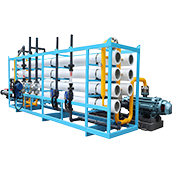
Ultrafiltration separation equipment takes ultrafiltration membrane modules as the core separation medium to achieve selective separation of mixed liquid systems. Different from conventional filtration devices that only trap large particles, it relies on precise molecular weight cutoff to realize classified separation of dissolved substances and suspended pollutants. The complete set consists of feed pump, circulating pump, membrane housing, ultrafiltration membrane elements, backwashing pipeline, chemical cleaning assembly and PLC control cabinet.
For small-flow purification demands, customers can adopt compact Water treatment ultrafiltration equipment. For large engineering projects, multiple groups of equipment can be combined into integrated Ultrafiltration system and equipment to boost overall processing capacity. Available membrane materials include PVDF, PAN and PES hollow fiber membranes, and tubular membrane options are provided for wastewater with high suspended solids. Ultrafiltration separation equipment is suitable for surface water, groundwater, municipal secondary effluent and light industrial wastewater. It can be applied not only in water treatment, but also in food clarification, biological liquid concentration and pharmaceutical liquid purification, providing reliable separation performance for multiple industrial sectors.
Working Principle
Ultrafiltration separation equipment follows low-pressure cross-flow membrane separation theory. Driven by circulating pumps at 0.1–0.3 MPa, raw liquid flows along the surface of ultrafiltration membrane components. Water molecules and small inorganic ions with molecular weight below the membrane cutoff value penetrate the membrane micropores to form permeate liquid. Substances larger than the membrane pore size such as suspended solids, colloids, bacteria and macromolecular organics are intercepted on the membrane surface and discharged with concentrated fluid.
Continuous cross-flow creates shear force on the membrane surface, reducing pollutant accumulation and slowing membrane fouling. The automatic control system executes scheduled backwashing; when flux drops obviously, online chemical cleaning restores membrane permeability. According to project scale and fluid characteristics, users can select single-set Water treatment ultrafiltration equipment, or assemble multiple units into complete Ultrafiltration system and equipment. Reasonable pretreatment configuration can effectively reduce membrane pollution load and extend the continuous operation cycle of ultrafiltration separation equipment.
Technical Features
1. Precise molecular separation:
Separate pollutants relying on fixed molecular weight cutoff to obtain stable separation effect.
2. Low-pressure energy-saving operation:
Run under mild pressure, significantly lower energy consumption compared with nanofiltration and reverse osmosis systems.
3. Multiple applicable working modes:
Support inside-out and outside-in operation modes to adapt different liquid turbidity.
4. Flexible modular collocation:
Can be used independently or combined into large-scale Ultrafiltration system and equipment.
5. Diversified material selection:
Multiple membrane materials are optional, and matched with Water treatment ultrafiltration equipment for process combination.
Product Advantages
1. Physical separation without phase change:
No heating or chemical additives required in most scenarios, maintaining original properties of processed liquid.
2. Compact structural layout:
High membrane packing density within limited space, saving plant floor area.
3. Easy automatic control:
The whole process can be intelligently managed to realize unattended continuous operation.
4. Convenient maintenance:
Single membrane element replacement is supported without shutting down the entire unit.
5. Wide application scope:
Adaptable to water purification, wastewater reuse and material concentration in various industries.
Application Fields
Industrial pure water pretreatment for pharmaceutical, beverage and electronic production workshops.
Municipal sewage advanced treatment to produce reclaimed water for industrial circulation and landscape irrigation.
Brackish water and seawater desalination pretreatment to reduce SDI value and protect reverse osmosis membranes.
Small liquid separation projects adopting compact Water treatment ultrafiltration equipment.
Large-scale industrial water treatment stations built with combined Ultrafiltration system and equipment.
Food, biochemical and chemical industry liquid clarification and concentration separation projects.
FAQ
Q1: What is the core separation principle of ultrafiltration separation equipment?
A1: Ultrafiltration separation equipment achieves selective interception by the molecular weight cutoff of ultrafiltration membranes. It can be used independently or matched with Water treatment ultrafiltration equipment, and multiple units can form complete Ultrafiltration system and equipment.
Q2: Can ultrafiltration separation equipment remove dissolved salts in water?
A2: No. Ultrafiltration mainly intercepts colloids, bacteria and macromolecular organics. Dissolved ions can only be removed by reverse osmosis or nanofiltration equipment.
Q3: Can ultrafiltration separation equipment handle high-concentration wastewater continuously?
A3: It depends on wastewater composition. High oil and high-solids wastewater requires proper pretreatment. Tubular membrane configuration is recommended for heavy pollution working conditions.
Q4: How to effectively reduce membrane fouling of ultrafiltration separation equipment?
A4: Optimize pretreatment process, maintain stable cross-flow velocity, and implement regular backwashing and periodic chemical cleaning according to operating parameters.
Q5: Can the processing capacity of ultrafiltration separation equipment be expanded later?
A5: Yes. The modular design allows adding more membrane racks. Users can expand into larger Ultrafiltration system and equipment on the basis of original Water treatment ultrafiltration equipment.
You May Also Be Interested In